Why Laundromats Need Cloud Reporting to Grow
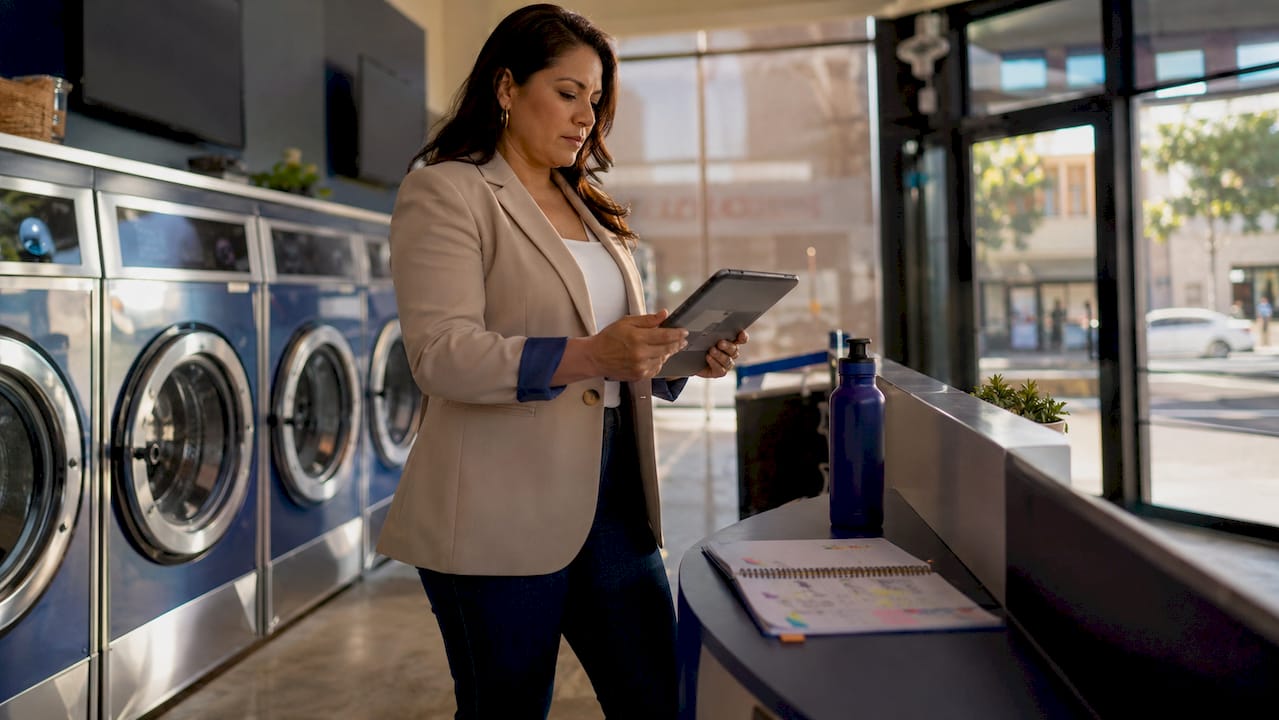
Cloud reporting for laundromats is defined as real-time, internet-based monitoring and data analysis of machine performance, revenue, and maintenance status, delivered through remote dashboards and automated alerts. This technology transforms a traditionally reactive business into one where owners make decisions based on live data rather than guesswork. IoT sensors, cashless payment integrations, and cloud-based POS platforms like Kansoflow now give independent operators the same operational visibility once reserved for enterprise chains. The result is measurable: up to 40% less downtime and 20 to 25% more revenue per machine for operators who adopt it.
Why laundromats need cloud reporting for operational control
Cloud reporting gives laundromat owners something coin-operated systems never could: the ability to know exactly what every machine is doing without being physically present. Traditional operations rely on customer complaints to flag broken equipment. That model costs you money every hour a machine sits idle before you find out.
Modern cloud systems pull real-time telemetry from each washer and dryer, including cycle status, error codes, and utilization rates. When a machine goes out of service, the system fires an automated alert to your phone before a single customer walks away frustrated. Systems without out-of-service alerts lead directly to revenue loss and negative reviews, particularly in unattended stores where no staff member would otherwise catch the problem.
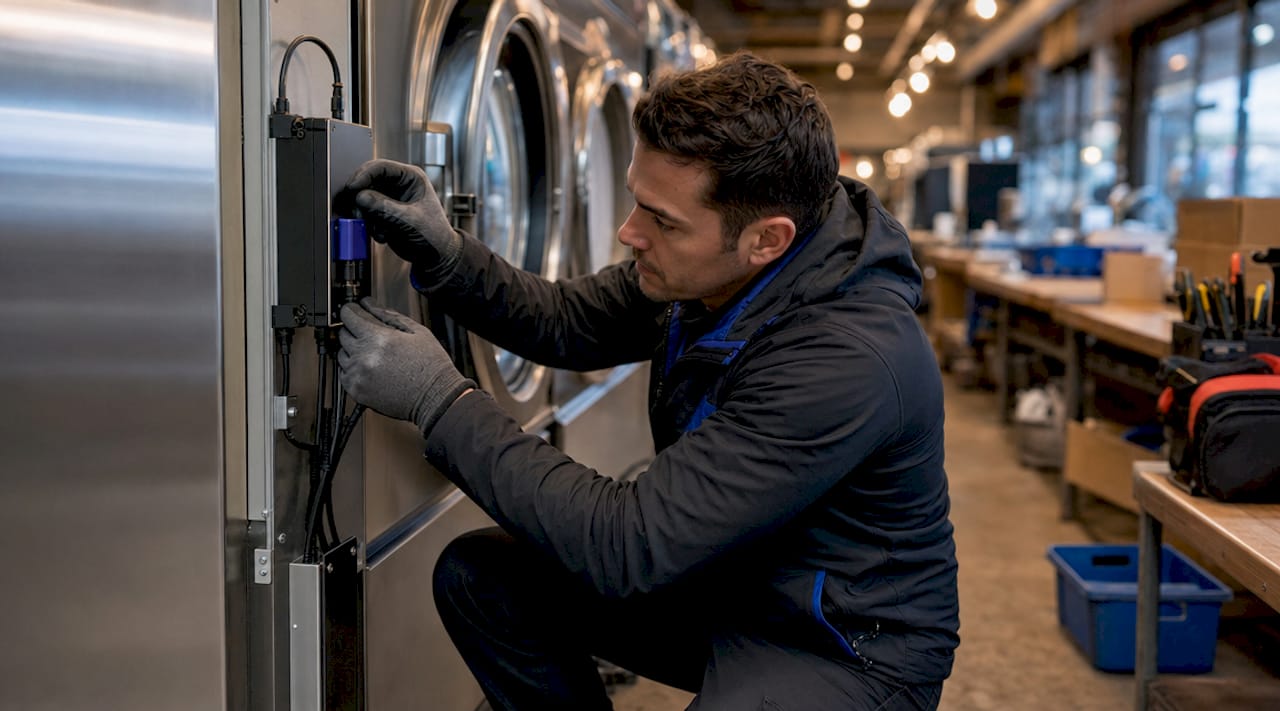
The deeper advantage is predictive maintenance. Predictive alerts based on small daily variations in cycle duration let you schedule a technician before a machine actually breaks down. That shift from reactive to proactive repair eliminates emergency service call premiums and the compounding revenue loss of extended downtime. A machine that runs 10 cycles a day at $3.50 per cycle loses $35 every day it sits broken. Multiply that across a 20-machine store and the math becomes urgent fast.
Pro Tip: Set your cloud alert thresholds to notify you within 15 minutes of a machine error code, not just when a cycle fails to complete. Early-stage alerts catch mechanical drift before it becomes a breakdown.
The shift from coin-based to cashless telemetry is the largest operational change in the laundromat industry in decades. Moving to cashless telemetry means owners know machine status remotely rather than reacting to customer complaints. That single change redefines what it means to manage a store.
How cloud reporting changes your revenue tracking and reconciliation
Manual financial reconciliation in a coin-based laundromat is slow, error-prone, and impossible to audit in real time. Counting coin vaults, matching totals to expected revenue, and identifying discrepancies can consume hours of management time each week. Cloud reporting eliminates most of that work.
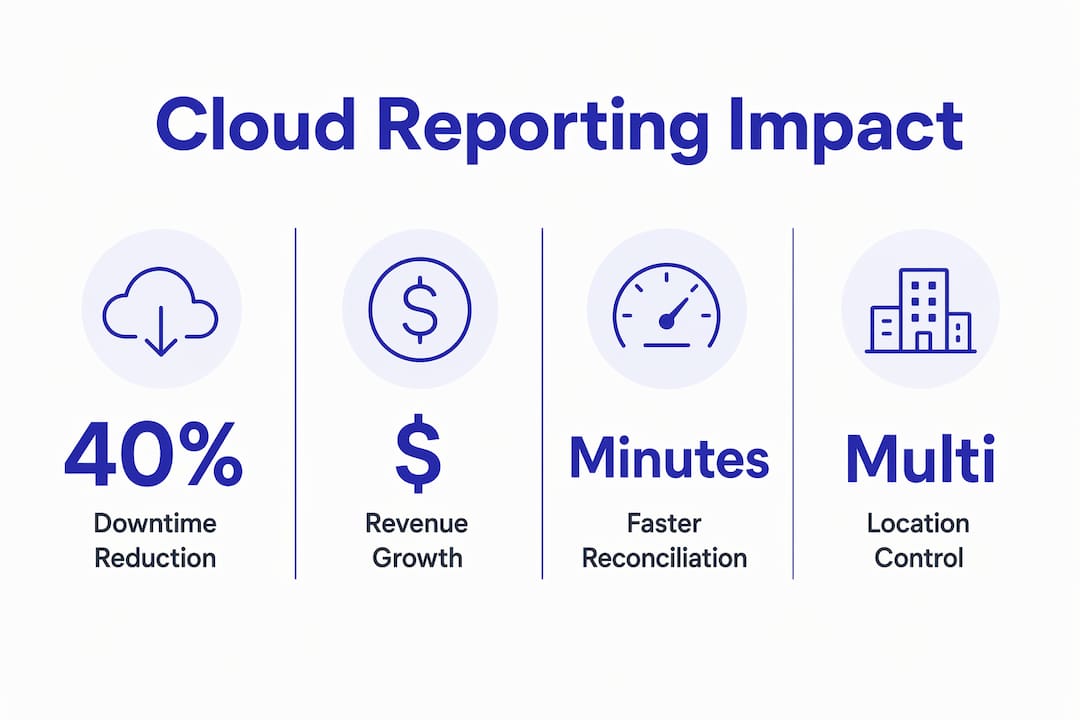
Integrating mobile payments and remote monitoring reduces financial reconciliation time from hours to minutes and eliminates earning discrepancies. Every transaction is logged digitally, timestamped, and matched automatically against machine usage data. You can verify that the revenue from machine 7 between 9 a.m. and 5 p.m. matches exactly what hit your Stripe or Square account. There is no manual counting step in that process.
The table below shows the practical difference between traditional coin operations and cloud-enabled cashless systems:
| Feature | Traditional coin system | Cloud-enabled cashless system |
|---|---|---|
| Revenue visibility | Manual vault count, delayed | Real-time dashboard, instant |
| Reconciliation time | 2 to 4 hours per week | Under 30 minutes per week |
| Theft risk | High (coin theft, skimming) | Eliminated at machine level |
| Pricing flexibility | Fixed mechanical settings | Dynamic, adjustable remotely |
| Financial reporting | Manual spreadsheets | Automated daily CSV exports |
Cashless systems eliminate coin theft risks entirely and allow dynamic pricing without mechanical constraints. That means you can raise prices on peak Saturday mornings and lower them on slow Tuesday afternoons, all from your phone, without touching a single machine.
Cloud systems also surface pricing optimization data you never had before. Revenue per machine, turns per day, and peak usage windows are all visible in your dashboard. One operator credited cloud reporting platforms with eliminating guesswork about customer trends, busiest days, and which machines generate the most revenue. That is not a minor convenience. That is the foundation of a pricing strategy.
Pro Tip: Review your revenue-per-machine report weekly for the first 90 days after switching to cloud reporting. You will almost always find one or two underperforming machines that need repositioning or a price adjustment.
One nuance worth acknowledging: some customers resist downloading payment apps. Scan-to-pay options improve acceptance rates significantly compared to app-only payment models. Offering multiple cashless entry points, QR codes, tap-to-pay, and in-app options, covers the full range of customer preferences without friction.
How cloud reporting supports scaling to multiple locations
Managing a single laundromat manually is hard. Managing three or five locations the same way is not scalable. The math on labor alone breaks down quickly when each location requires a physical visit to assess machine status, pull revenue data, and check maintenance logs.
Cloud reporting solves this by centralizing everything into one dashboard. You see every machine across every location, their current status, cycle counts, and revenue contribution, from a single screen. Multi-location management with cloud dashboards allows operators to manage triple the number of machines with the same headcount. That is a direct labor cost reduction and a scalability multiplier.
Here is what changes operationally when you move from manual to cloud-based multi-location management:
- Machine status visibility: You know instantly which machines are running, idle, or faulted across all locations without a phone call or site visit.
- Maintenance dispatch: Automated work orders route directly to your technician when a fault is detected, cutting response time from days to hours.
- Revenue comparison: Side-by-side location performance data shows you which store is underperforming and why, whether it is machine downtime, pricing, or traffic patterns.
- Reporting automation: Daily revenue CSVs, maintenance logs, and profitability analyses generate automatically, removing manual data entry from your weekly routine entirely.
The table below illustrates the FTE efficiency difference at scale:
| Locations | Machines | Manual management FTEs needed | Cloud-managed FTEs needed |
|---|---|---|---|
| 1 | 20 | 1.5 | 1.0 |
| 3 | 60 | 4.0 | 1.5 |
| 5 | 100 | 6.5 | 2.0 |
The real value of cloud reporting at scale is not just efficiency. It is actionable intelligence that lets you manage growth strategically rather than spending all your time on operational oversight. Owners who reach five or more locations without cloud infrastructure typically hit a ceiling where adding another store adds more stress than revenue.
Choosing the right cloud reporting technology for your laundromat
Not all cloud reporting tools deliver equal value. The most common mistake operators make is adopting a system that provides basic revenue summaries but lacks granular machine telemetry. Cloud reporting without granular telemetry is ineffective. You need out-of-service alerts and turns-per-machine data at minimum, or you are paying for a dashboard that cannot prevent the problems that cost you the most money.
Follow these steps when evaluating and implementing a cloud reporting system:
- Audit your current hardware. Identify which machines are IoT-ready and which require a retrofit module. Most machines manufactured after 2015 can accept an aftermarket IoT controller at a cost well below replacing the machine.
- Prioritize out-of-service alerts. Any system you evaluate must send real-time fault notifications to your phone. This is non-negotiable for unattended stores.
- Confirm payment integration. Your cloud reporting platform should connect directly to your payment processor, whether Stripe, Square, or a laundry-specific provider, so revenue data flows automatically without manual reconciliation.
- Evaluate multi-location support. If you own or plan to own more than one location, confirm the platform supports a unified dashboard before you commit.
- Check reporting depth. Look for systems that generate automated daily reports, not just live dashboards. Platforms like CleanCloud aggregate laundromat and dry cleaning operations into a single login, which matters if you run mixed service models.
Pro Tip: Before signing any contract, ask the vendor to demonstrate a live out-of-service alert simulation. If they cannot show you the alert firing in real time, the feature may not work as advertised.
The importance of cloud technology in laundromats comes down to one principle: you cannot manage what you cannot measure. Owners who implement telemetry-backed cloud reporting gain the ability to make decisions on pricing, maintenance, and staffing based on actual data trends rather than intuition.
Key takeaways
Cloud reporting is the single most impactful operational upgrade available to laundromat owners today, delivering measurable gains in uptime, revenue accuracy, and scalability.
| Point | Details |
|---|---|
| Downtime reduction | Cloud alerts cut equipment downtime by up to 40%, directly protecting daily revenue. |
| Revenue reconciliation | Cashless cloud integration reduces weekly reconciliation from hours to under 30 minutes. |
| Predictive maintenance | Telemetry-based alerts prevent breakdowns before they happen, eliminating emergency repair costs. |
| Multi-location scaling | Cloud dashboards allow operators to manage triple the machines with the same staff headcount. |
| Technology selection | Insist on granular telemetry and out-of-service alerts; basic revenue dashboards alone are insufficient. |
What I have learned running laundromats on data instead of instinct
I spent years managing laundromat operations the way most owners do: driving to stores, counting vaults, and finding out a machine had been broken for two days only because a customer finally complained. The shift to cloud reporting did not just save time. It changed the entire mental model of what it means to run this business.
The most surprising thing was not the revenue increase, though that was real. It was the elimination of anxiety. When you can see every machine’s status from your phone at 10 p.m. on a Sunday, you stop losing sleep over what might be broken. That psychological shift is worth more than most owners expect before they experience it.
What I would tell any operator considering cloud reporting: do not underestimate the pricing intelligence. Cloud reporting provides key performance metrics that inform decisions about renovations, pricing, and inventory based on actual trends. I raised prices on my two highest-utilization machines after 60 days of data. Revenue went up. No customers left. I would never have had the confidence to do that without the numbers.
The one area where I see operators stumble is expecting the system to do everything automatically without any setup investment. You need to configure your alert thresholds, connect your payment processor correctly, and actually review your weekly reports. The data is only as useful as the attention you give it. Operators who treat cloud reporting as a passive tool get passive results.
— Artur
See how Kansoflow brings cloud reporting to your counter
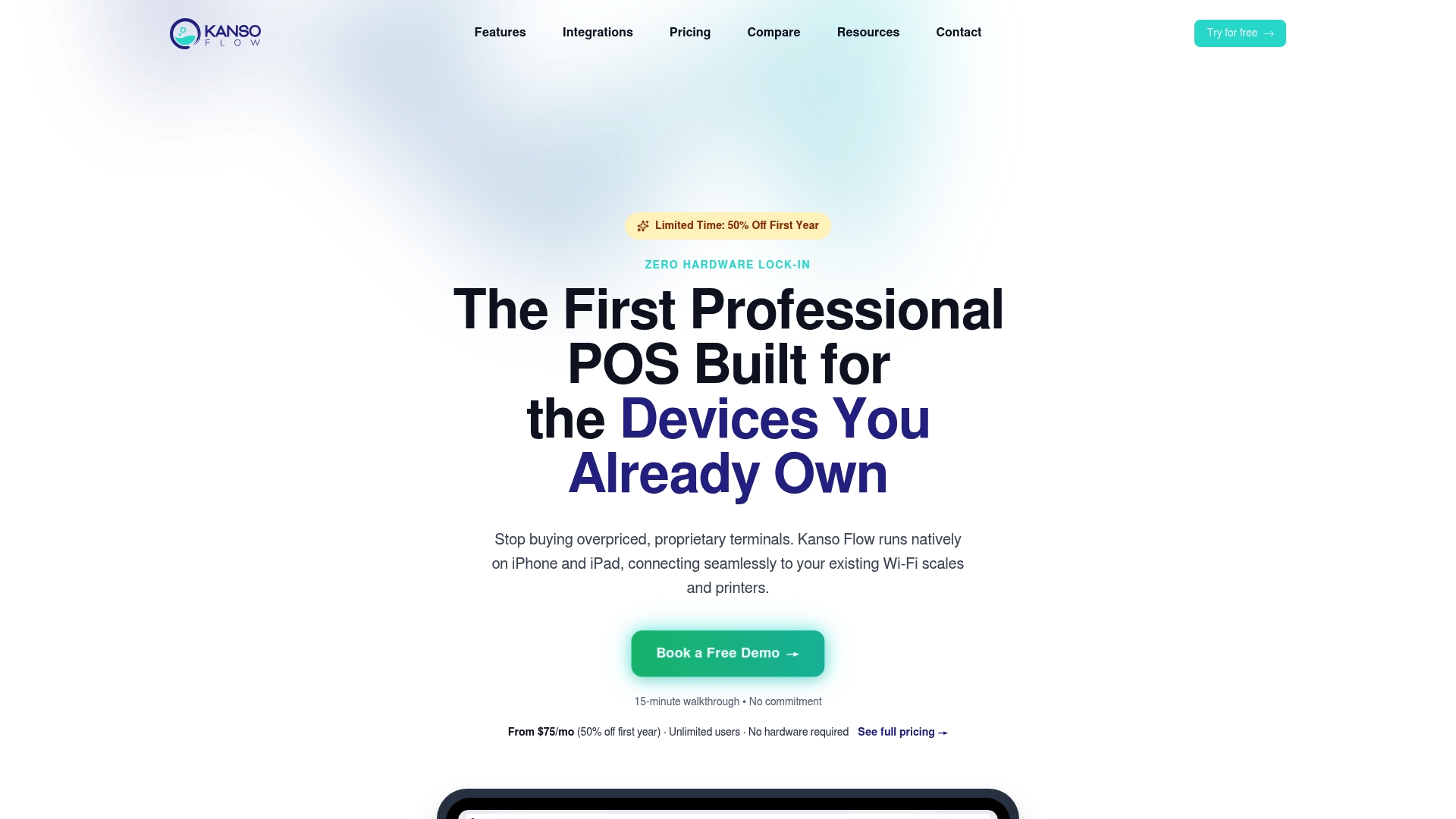
Kansoflow is built specifically for laundromat owners who want real-time operational control without the complexity of legacy management systems. The platform runs natively on iOS, connects directly to Stripe and Square for automatic revenue reconciliation, and gives you a live view of your operation from anywhere. Whether you run one location or five, the reporting and management features are designed to replace manual processes with data you can act on immediately. If you are ready to stop guessing and start managing by the numbers, explore Kansoflow and see what your operation looks like with full visibility.
FAQ
What is cloud reporting in a laundromat context?
Cloud reporting is the use of internet-connected sensors and software to monitor machine performance, track revenue, and generate operational reports in real time. It replaces manual vault counting and reactive maintenance with live data accessible from any device.
How much can cloud reporting reduce laundromat downtime?
Laundromats using cloud-based remote monitoring report up to 40% reduction in equipment downtime, primarily because automated alerts notify owners of faults before extended revenue loss occurs.
Is cloud reporting worth it for a single-location laundromat?
Yes. Even a single-location store benefits from automated revenue reconciliation, out-of-service alerts, and pricing intelligence. The time savings on financial management alone typically justify the cost within the first few months.
Can I add cloud reporting to existing machines without replacing them?
Most machines manufactured after 2015 accept aftermarket IoT retrofit modules at a fraction of replacement cost. The key is confirming compatibility with your chosen cloud platform before purchasing hardware.
What should I look for when choosing a cloud reporting system?
Prioritize granular machine telemetry, real-time out-of-service alerts, direct payment processor integration, and automated daily reporting. Systems lacking these features leave critical operational gaps that cost more than the software saves.