Why Dry Cleaners Need Enterprise POS to Compete

An enterprise POS system for dry cleaning is defined as an integrated platform that combines garment-level tracking, automated billing, inventory management, and customer notifications into a single operational hub. Understanding why dry cleaners need enterprise POS comes down to one core problem: manual processes lose garments, leak revenue, and burn labor hours at a rate most owners never fully measure. Manual logs account for 60% of operational errors related to missing garments. That number alone explains why paper tickets and spreadsheets cannot carry a modern dry cleaning operation.
Why dry cleaners need enterprise POS for garment tracking
Garment loss is the most visible and most expensive failure point in dry cleaning. The average industry loss rate sits between 0.3% and 0.7% of garments processed, costing a single location between $1,350 and $2,880 annually in replacements. That figure does not include the customer disputes, refund negotiations, and reputation damage that follow each incident.
Manual tracking creates this problem. When attendants write ticket numbers by hand and sort garments by memory, mix-ups are inevitable. A busy Saturday with 200 orders in process is all it takes to lose a suit jacket or return the wrong shirt to the wrong customer.
Enterprise POS systems solve this at the source. Digital garment tracking assigns a unique identifier to every item at intake. That identifier follows the garment through every stage: intake, cleaning, pressing, bagging, and pickup. Enterprise-grade dry cleaning POS systems reduce lost or misplaced garments by up to 89% within six months of deployment. The mechanism is simple: no garment moves without a scan, so the system always knows where every item is.
Two tracking technologies dominate the market right now.
- Barcode and QR tracking: Low cost, easy to implement, and effective for shops processing under 500 garments per day. Staff scan each item individually. Results appear within weeks of setup.
- RFID tracking: Higher upfront cost, but RFID reads bundled batches at over 1,000 items per hour, eliminating manual counting entirely. RFID also creates a real-time perpetual inventory of every garment’s location and lifecycle status.
Advanced RFID garment tracking reduces annual loss rates from 5–15% to 1–3% and cuts manual counting labor by 20–40 hours per week in medium-sized facilities. That labor reduction alone often justifies the investment.
Pro Tip: Start with barcode or QR tracking if your volume is under 300 orders per day. Upgrade to RFID when your weekly labor cost for manual counting exceeds the monthly cost of RFID hardware and tags.
How POS systems manage inventory and control supply costs
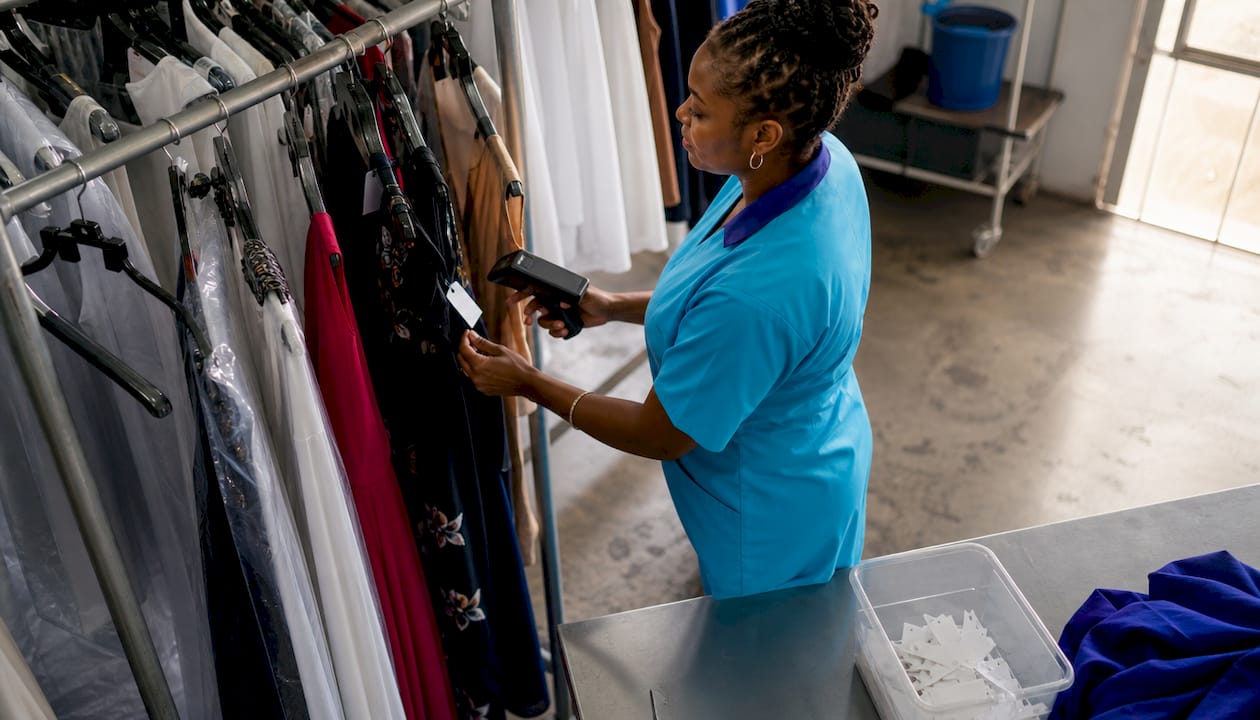
Garment tracking gets the attention, but supply management is where enterprise POS quietly saves thousands of dollars per year. Dry cleaning operations consume significant quantities of hangers, poly bags, solvents, spotting chemicals, and pressing supplies. Without automated tracking, operators order by gut feel and routinely overstock some items while running out of others mid-week.
An enterprise POS system with integrated inventory management changes that pattern in four concrete ways:
- Real-time consumption tracking: Every order processed deducts the associated consumables from inventory counts automatically. Owners see actual usage rates, not estimates.
- Automated reorder alerts: The system flags low-stock items before they become stockouts. A shop never runs out of poly bags on a Friday afternoon because the alert fired on Tuesday.
- Supplier order integration: Advanced platforms connect directly to supplier catalogs, letting managers approve restocking orders from the same dashboard they use to run the floor.
- Cost-per-order reporting: When consumable costs are tracked against order volume, owners can see exactly what each garment type costs to process. That data drives smarter pricing decisions.
The financial impact compounds over time. Operators who track consumables digitally eliminate the emergency orders, the overstocked shelves, and the guesswork that inflates supply budgets. The importance of POS in dry cleaning extends well beyond the counter. It reaches into the back room, the supply closet, and the monthly profit-and-loss statement.
Does integrated billing in enterprise POS reduce revenue leakage?
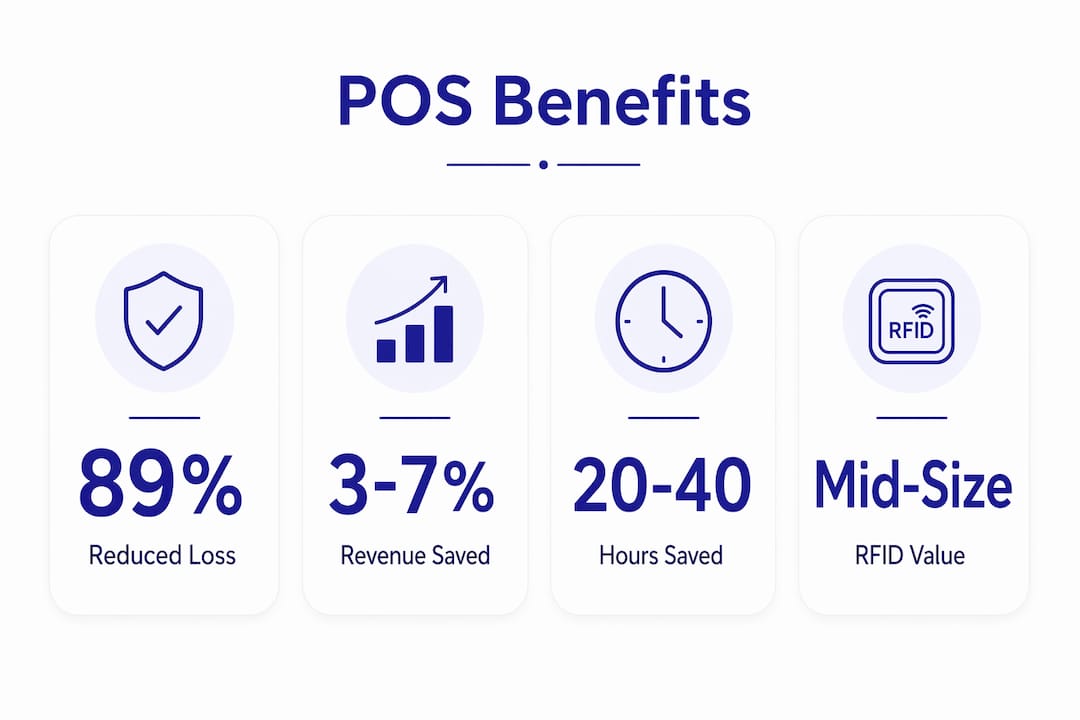
Yes. Manual billing and inventory management cause revenue loss of 3–7% monthly due to missed add-ons and pricing errors that go undetected without automated systems. On a location generating $30,000 per month, that is $900 to $2,100 walking out the door every single month.
The errors are predictable. An attendant forgets to charge for stain treatment. A rush fee gets applied inconsistently. A customer with a negotiated corporate rate gets charged retail. None of these errors are intentional, but all of them cost money.
Enterprise POS systems eliminate these gaps through automated pricing rules. Every service, add-on, and modifier is pre-configured. The system applies the correct price every time, regardless of which staff member processes the order. RFID data integration enables near-99% billing accuracy by linking garment movements directly to customer accounts, which also reduces billing disputes and strengthens contract negotiations with commercial clients.
Customer management features add another layer of value:
- Automated order status notifications: Customers receive a text or email when their order is ready. This reduces “where is my order” calls and cuts counter wait times.
- Customer preference profiles: Repeat customers have their preferences stored. No more asking the same questions on every visit.
- Loyalty and account tracking: Commercial accounts and high-frequency customers get tracked automatically, making retention programs easy to run without manual spreadsheets.
Pro Tip: Configure your POS to require a staff confirmation step before any discount or price override is applied. This single setting eliminates most unauthorized pricing errors without slowing down the counter.
Barcode vs. QR vs. RFID: which tracking fits your business?
Not every dry cleaning operation needs the same technology. The right tracking method depends on your daily order volume, your budget, and how quickly you need to see a return on investment.
| Tracking method | Best for | Upfront cost | Accuracy | Labor impact |
|---|---|---|---|---|
| Barcode | Small shops, under 200 orders/day | Low | High per scan | Moderate reduction |
| QR code | Small to mid-size, mobile-friendly | Low | High per scan | Moderate reduction |
| RFID | Mid-size to enterprise, high volume | High | Near-100% in batches | 20–40 hours/week saved |
Barcode and QR tracking combined with POS software eliminates garment mix-ups and accelerates operations without high cost or complexity. Small shops see results within weeks. RFID delivers greater speed and accuracy at scale, with RFID implementation costs paying back within 6–14 months for medium and large facilities.
Scalability matters as much as the technology itself. A single-location shop running 150 orders per day has different needs than a five-location chain processing 2,000 orders daily. AI-powered garment tracking and automated notifications have reached over 50% implementation rates among multi-location dry cleaning businesses. That adoption rate signals where the industry is heading, not where it has been.
Enterprise POS platforms built for growth let operators start with barcode tracking at one location and add RFID capability as volume increases. The platform grows with the business rather than forcing a full system replacement every few years.
Key Takeaways
Enterprise POS systems are the single most effective tool for reducing garment loss, billing errors, and supply waste in dry cleaning operations.
| Point | Details |
|---|---|
| Garment loss is measurable and preventable | Digital tracking cuts garment loss by up to 89%, saving thousands annually per location. |
| RFID pays back faster at scale | RFID reduces loss rates to 1–3% and saves 20–40 labor hours per week in mid-size facilities. |
| Billing errors cost real money | Manual billing causes 3–7% monthly revenue loss; automated POS pricing rules eliminate most errors. |
| Tracking technology should match volume | Barcode and QR work for smaller shops; RFID delivers the best return for high-volume operations. |
| Integration challenges are common | 43% of businesses cite compatibility as a top hurdle, so choosing a purpose-built platform matters. |
What running a manual operation actually costs you
I have talked with enough dry cleaning owners to know that the real cost of paper tickets never shows up clearly on a profit-and-loss statement. It hides in the hours your best attendant spends hunting for a missing blazer. It hides in the $200 you paid to replace a coat you cannot prove was ever returned. It hides in the customer who never came back after a mix-up and never told you why.
The 43% of businesses citing integration compatibility as a leading hurdle is a real warning. I have seen operators invest in a POS system and then spend months fighting with middleware just to get their existing hardware to talk to the new software. The lesson is not to avoid modern systems. The lesson is to choose a platform built for your specific operation from the ground up, not one that was designed for retail and adapted for laundry.
Staff training is the other piece most owners underestimate. A system that takes three weeks to learn will face resistance. Attendants will find workarounds. Those workarounds recreate the manual errors you were trying to eliminate. The best implementations I have seen share one trait: the software was simple enough that a new hire could process an order correctly on day one.
The operators who see the fastest ROI are not the ones with the biggest budgets. They are the ones who chose a purpose-built platform, trained their team properly, and stopped tolerating the slow bleed of manual errors.
— Artur
Kansoflow brings enterprise-grade tracking to your counter
Kansoflow is a native iOS POS platform built specifically for laundromat and dry cleaning operators. Its visual Kanban board tracks every order through Wash, Fold, Dry Cleaning, and Ready stages in real time. Photo intake at the counter eliminates lost-item disputes before they start. Built-in inter-branch transfer support handles drop-off locations and processing hubs without extra software. Kansoflow pairs natively with Star Micronics tag printers and Bluetooth scales, and processes payments through Stripe and Square. Explore the full feature set for dry cleaners or review pricing plans to find the right fit for your operation.
FAQ
What is an enterprise POS system for dry cleaning?
An enterprise POS system for dry cleaning is a platform that integrates garment-level tracking, automated billing, inventory management, and customer notifications into one system. It replaces paper tickets and manual logs with digital workflows that reduce errors and improve operational visibility.
How much can a dry cleaning POS reduce garment loss?
Enterprise-grade dry cleaning POS systems reduce lost or misplaced garments by up to 89% within six months. The average industry loss rate of 0.3–0.7% costs a single location between $1,350 and $2,880 annually in replacements.
Is RFID tracking worth the cost for a small dry cleaner?
RFID delivers the strongest return for mid-size to high-volume operations, with payback in 6–14 months. Smaller shops processing under 200 orders per day typically see better value from barcode or QR tracking, which costs less and delivers results within weeks.
How does enterprise POS reduce billing errors?
Automated pricing rules in enterprise POS systems apply the correct price, add-ons, and modifiers on every transaction, regardless of which staff member processes the order. RFID-linked billing achieves near-99% accuracy by tying garment movements directly to customer accounts.
What is the biggest challenge when implementing a new POS system?
Integration compatibility is the leading hurdle, cited by 43% of businesses. Incomplete integrations cause redundant data entry and reduce expected efficiency gains. Choosing a platform built specifically for dry cleaning operations reduces this risk significantly.