The Laundromat Drop-Off Location Model Explained
What is the laundromat drop-off location model?
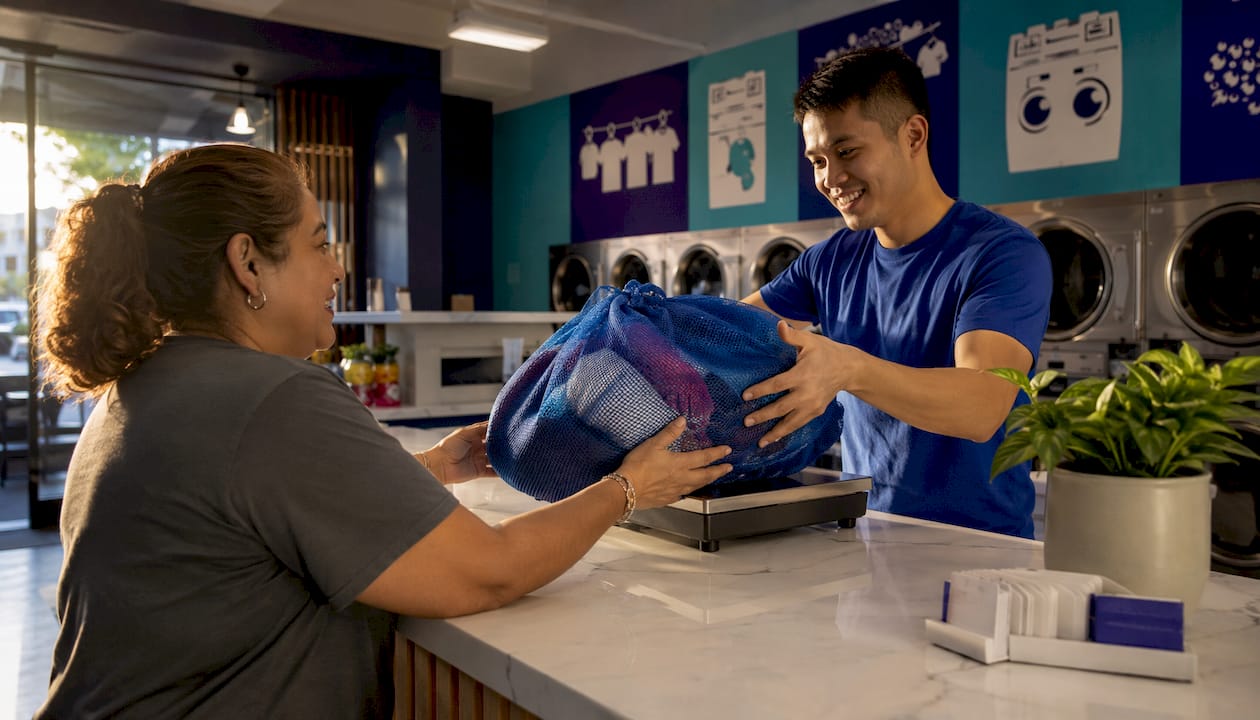
The laundromat drop-off location model is a professional wash, dry, and fold service where customers bring their laundry to a staffed counter, leave it for processing, and return to pick it up clean and folded. It is neither self-service nor full pickup and delivery. The customer does the transporting; your attendant does everything else. That distinction matters operationally and financially.
The typical turnaround is 24 hours, though many shops offer same-day rush at a premium. Pricing runs on weight, usually billed per pound, which keeps the math simple for both sides of the counter. Commercial accounts, such as gyms, Airbnb hosts, and small hotels, often become the highest-volume customers in this model because they generate recurring, predictable loads.
What separates drop-off from a coin-op laundromat is labor. You are selling your attendant’s time and skill, not just machine access. That shift changes your cost structure, your staffing needs, and your customer relationship entirely.
How a drop-off laundry service works, step by step
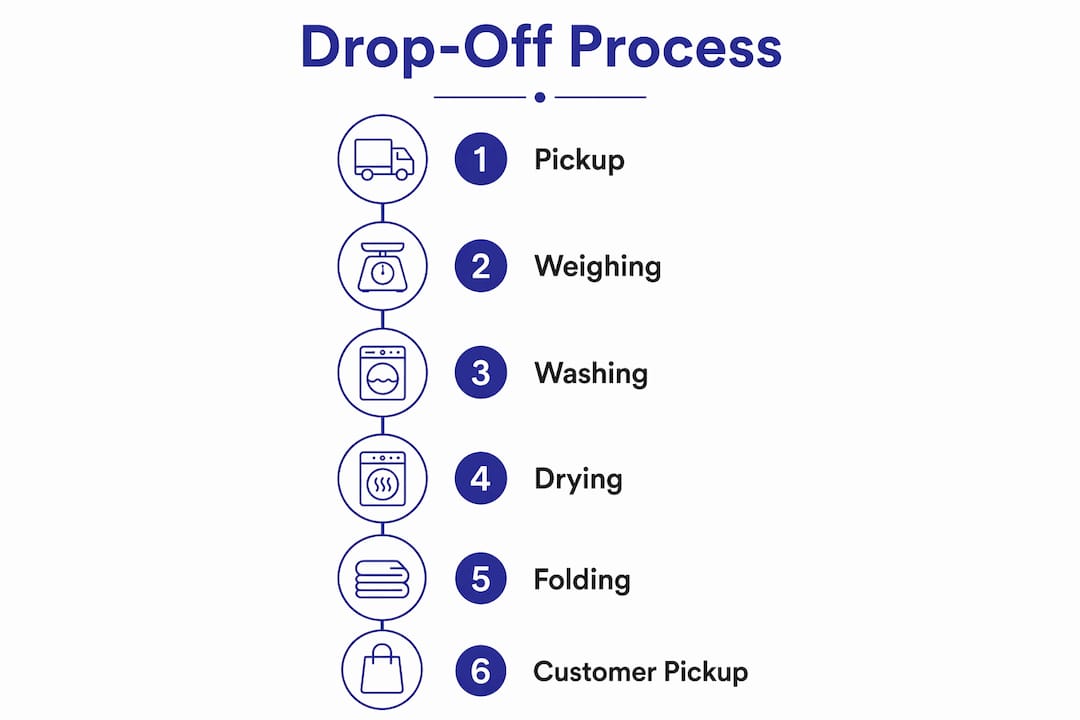
Getting the workflow right from day one prevents the lost-load disasters that kill customer trust. Here is how a well-run drop-off operation moves an order from dirty bag to happy customer.
-
Customer arrives at the attended counter. The attendant greets the customer, confirms any special preferences (detergent type, water temperature, folding style), and begins intake. This is the moment that sets the tone for the whole transaction.
-
Weigh the laundry in front of the customer. Weight-based billing requires a scale at the counter. Weighing openly builds trust and locks in the price before the customer leaves. Bluetooth scales that sync directly to your POS system eliminate manual entry errors.
-
Tag every bag with a durable, secure label. A tag that falls off mid-cycle causes a lost-load claim. Use heat-resistant, adhesive tags printed directly from your POS. Each tag carries the order number, customer name, and any care notes.
-
Log the order into your intake system. A purpose-built POS records the weight, customer preferences, machine assignment, and payment. A generic cash register will not scale once volume picks up.
-
Collect payment or card authorization at drop-off. Prepayment reduces abandoned orders. Customers who have already paid pick up promptly; customers who have not tend to let orders sit, which ties up your storage and your staff.
-
Assign machines and run wash cycles during off-peak windows. Routing drop-off loads to times when self-service traffic is light protects both revenue streams. Many operators run drop-off orders before the store opens or in the evening.
-
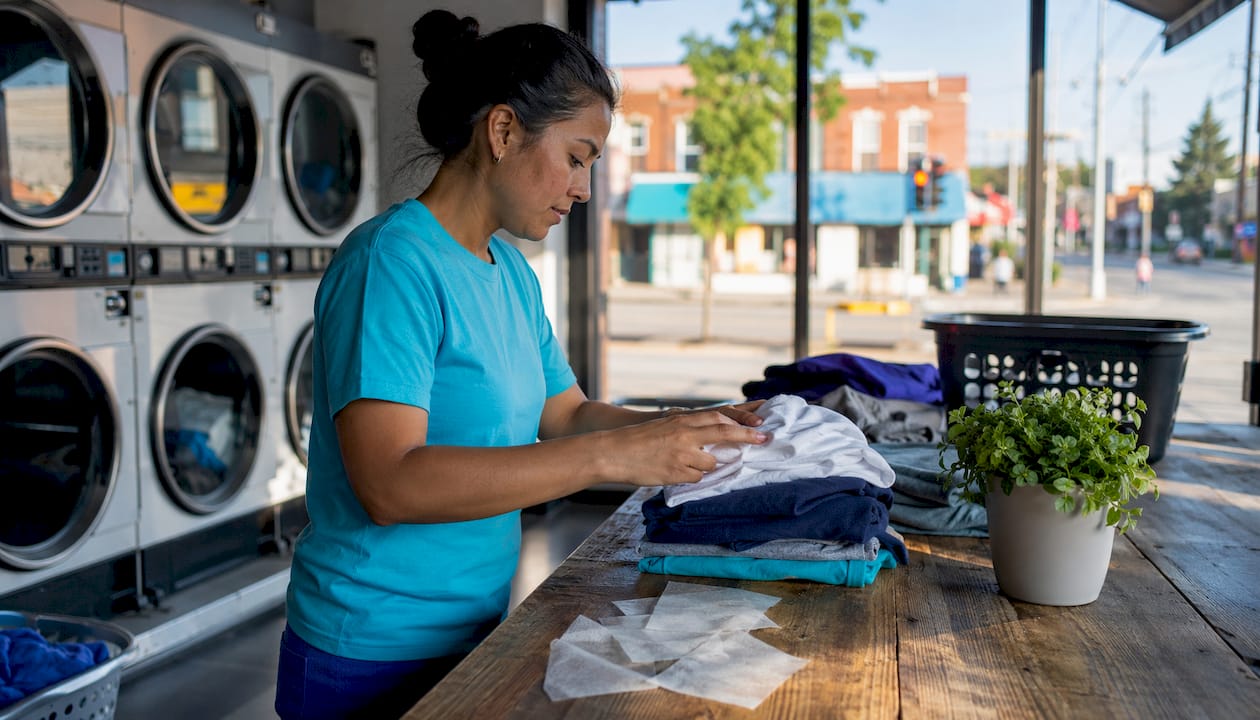
Transfer to dryers, fold, and package. Folding quality is what customers remember. A neatly packaged order wrapped in tissue or placed in a branded bag signals professionalism and justifies the per-pound price.
-
Notify the customer when the order is ready. A text or email notification drives prompt pickup. Automated notifications through your POS system remove the manual phone-call burden from your attendant.
-
Hand off the finished order at pickup. Confirm the order number, verify the customer, and close the transaction. If payment was not collected at drop-off, collect it now.
Why drop-off services benefit both your business and your customers
The revenue case for adding drop-off laundry services is direct. Adding wash-and-fold to an existing coin-op store can grow total revenue significantly over a coin-only model, because you are monetizing equipment you already own with a higher-margin service line. The machine is running either way; the difference is whether it is generating $0.50 per pound in self-service revenue or $1.50–$2.50 per pound in attended service revenue.
- Higher margins per pound. Labor and service fees command a premium that self-service vending cannot match.
- Off-peak machine utilization. Drop-off loads fill machines during hours when walk-in traffic is low, turning idle capacity into billable cycles.
- Commercial account volume. Gyms, salons, and hospitality clients generate consistent weekly loads without the acquisition cost of individual customers.
- Customer loyalty through personalization. Recording preferences like detergent brand and fold style builds a relationship that keeps customers from switching to a competitor.
- Brand differentiation. A staffed, full-service counter positions your store above unattended coin-op locations in the same neighborhood.
- Convenience-driven customer acquisition. Busy professionals and families who will not sit in a laundromat for two hours will pay a premium to drop off and walk away.
The customer benefit is straightforward: time. Drop-off laundry service converts a two-hour chore into a five-minute errand. That value proposition is why convenience-driven customers are willing to pay a meaningful premium per pound over the self-service rate.
Operational best practices for running a drop-off model profitably
Drop-off is a different business than self-service, and treating it like a side project is the fastest way to lose money on it. Industry consultants are direct on this point: drop-off requires dedicated operational focus, not casual attention between coin-op shifts.
-
Track drop-off financials separately. Segmented profit-and-loss tracking using class tracking in QuickBooks or equivalent software prevents self-service fixed costs from masking whether drop-off is actually profitable. Every cost, including folding labor, detergent, and a fair share of machine wear, belongs on the drop-off P&L.
-
Hire for reliability, not speed. Your attendant is the product. One trustworthy person who folds carefully and handles intake correctly is worth more than a fast worker who loses bags. Sloppy folding loses a customer faster than a slow turnaround.
-
Use a POS built for laundry operations. Automated tagging, weight-based billing, and customer notifications all require purpose-built software. Tools like Kansoflow pair native iOS devices with Bluetooth scales and label printers to handle the full intake-to-pickup workflow without paper tickets or manual errors.
-
Schedule drop-off cycles in off-peak windows. Running wash-dry-fold loads before the store opens or in the evening keeps machines available for walk-in customers during peak hours and protects both revenue streams simultaneously.
-
Require prepayment at drop-off. Customers who pay upfront pick up on time. Unpaid orders sit in storage, block space, and create awkward collection conversations.
-
Optimize your physical layout, not your square footage. A well-organized dedicated drop-off area can handle high daily volume without a large footprint. Workflow discipline and smart storage matter more than raw space.
-
Use staffing tools to manage scheduling. Field operations platforms like Heyhive help owners track attendant hours, coordinate shift coverage, and maintain the operational consistency that drop-off service demands.
-
Build your review base deliberately. Word-of-mouth and five-star Google reviews drive organic customer acquisition for drop-off services. Surveying customers after pickup and following up on negative responses compounds over time into a durable marketing asset.
-
Set a realistic turnaround promise and protect it. The standard offer is next-day by a set cutoff, with a same-day rush tier at a premium. Your binding constraint is usually fold labor and dryer availability, not wash capacity. Do not promise faster than your slowest realistic day.
Pro Tip: Before you add a single drop-off customer, build your intake checklist and train your attendant on it. The Saturday rush will test every gap in your process, and a lost load on a busy day costs you far more than the order itself.

Compliance and regulatory considerations for drop-off laundry services
Drop-off laundry operations in the United States carry compliance obligations that go beyond a standard business license. Getting these right protects your customers, your staff, and your operating permit.
Health and sanitation standards apply directly to commercial laundry handling. The CDC publishes guidelines on laundry handling and infection control that are relevant when processing items from medical offices, gyms, or hospitality clients. Washing temperatures, chemical concentrations, and cross-contamination prevention all fall under these standards for commercial accounts.
Business licensing and zoning requirements vary by city and state. A drop-off service that accepts commercial accounts, particularly from healthcare-adjacent clients, may require a separate commercial laundry permit beyond the standard retail business license. Check with your local municipality before onboarding medical or institutional accounts.
Labor law compliance is non-negotiable once you add attended staff. Minimum wage, overtime rules, and break requirements under the Fair Labor Standards Act apply to every attendant hour. States like California and New York layer additional requirements on top of federal standards.
Customer property liability is a practical and legal concern. When a customer leaves garments in your care, you assume a duty of care for those items. Clear intake documentation, photo records of garment condition at drop-off, and a written service agreement that defines your liability limits protect you in dispute situations. A POS system with photo intake capability, like Kansoflow’s Photo Intake feature, creates a timestamped record that resolves most claims before they escalate.
Data privacy applies if you store customer preferences, contact information, or payment data digitally. Ensure your POS and notification systems comply with applicable state privacy laws, particularly if you operate in California under the CCPA.
Key Takeaways
The laundromat drop-off location model generates its strongest returns when operational discipline, segmented financial tracking, and a trained attendant combine to deliver a consistent, on-time service.
| Point | Details |
|---|---|
| 24-hour turnaround is the standard | Customers expect next-day pickup; same-day rush commands a premium price per pound. |
| Separate your financials | Track drop-off costs and revenue independently to see true profitability and avoid cross-subsidization. |
| Attendant quality drives retention | Reliable, careful staff who follow intake procedures are the core product in a drop-off model. |
| Off-peak scheduling protects both revenue streams | Running drop-off cycles before opening or in the evening keeps machines free for walk-in customers. |
| Revenue lift over coin-only is meaningful | Layering wash-and-fold on existing equipment can grow total store revenue significantly over a coin-only model. |
Kansoflow makes drop-off operations easier to run

Running a drop-off service on paper tickets and manual logs is how loads get lost and customers leave. Kansoflow is a native iOS POS platform built specifically for laundromat owners who want to run attended drop-off without the chaos. It pairs with Bluetooth scales and Star Micronics label printers for counter-speed intake, captures photos at drop-off to eliminate garment disputes, and tracks every order through a visual Kanban board from Wash to Ready. Automated customer notifications go out the moment an order is complete, and segmented reporting keeps your drop-off P&L clean and separate from self-service revenue. Explore the full drop-off feature set and see how Kansoflow fits your operation.