Sewfresh.co Alternatives: Best Laundry POS for Operators
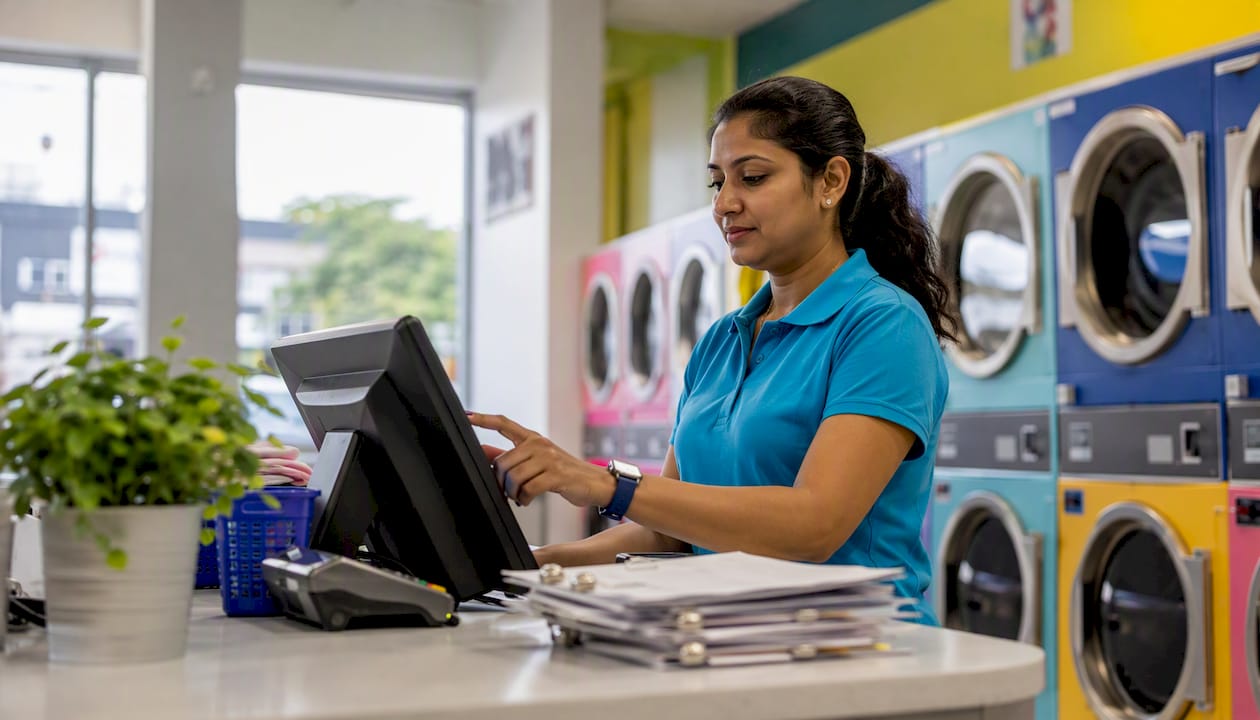
If you’re looking for sewfresh.co alternatives, the short answer is Kanso Flow. It covers the full order lifecycle — intake, tagging, wash/fold/dry-cleaning stages, and customer notification — on native iOS with real hardware integrations and flat per-location pricing. Two other platforms are worth knowing:
- Cents fits high-volume, unattended laundromats where machine-payment reliability and remote uptime monitoring are the primary concern, not garment tracking.
- CleanCloud suits combo shops running drop-off dry cleaning, wash-dry-fold, and delivery under one cloud login, with a gentler learning curve for counter staff.
For most counter-first operators, the deciding factors are order lifecycle coverage, enforced tagging, weight-based pricing, hardware compatibility, and predictable payment processing. Kanso Flow addresses all five out of the box.
Table of Contents
- How the top sewfresh.co competitors compare side by side
- What each platform actually does best
- How to choose the right replacement for your shop
- Key Takeaways
- Why Kanso Flow was built this way
- Kanso Flow: the direct replacement worth trying
- Research sources and documentation to read next
How the top sewfresh.co competitors compare side by side
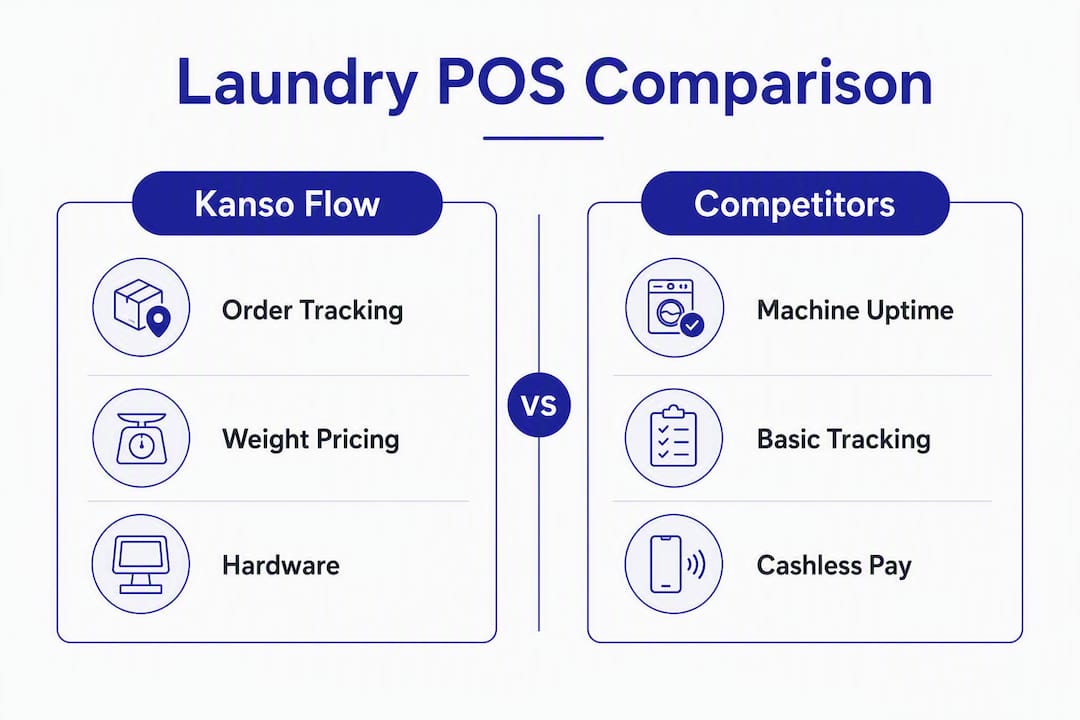
| Platform | Best for | Order lifecycle & garment tracking | Weight-based pricing | Hardware compatibility | Payment integrations / offline | Multi-location / transfers | Reporting & analytics | Onboarding | Pricing model |
|---|---|---|---|---|---|---|---|---|---|
| Kanso Flow | Counter-first laundromats and multi-location ops | Visual Kanban board, photo intake, stage tracking | Native Bluetooth scale support | Star Micronics printers, Bluetooth scales, iOS devices | Stripe, Square; offline mode | Inter-branch transfers, outsourcing management | Real-time operational reports | Fast; iOS-native reduces training time | Flat monthly per location |
| Cents | High-volume unattended self-service laundromats | Limited garment tracking; machine-centric | Not a primary feature | Per-machine payment hardware | Machine payment integrations | Multi-location machine monitoring | Machine uptime and revenue reports | Moderate | Per-machine / subscription |
| CleanCloud | Combo shops: drop-off + delivery + WDF | Garment and delivery tracking, unified login | Available | Standard receipt printers | Card processing integrations | Multi-location cloud login | Delivery and garment reports | Moderate; browser-based | Subscription tiers |
What each platform actually does best
Kanso Flow
Kanso Flow is built specifically for the counter. The visual Kanban board moves orders through Wash, Fold, Dry Cleaning, and Ready stages at a glance, so attendants never have to guess where a bag is. Photo intake at the counter creates a timestamped record of every garment, which cuts lost-item disputes before they start. Native Bluetooth scale pairing means weight-based pricing is a first-class feature, not a workaround — generic retail POS systems typically represent pounds as quantity items, which wrecks reporting granularity. Star Micronics receipt and tag printers connect directly, and the whole stack runs on standard iOS hardware rather than proprietary terminals.
For multi-location operators, inter-branch garment transfers and outsourcing management are built in. Unlimited team members with per-device PIN security means staff can switch users in seconds on a busy floor. Pricing is a flat monthly fee per location, so costs scale predictably.
Pro Tip: During your Kanso Flow demo, create a weight-based ticket, print a heat-seal tag, and then simulate a lost-garment dispute using the photo intake record. If those three flows run without friction, your counter staff will be live within a day.
Cents
Cents is the right call when your primary problem is machine uptime, not garment tracking. It excels at cashless machine payments, remote monitoring, and per-machine revenue reporting. The best laundry tech stacks often separate machine-payment and garment-tracking cores, and Cents is purpose-built for the machine-payment side of that equation. If you run a largely unattended store and your biggest headache is coin collection and machine downtime, Cents addresses that directly. It is not designed for the drop-off counter workflow that most full-service operators need.
CleanCloud
CleanCloud covers drop-off dry cleaning, wash-dry-fold, and delivery in a single cloud login. The unified customer app and delivery routing make it a reasonable fit for combo shops that want one system for garments and driver dispatch. The learning curve is gentler than older legacy platforms, and the browser-based access means staff can log in from any device. The trade-off: it is not as deep on unattended machine payments, and its garment tracking is less counter-optimized than a native iOS platform. Delivery integration is increasingly standard across laundry POS platforms, so CleanCloud’s delivery features are competitive but no longer a unique differentiator.

Pro Tip: When demoing CleanCloud, run a full delivery order from intake through driver dispatch and customer notification. That end-to-end test reveals whether the routing and notification logic actually fits your pickup zone.
How to choose the right replacement for your shop
Prioritized criteria
Start with the operational gaps that cost you money today:
- Order lifecycle coverage — Can the platform track every order from intake to pickup, with enforced stage transitions?
- Tagging enforcement — Does it require a barcode or heat-seal tag before an order moves forward? Skipping tagging is the single most expensive operational error; one high-value lost garment can cost more than years of subscription fees.
- Weight-based pricing — Is it native, or a workaround using quantity fields?
- Hardware compatibility — Will your existing scales and label printers connect, or do you need new hardware?
- Payment processing transparency — Laundry businesses carry a specific card-mix fingerprint with seasonal peaks and a higher share of rewards cards. Calculate your effective processing rate monthly to catch hidden interchange costs that bundled rates obscure.
- Multi-location reconciliation — Can you pull a single report across locations without exporting spreadsheets?
- Onboarding and support — Is there a structured go-live plan, or are you handed a help doc?
Demo checklist
Run these actions in every live demo before signing anything:
- Create a weight-based ticket and verify the scale syncs automatically
- Print a heat-seal or barcode tag and confirm it ties back to the order record
- Simulate a lost-garment dispute using the photo intake record
- Run a multi-location reconciliation report
- Test offline mode: disconnect the internet and attempt a transaction
Migration costs and timeline
Laundry-specific POS subscriptions typically range from about $99 to $330 per month; commercial hardware packages (terminal, scale, thermal and label printers) typically cost $1,500 to $4,000 up front. Budget two to four weeks per location for hardware procurement, customer data import, and staff training. Counter staff on a native iOS platform typically reach full speed faster than on browser-based systems because the interface behaves like an app they already know.
Pro Tip: Run a one-day on-floor pilot with one register, one tag printer, and one scale before full rollout. That single day surfaces most integration gaps faster than a week of remote demos.
Red flags to watch for
- No heat-seal or tag workflow enforced at the POS level
- Scale integration requires a third-party middleware app
- Processing pricing is quoted as a flat bundled rate with no interchange breakdown
- No documented onboarding plan or published case studies
- Offline mode is unavailable or untested
Key Takeaways
Kanso Flow is the strongest sewfresh.co replacement for counter-first laundromats: it covers the full order lifecycle, enforces tagging, supports weight-based pricing natively, and integrates directly with Star printers and Bluetooth scales.
| Point | Details |
|---|---|
| Match the platform to your core operation | Counter-first shops need garment tracking; unattended stores need machine-payment depth. Pick accordingly. |
| Tagging enforcement is non-negotiable | A single high-value lost garment can cost more than years of subscription fees — require enforced tagging in any platform you evaluate. |
| Budget the full migration cost | Plan for $99–$330/month in subscription plus $1,500–$4,000 in hardware; add two to four weeks per location for go-live. |
| Calculate your effective processing rate monthly | Seasonal card-mix shifts hide interchange costs inside bundled rates — review the actual rate every month. |
| Kanso Flow | Native iOS, flat per-location pricing, visual Kanban, photo intake, and direct hardware integrations make it the operations-first pick for this audience. |
Why Kanso Flow was built this way
The operational pain points that shaped Kanso Flow are specific: paper tickets that disappear, intake errors that turn into lost-garment disputes, and counter staff who need 20 minutes of training, not 20 hours. The product decisions follow directly from those problems. Native iOS performance means the interface responds at counter speed, not browser speed. The Kanban board makes order status visible to every attendant without a manager having to check. Photo intake creates a timestamped record at the moment of drop-off, so disputes have evidence rather than argument.
Hardware integrations with Bluetooth scales and Star Micronics printers are native, not bolted on, because weight-based pricing and heat-seal tagging are not edge cases in this industry — they are the core workflow. Garment tracking and rigorous tagging reduce the most expensive operational error in laundry, and the platform is designed around enforcing that discipline at the counter.
The flat per-location subscription model reflects the same philosophy: operators should know their software cost without doing math on transaction volumes or per-seat licenses.
Kanso Flow: the direct replacement worth trying
Paper tickets and lost-garment disputes are expensive. Kanso Flow replaces that friction with a native iOS POS that goes live faster than any browser-based alternative and costs a predictable flat rate per location.
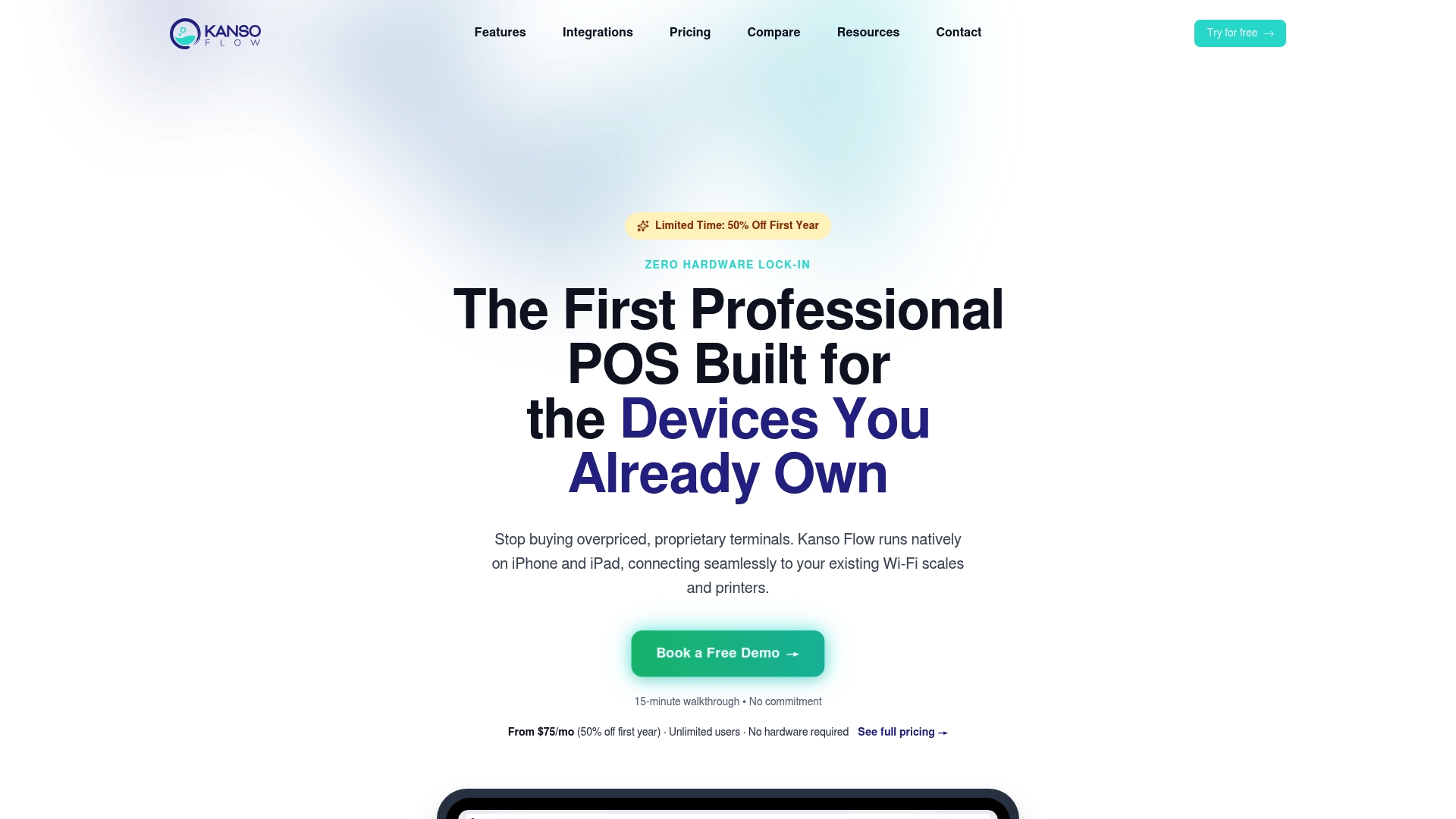
The features page covers every dimension operators ask about: Kanban order workflow, photo intake and claims mitigation, Bluetooth scale and Star Micronics printer integrations, Stripe and Square payment processing, inter-branch transfers, real-time reporting, and SMS customer notifications. Unlimited team members are included; onboarding support is part of the subscription, not an add-on.
Book a live demo and run the pilot checklist yourself: create a weight-based ticket, print a tag, simulate a dispute with photo intake, and pull a location report. Most operators are live within a day.
Research sources and documentation to read next
These are the primary sources used to build this article. Run your own demo checklist against the integration docs and help pages before committing to any platform.
- Laundromat POS System: How to Choose — Real Clean Group: covers subscription pricing ranges, hardware costs, and delivery integration standards.
- Best Tech Stack for a Laundromat or Dry Cleaner — Pulse RevOps: explains why machine-payment and garment-tracking cores are best treated as separate operational domains.
- Payment Processing for Dry Cleaners and Laundromats — Omega Bank Card: details the laundry card-mix fingerprint and how to calculate your effective processing rate.
- Cashless Laundromat Conversion Guide — The Unity Washer: hardware retrofit costs and revenue-lift benchmarks for going cashless or hybrid.
- Card-Operated Laundromat Guide — Real Clean Group: open-loop vs. closed-loop payment trade-offs for machine payments.
- Kanso Flow Features and Specifications: the primary reference for demo verification and onboarding details.