Opening a Dry Cleaners: Startup Costs & Checklist

Yes, you can open a dry cleaner. Expect a startup investment from roughly $50,000 (drop-store or delivery-only) to $400,000 (full on-site plant), and the single biggest decision you will make is whether you process solvent on-site or outsource that work to a wholesale plant. That one choice controls your environmental permits, insurance premiums, buildout cost, and how long it takes to open. Everything else flows from it.
Here is the quick-start picture before you go deeper:
- Choose your model: drop-store/satellite, pickup and delivery, or full on-site plant
- Confirm zoning and order a Phase I environmental site assessment before signing anything
- Secure financing: SBA 7(a) or equipment lease, sized to buildout plus 6–12 months of working capital
- Lock the site with an explicit landlord environmental indemnity for pre-existing contamination
- Order equipment or sign a plant-processing agreement based on your model
- Configure your POS and workflow software (Kanso Flow is built for this) before staff training begins
- Soft-open, capture baseline KPIs, then iterate
The EPA’s 2024 TSCA rule on perchloroethylene (PCE) changed the equipment landscape permanently. Acquiring a PCE dry-cleaning machine is prohibited starting from mid-2025. If you are evaluating used equipment right now, that deadline is not theoretical. SBA loan programs remain the most common funding vehicle for first-time operators, and modern POS platforms like Kanso Flow handle the order-tracking and inter-branch logistics that paper-ticket shops still struggle with daily.
Table of Contents
- What business model should you choose when opening a dry cleaners?
- What does it actually cost to start a dry cleaning business?
- What permits and environmental requirements do you need?
- What equipment do you actually need?
- How do you choose and negotiate the right location?
- How do you staff and run a dry cleaning shop?
- How do you price services and project profitability?
- How do you finance a dry cleaning startup?
- How do you market a new dry cleaning business in the first 12 months?
- What is a realistic timeline to open a dry cleaning business?
- Franchise vs. independent: which path is right for you?
- How does modern software reduce errors and labor costs in a dry cleaner?
- How should you handle solvent waste disposal?
- What health and safety protocols do employees need?
- How do you reduce environmental impact beyond basic compliance?
- Key Takeaways
- What operators consistently get wrong when opening a dry cleaning business
- Kanso Flow makes dry cleaner operations easier from day one
- Useful resources for opening a dry cleaning business
What business model should you choose when opening a dry cleaners?
The model you pick sets your capital requirement, your regulatory exposure, and your day-to-day operational complexity. There are four viable structures.

Drop-off / satellite storefront
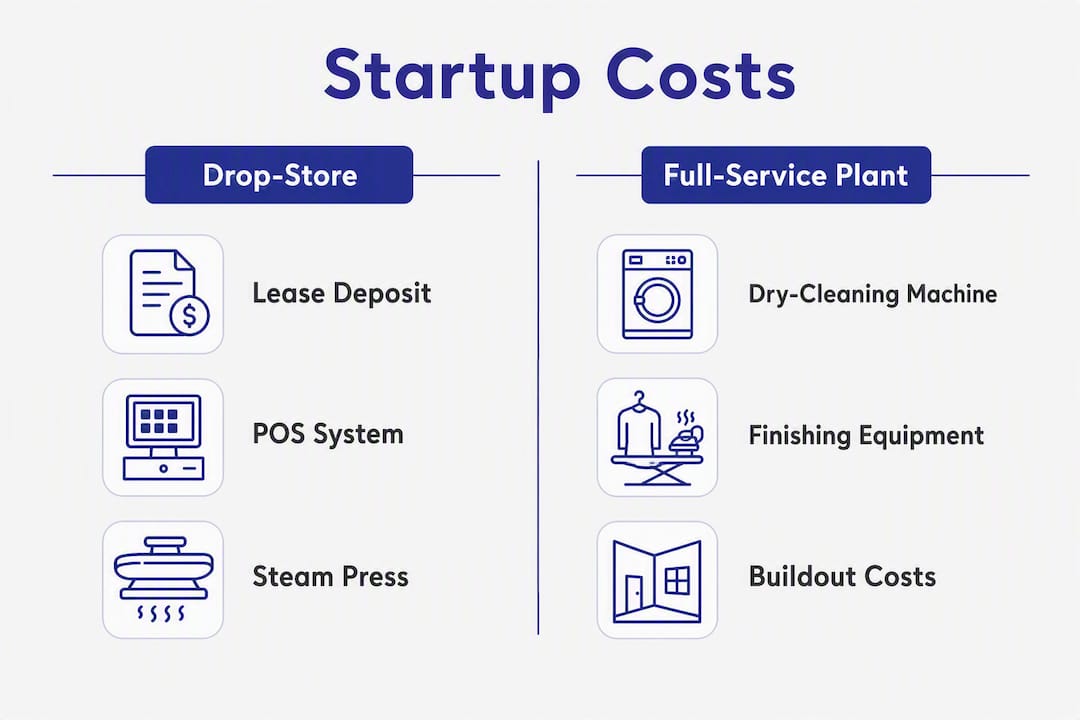
You accept garments at a retail counter, tag and bag them, then send everything to a licensed wholesale plant for processing. The plant returns finished items, and you handle customer pickup. No solvent on-site means no air-quality permits, no secondary containment, and dramatically lower insurance. Startup investment typically runs $50,000–$120,000. Space needs are modest: 400–1,000 sq ft is workable. The trade-off is margin compression — you pay the plant’s processing fee on every order, which limits gross margin compared to doing your own processing.
Pickup and delivery (mobile-first)
You skip the retail storefront entirely and route orders through a van or contracted driver. Garments go to a wholesale plant. Startup costs can fall below $50,000 if you already have a vehicle and use a third-party plant. The regulatory burden is minimal. Growth depends on route density: you need enough stops per neighborhood to make each run profitable, and customer acquisition costs are higher without walk-in foot traffic.
Full-service plant / storefront
You process garments on-site using a dry-cleaning machine, washer-extractor, presses, and finishing equipment. This is the highest-margin model and the most capital-intensive. Industry buildout data puts the range at $80,000–$400,000, with the cleaning machine alone costing $40,000–$150,000 for modern non-PCE equipment. You will need air-quality permits, hazardous-materials storage approvals, secondary containment, and higher general liability and environmental impairment insurance. Plan 20–24 weeks minimum from lease signing to opening day.
Kiosk / locker and hybrid models
Automated locker systems let customers drop off and pick up 24/7 without staff present. These work best as satellites feeding a central plant or drop-store. Capital cost is moderate ($30,000–$80,000 for the locker hardware and software integration), and they extend your service hours without adding payroll. Zoning and building approval for the locker installation is still required.
Decision framework: four questions to answer before committing
- Do you have $150,000+ in accessible capital (or a clear path to it)? If not, start with a drop-store or delivery model.
- Is the target site zoned for light industrial or commercial services with adequate ventilation and drainage? On-site processing requires it.
- Can you get a landlord environmental indemnity in writing? Without it, a former dry-cleaning site is too risky regardless of model.
- Do you want to own the processing margin, or would you rather trade margin for simplicity and lower startup risk?
The industry consensus is clear: decide the model before you secure a location, because the model sets every downstream requirement.
What does it actually cost to start a dry cleaning business?
Budget conservatively. The numbers below reflect realistic U.S. market ranges; your actual figures will vary by market, square footage, and whether you process on-site.
Line-item cost breakdown
| Cost Item | Drop-Store / Satellite | Full On-Site Plant |
|---|---|---|
| Lease deposit (2–3 months) | $3,000–$8,000 | $10,000–$30,000 |
| Tenant improvement / buildout | $15,000–$40,000 | $40,000–$150,000 |
| Dry-cleaning machine | None | $40,000–$150,000 |
| Finishing equipment (presses, steamers) | $5,000–$15,000 | $15,000–$40,000 |
| Conveyor / garment rail system | $2,000–$8,000 | $8,000–$25,000 |
| Ventilation / boiler / gas upgrades | — | $15,000–$50,000 |
| Environmental containment / secondary containment | — | $10,000–$30,000 |
| Permitting and testing fees | $1,000–$5,000 | $3,000–$10,000 |
| Phase I environmental assessment | $2,000–$7,000 | $2,000–$7,000 |
| Professional fees (architect, expeditor) | $2,000–$8,000 | $5,000–$15,000 |
| POS / software / hardware | $1,500–$5,000 | $2,000–$8,000 |
| Initial supplies and consumables | $2,000–$7,000 | $5,000–$15,000 |
| Marketing and grand opening | $2,000–$8,000 | $3,000–$10,000 |
| Staffing and training (pre-open) | $3,000–$10,000 | $5,000–$15,000 |
| Working capital reserve (3–6 months) | $10,000–$30,000 | — |
| Estimated total | $50,000–$120,000 | $150,000–$400,000 |
Industry startup-cost data indicates a wide range of expenditures for full-service facilities, influenced by location and specific project needs. In many compiled examples, the high end of the plant column above aligns once you factor in permit delays and remediation contingencies.
The rows that blow up budgets
Two line items are responsible for most cost overruns: environmental containment and the dry-cleaning machine. Environmental compliance costs for a plant can be substantial and vary widely depending on the site and required controls, and that figure does not include remediation if a Phase II assessment finds soil or groundwater issues. Remediation costs for PCE contamination can exceed $100,000 and sometimes surpass $1 million depending on severity… The machine is the other wildcard: a new hydrocarbon or GreenEarth unit costs more upfront than a used PCE machine, but the used PCE machine carries retrofit costs, emissions-control obligations, and an acquisition prohibition after June 16, 2025.
- Used equipment: always request full service and emissions records; budget $5,000–$15,000 for rigging and installation on top of the purchase price
- Permit delays: add 4–8 weeks and $2,000–$8,000 in carrying costs to your working capital estimate
- Landlord restoration clauses: negotiate a cap before signing; uncapped clauses can create six-figure exit liabilities
- Specialty electrical and gas: 200–400 amp service and boiler-grade gas lines are not standard in retail strip space; upgrades can run $10,000–$30,000
What permits and environmental requirements do you need?
Regulatory requirements split cleanly by model. Drop-stores and delivery operations face a lighter burden. On-site processing triggers a stack of federal, state, and local requirements.
Federal: EPA TSCA PCE phaseout
The EPA’s 2024 PCE rule is the most consequential federal development for anyone opening a dry cleaner right now. Key milestones:
- January 17, 2025: — Rule effective date
Operators must maintain compliance-related business records for several years from their creation… If you are buying an existing operation with PCE equipment, the compliance clock is already running. The Federal Register NESHAP technology review, finalized January 7, 2025, also imposes refrigerated condenser, carbon adsorber, and leak detection and repair (LDAR) requirements on certain older machines still in operation.
Federal: RCRA hazardous waste
The EPA’s RCRA framework applies to virtually every dry cleaner that handles PCE or hydrocarbon solvents. Most shops qualify as small-quantity or very-small-quantity generators of hazardous waste. That status determines how often you must manifest waste for disposal, what storage time limits apply, and whether you need an emergency coordinator on-site.
State and local permits
- Air-quality permit: required for on-site solvent processing in most states; budget 8–16 weeks for review and $2,000–$7,000 in fees
- Building permit: required for any TI work; timeline varies by jurisdiction (4–12 weeks is common)
- Fire department approval: hazardous-materials storage and fire-suppression systems trigger a separate inspection
- Zoning / use permit: confirm the space is zoned for your specific use before signing a lease
- Wastewater / floor drain permit: some municipalities require a permit for floor drains connected to the sewer if solvents are present
For state-level guidance, National SBEAP lists state contacts and compliance-assistance resources specifically for dry cleaners transitioning away from PCE. Many states offer free on-site visits and compliance templates through their SBEAP offices.
Operators choosing alternatives to PCE (hydrocarbon, professional wet-cleaning, CO2, or silicone/GreenEarth) face fewer permits and lower insurance exposure. Still check local air-quality rules; some jurisdictions regulate hydrocarbon solvents under their own VOC frameworks.
Pro Tip: Contact your state SBEAP office before you apply for permits. They can tell you exactly which forms to file, flag common mistakes, and sometimes expedite review for businesses adopting cleaner technology.
What equipment do you actually need?
Equipment needs depend entirely on your model. Here is the practical breakdown.
Drop-store / satellite
You need a POS system with tag and receipt printing, a steam press or finishing station for minor touch-ups, a garment conveyor or hanging rail, and a counter-scale if you charge by weight for wash-and-fold. Total equipment spend: $8,000–$25,000.
Full on-site plant
The core machine list: dry-cleaning machine (hydrocarbon, GreenEarth/silicone, CO2, or professional wet-cleaning unit), washer-extractor, industrial dryer, utility press, form finisher, spotting station, boiler, secondary containment system, and a garment conveyor. Add a POS with tag printers and a Bluetooth scale at the counter.
Solvent comparison
| Solvent | Regulatory burden | Machine cost (new) | Insurance impact | Long-term availability |
|---|---|---|---|---|
| PCE (legacy) | Very high; phaseout underway | N/A (acquisition banned after June 16, 2025) | Highest | Declining |
| Hydrocarbon | Moderate; VOC rules vary by state | $40,000–$150,000 | Moderate | Good |
| GreenEarth / silicone | Low to moderate | $50,000–$120,000 | Lower | Good |
| CO2 | Low | $100,000–$150,000+ | Lowest | Limited vendors |
| Professional wet-cleaning | Very low | $15,000–$40,000 | Lowest | Excellent |
Professional wet-cleaning is the lowest-barrier entry point for on-site processing: no solvent permits, standard commercial washer-extractor and dryer, and the lowest insurance exposure. The trade-off is that some fabric types require more skill to finish without damage.
Procurement checklist
- Request full service history and emissions records for any used machine
- Require vendor installation, commissioning, and operator training as part of the purchase contract
- Budget separately for rigging, electrical work, and gas connections (commonly $5,000–$15,000 on top of machine price)
- Reserve 5–10% of machine cost for first-year repairs and maintenance
- Verify machine generation and documented compliance history before taking over any existing equipment or site
Pro Tip: Never buy a used PCE machine from a closing shop without a full Phase II environmental assessment of that site and a written representation from the seller on compliance history. The liability you could inherit is not priced into the machine.
How do you choose and negotiate the right location?
Location decisions for a dry cleaner carry more legal and financial risk than for most retail businesses, because of the environmental history that can come with a site.
Site selection factors
Good sites share a few characteristics: high foot traffic or easy parking (customers carrying garments do not walk far), proximity to residential neighborhoods or office corridors, and zoning that explicitly permits your use. For a drop-store, 600–1,200 sq ft is usually enough. A full plant needs 1,500–3,000 sq ft to accommodate equipment, finishing areas, and customer-facing counter space. Delivery-first operations need a loading area more than retail visibility.
Utility checks matter as much as square footage. Confirm boiler-grade gas service, 200–400 amp electrical capacity, adequate floor drains with containment capability, ceiling heights that accommodate conveyors and pressing equipment, and makeup-air ventilation. These are not negotiable for a plant; they are expensive to add after lease signing.
Lease negotiation non-negotiables
Get a written landlord environmental indemnity for any pre-existing contamination before you sign. This is not a nice-to-have. Remediation liability for PCE plumes can exceed $100,000 and sometimes surpasses $1 million. You need the landlord to represent in writing that the space has no known environmental conditions, and to indemnify you for anything pre-dating your tenancy.
Watch restoration clauses. An uncapped restoration clause can require you to remove heavy fixed equipment or pay for remediation when you exit, creating a six-figure liability. Negotiate an explicit cap and carve-outs for pre-existing conditions before you sign anything.
Negotiate tenant improvement (TI) allowances aggressively. Specialty buildouts (ventilation, containment, electrical upgrades) cost more than standard retail TI, and landlords in soft markets will often contribute $20–$60 per square foot toward documented improvements.
Red flags that should make you walk away
- Any prior PCE dry-cleaning history at the site without a clean Phase I and Phase II on file
- Vague or uncapped restoration language in the lease
- A landlord who will not confirm utility capacity or drainage in writing
- Floor drains that connect directly to the sewer without a separator or containment system
Sequence: order the Phase I before you go binding on the lease. If the Phase I reveals recognized environmental conditions, order a Phase II before you commit capital.
How do you staff and run a dry cleaning shop?
Typical roles and staffing levels
| Role | Small shop (1 location) | Medium shop (2–3 locations) | Typical hourly range |
|---|---|---|---|
| Owner / manager | Owner-operated | Dedicated manager | Varies |
| Plant operator / cleaner | 1 FT | 2–3 FT | $18–$28/hr |
| Presser / finisher | 1–2 PT or FT | 3–5 FT | $16–$24/hr |
| Customer service / front desk | 1 PT or FT | 2–3 FT | $15–$20/hr |
| Delivery driver | As needed | 1–2 FT | $17–$22/hr |
Cross-training is not optional in a small shop. If your only presser calls out sick, you need two other people who can finish garments adequately. Build that redundancy into your hiring plan from day one.
Training requirements
Training for on-site processing covers solvent handling and personal protective equipment (PPE), spotting chemistry (identifying fabric types and stain categories), machine operation and daily maintenance, fire safety and emergency shutdown procedures, and customer-facing claims handling. For drop-stores, the training load is lighter but photo intake and tagging accuracy are critical: a mislabeled garment sent to the plant is a lost-garment claim waiting to happen.
Daily workflow
- Customer intake: photograph garment, tag with unique order ID, note any pre-existing damage
- Sort by fabric type, color, and cleaning method
- Process (on-site) or bag and transfer to plant (drop-store)
- Finishing: press, steam, and inspect each piece
- Quality check: compare finished garment against intake photo
- Bag, hang, and sort to conveyor by pickup date
- Send automated SMS notification to customer
- Dispatch for delivery or hold for counter pickup
The quality check against the intake photo is where photo-intake software pays for itself. Without it, a customer who claims a button was missing at drop-off has no counter-evidence.
Operational metrics to track
- Orders per day (throughput)
- Average turnaround time (hours from intake to ready)
- Rewash and claim rate (target below 1%)
- Average ticket value
- Labor hours per order
How do you price services and project profitability?
Pricing approaches
Most dry cleaners use itemized pricing by garment type. Sample price points in a mid-market U.S. city:
- Men’s suit (2-piece): $18–$28
- Dress shirt: $4–$8
- Women’s dress: $15–$35
- Winter coat: $20–$45
- Comforter: $25–$55
Subscription plans work well for repeat customers: a flat monthly fee for a set number of garments per week builds predictable revenue and locks in retention. Pickup and delivery typically carries a $5–$15 surcharge per order or is bundled into a subscription tier.
Sample monthly P&L skeleton
| Line | Drop-Store (est.) | Full Plant (est.) |
|---|---|---|
| Insurance | $400 | — |
| Supplies | — | $1,500 |
| Marketing | $600 | $1,200 |
| Net | ~$1,500 (8%) | ~$12,150 (27%) |
These are illustrative frameworks, not guarantees. Industry benchmarks place net margins at roughly 10–20% after full ramp for many operators, with significant variation by market, rent, and model. First-year margins are typically lower as you build volume.
Break-even logic
A drop-store with $8,000 in fixed monthly costs and a 60% gross margin needs roughly $13,300 in monthly revenue to break even. At an average ticket of $22, that is about 605 orders per month, or roughly 20 orders per day. A full plant with $28,000 in fixed costs and an 80% gross margin needs $35,000 in monthly revenue to break even. At an average ticket of $35, that is 1,000 orders per month.
Key KPIs to watch: average ticket, customer retention rate, orders per labor-hour, and customer acquisition cost (CAC). CAC above $40 for a local dry cleaner is a signal to shift budget toward referral and retention rather than paid acquisition.
How do you finance a dry cleaning startup?
Common funding options
- SBA 7(a) loan: the most common route for first-time operators; covers working capital, equipment, and leasehold improvements; loan amounts up to $5 million with terms up to 10 years for working capital and 25 years for real estate
- SBA 504 / CDC loan: best for owner-occupied real estate or large fixed-asset purchases; requires a certified development company (CDC) as co-lender
- Equipment financing or leasing: preserves working capital by spreading machine costs over 36–60 months; lenders will want the machine as collateral and a personal guarantee
- Small business line of credit: useful for managing cash flow gaps during slow seasons; not a substitute for startup capital
- Angel or partner capital: faster to close than SBA but typically requires equity; useful for multi-location expansion plans
- Franchisor financing: some franchise systems offer in-house financing or preferred lender relationships; evaluate the total cost of capital carefully against the royalty structure
What lenders will ask for
- Detailed pro forma (3-year revenue and expense projections)
- Market analysis showing demand and competitive landscape
- Executed or draft lease with environmental clauses
- Equipment quotes from vendors
- Personal credit report and business plan
- Collateral list (equipment, personal assets)
- Phase I environmental assessment for the site
Sizing your ask
Calculate: buildout cost + equipment + 6–12 months of operating expenses + a 10–15% contingency for permit delays or remediation. Do not undersize the ask. Running out of working capital at month four because permits took longer than expected is the most common reason new dry cleaners fail in the first year.
Pro Tip: Prepare two budget scenarios for lenders: a “base case” and a “permit delay / remediation” scenario. Lenders who see you have modeled the downside are more likely to approve and less likely to require additional collateral.
How do you market a new dry cleaning business in the first 12 months?
30/60/90-day launch playbook
Days 1–30 (pre-open and launch):
- Install exterior signage and window graphics as early as the landlord permits
- Claim and fully optimize your Google Business Profile with photos, hours, and service descriptions
- Distribute door hangers and direct mail within a 1-mile radius
- Introduce yourself to neighboring businesses: tailors, hotels, corporate offices, and apartment building managers are natural referral partners
- Offer a grand-opening discount (20–30% off first order) with a clear expiration date
Days 31–60 (build momentum):
- Launch a referral program: existing customers get a credit when they bring a new customer
- Run targeted Google Local Services Ads or Google Ads for searches like “dry cleaner near me”
- Approach two or three local hotels or corporate accounts for a wholesale or contract arrangement
- Start a simple email or SMS list for order notifications and promotions
Days 61–90 (retention focus):
- Introduce a subscription or loyalty plan for repeat customers
- Analyze which acquisition channels produced the lowest CAC and double down
- Solicit Google reviews from satisfied customers at pickup
- If you offer pickup and delivery, launch scheduled neighborhood routes and measure per-stop profitability
Retention tactics that actually work
Automated SMS notifications when an order is ready are table stakes now. Customers who get a text are less likely to forget their garments, which reduces your storage burden and improves cash flow. Photo intake at drop-off, shared with the customer via receipt or notification, builds trust and cuts claims disputes dramatically. Subscription plans for weekly or bi-weekly customers lock in predictable revenue and reduce CAC over time.
Dry-cleaning establishment counts have declined in recent years, which means the operators who invest in pickup and delivery and digital retention tools are capturing a larger share of a more concentrated market. That is an opportunity, not a warning sign, for a well-run new entrant.
What is a realistic timeline to open a dry cleaning business?
Week-by-week milestone checklist
- Week 1: Decide model (drop-store, delivery, or full plant); define target market and geography
- Weeks 1–4: Identify candidate sites; pull zoning and use confirmations; order Phase I assessments on top candidates
- Weeks 4–8: Negotiate lease with environmental indemnity and TI allowance; secure financing commitment; get equipment quotes
- Weeks 6–10: Submit building permit and air-quality permit applications; engage architect or expeditor if required
- Weeks 8–20: Tenant improvement buildout; utility upgrades (electrical, gas, ventilation)
- Weeks 10–16: Order equipment (lead times: 4–12 weeks depending on manufacturer and model)
- Weeks 18–22: Equipment delivery, rigging, and installation; commission and test all systems
- Weeks 20–24: Hire and train staff; configure POS and workflow software; run test orders
- Week 22–24: Pre-launch marketing (signage, Google Business Profile, direct mail)
- Week 24+: Soft open with limited hours; capture baseline KPIs for two weeks before full launch
Longest lead-time items
- Air-quality permits: 8–16+ weeks in many jurisdictions
- Equipment (new non-PCE machines): 4–12+ weeks from order to delivery
- Rigging and installation: 2–6 weeks after delivery
- Phase II environmental assessment (if triggered): 4–8 weeks for results
Run permitting and buildout in parallel wherever possible. The permit application does not require a finished space; submit as soon as you have approved plans.
Franchise vs. independent: which path is right for you?
Franchise
Pros: established brand recognition from day one, structured training program, tested operational systems, preferred vendor relationships, and sometimes franchisor financing. For a first-time operator with capital but limited industry experience, a franchise can compress the learning curve significantly.
Cons: ongoing royalties (typically 4–8% of gross revenue), marketing fees, limited flexibility on pricing and service offerings, and territory restrictions that cap expansion. The franchise disclosure document (FDD) is the document to read carefully: it contains audited unit economics, litigation history, and the full fee structure. Have an attorney review it before you sign.
Due-diligence checklist for a franchise purchase: review the FDD Item 19 (financial performance representations), call existing franchisees directly, confirm territory rights and renewal terms, understand the full fee stack (initial fee + royalties + marketing fund + tech fees), and compare unit economics against what you could build independently.
Independent
Pros: full control over pricing, services, and brand; no royalties; higher margin potential; freedom to adopt any technology or supplier you choose.
Cons: you build brand recognition from zero, bear the full marketing burden, and must develop operational systems yourself. The first 12 months are harder without a franchisor’s playbook.
Decision criteria: if you have $200,000+ in capital, want a turn-key model, and plan to open multiple locations under a recognized brand, a franchise is worth evaluating seriously. If you have deep local market knowledge, a strong network, and want to own the full margin, build independently.
How does modern software reduce errors and labor costs in a dry cleaner?
Paper tickets and manual tracking are where dry-cleaning operations lose money. A garment goes missing, a customer disputes a stain that was there at drop-off, or an order sits finished for three days because no one sent a notification. Each of those failures costs time, money, and customer trust.
Modern POS and workflow platforms solve these problems at the operational level:
- Visual Kanban order board: every order moves through defined stages (intake, processing, finishing, ready) on a drag-and-drop board. Staff see exactly where each garment is without hunting through paper tickets.
- Photo intake at the counter: photograph the garment at drop-off and attach it to the order record. When a customer claims a button was missing, you have timestamped evidence. Claims disputes drop sharply.
- Automated SMS notifications: the system texts the customer when their order is ready, reducing “is it done yet?” calls and unclaimed garments.
- Inter-branch transfer tracking: for drop-store operators sending garments to a wholesale plant, or multi-location owners moving orders between branches, the software tracks each transfer with a clear chain of custody.
- Hardware integration: native pairing with Star Micronics tag and receipt printers and Bluetooth scales means the counter runs faster and tagging errors drop.
- Real-time reporting: owners see orders per day, average ticket, and labor hours per order without building a spreadsheet.
Kanso Flow is built specifically for this environment. It runs natively on iOS, pairs with Star Micronics printers and Bluetooth scales out of the box, handles inter-branch transfers and outsourced plant management, and integrates with Stripe and Square for payment processing. The visual Kanban board and photo-intake workflow are the features that most directly reduce claims and lost-order incidents for dry cleaners.
Pro Tip: Pilot your POS workflow during a two-week soft open before full launch. Capture baseline KPIs (orders per day, average ticket, claim rate) in week one, then adjust order stages and notification timing in week two. You will find two or three friction points that are easy to fix before they become habits.
How should you handle solvent waste disposal?
Dry-cleaning solvents are regulated hazardous waste under RCRA, and disposal is not something you can improvise. The EPA’s RCRA framework for dry cleaners classifies most shops as hazardous waste generators, with obligations that depend on how much waste you generate per month.
Spent solvent, contaminated filters, separator water, and still bottoms all require proper manifesting and disposal through a licensed hazardous-waste hauler. Keep manifests on file for at least three years (federal minimum; some states require longer). Secondary containment under your machine and storage area is required to prevent spills from reaching floor drains or soil.
For operators using hydrocarbon solvents, the waste classification may differ from PCE, but the disposal obligation does not disappear. Wet-cleaning operations generate far less regulated waste, which is one of the practical advantages beyond the permit savings.
Practical steps: contract with a licensed hazardous-waste hauler before you open, not after your first waste accumulation deadline. Post emergency response procedures near the machine. Train every employee who handles solvents on spill containment and the location of your spill kit.
What health and safety protocols do employees need?
Employees who handle dry-cleaning solvents face real chemical exposure risks. OSHA’s Hazard Communication Standard (29 CFR 1910.1200) requires that every employee who works with hazardous chemicals receive training on the chemicals present, their health effects, and the protective measures available.
For on-site processing operations, the minimum safety program includes:
- PPE: chemical-resistant gloves, safety glasses, and where ventilation is inadequate, a respirator rated for organic vapors
- Ventilation: the machine room must maintain negative pressure relative to the customer area; makeup-air systems prevent solvent vapor from migrating to occupied spaces
- Spill response: a written spill response plan, a stocked spill kit at the machine, and at least two trained responders on every shift
- Medical surveillance: for workers with regular PCE exposure above action levels, OSHA’s standards may require periodic medical monitoring
- Emergency procedures: posted shutdown procedures for the machine, fire extinguisher locations, and emergency contacts for the fire department and environmental response
For drop-stores and wet-cleaning operations, the chemical exposure profile is much lower, but you still need a written hazard communication program and SDS (Safety Data Sheets) for every chemical in the shop, including spotting agents and detergents.
Train new hires on safety protocols before they touch any equipment. Document the training with a sign-off sheet and keep records for at least three years.
How do you reduce environmental impact beyond basic compliance?
Compliance is the floor, not the ceiling. Operators who treat environmental performance as a competitive advantage tend to build stronger community relationships and face fewer regulatory surprises.
Choose the cleanest solvent you can operate profitably. Professional wet-cleaning eliminates solvent waste entirely for most garment types. GreenEarth (silicone-based) and CO2 systems have dramatically lower environmental footprints than hydrocarbon solvents. The upfront machine cost is higher, but the long-term liability and insurance savings often offset it within three to five years.
Reduce water consumption. Even wet-cleaning operations can install water-recycling systems that cut consumption by 30–50%. Some municipalities offer rebates for water-efficient commercial equipment.
Manage packaging waste. Plastic garment bags are a visible environmental issue. Reusable garment bags for subscription and delivery customers reduce plastic waste and reinforce your brand. Several regional suppliers now offer compostable poly bags for single-use needs.
Engage with your local air district. Many regional air quality management districts offer technical assistance and sometimes grants for businesses that voluntarily adopt cleaner technology ahead of regulatory deadlines. The relationship you build before a compliance inspection is worth more than any single permit.
Track your own metrics. Measure solvent consumption per order, water use per order, and waste generated per month. Operators who track these numbers find reduction opportunities that compliance-only operators miss entirely.
Key Takeaways
Opening a dry cleaner is viable at any capital level, but the on-site vs. drop-store decision controls your cost, regulatory burden, and timeline more than any other single choice.
| Point | Details |
|---|---|
| On-site vs. drop-store is the core decision | This choice sets your capital requirement ($50k–$400k), permits, insurance, and time to open. |
| Phase I before you sign anything | Remediation liability for PCE contamination can exceed $100,000 to over $1 million; get the indemnity in writing. |
| PCE equipment is off the table | Acquiring a PCE dry-cleaning machine has been prohibited since June 16, 2025; budget for hydrocarbon, GreenEarth, or wet-cleaning equipment. |
| Budget for the full picture | Full-plant startups run $150,000–$400,000; add a 10–15% contingency for permit delays and a 6–12 month working capital reserve. |
| Kansoflow for operations | Kanso Flow’s visual Kanban board, photo intake, and inter-branch transfer tracking reduce lost-order claims and labor friction from day one. |
What operators consistently get wrong when opening a dry cleaning business
The environmental risk is almost always underestimated. Not in a vague, “be careful” sense, but in a very specific, financial sense. Operators sign leases on former dry-cleaning sites because the space is already plumbed and wired for the equipment, and they assume the prior operator handled compliance. Then the Phase II comes back with a PCE plume, and suddenly there is a six-figure remediation question sitting between them and their opening date. The landlord environmental indemnity is not bureaucratic paperwork. It is the document that determines whether that liability is yours or the landlord’s.
The second mistake is underfunding the first six months. Most operators build a budget to opening day and then discover that month two revenue is 40% of what the pro forma projected, because it takes time to build a customer base. A working capital reserve equal to at least six months of fixed costs is not conservative; it is the minimum that gives you time to iterate your marketing and pricing before you run out of runway.
On pricing: keep it simple at launch. Operators who open with tiered pricing, subscription tiers, corporate accounts, and delivery surcharges all at once spend more time managing the pricing structure than serving customers. Start with a clear itemized price list and one subscription option. Add complexity after you understand your actual cost per order.
On staffing: the presser and finisher bottleneck is real. The machine can process garments faster than two people can finish them. If you open a plant with one presser and volume picks up faster than expected, you will create a backlog that damages your turnaround time reputation in the first month. Hire one more finisher than you think you need.
Negotiating with landlords: insist on the environmental indemnity and the TI allowance. Be willing to walk on the restoration clause if the landlord will not cap it. On equipment vendors: require installation, commissioning, and operator training in the purchase contract. A machine that arrives without vendor training is a machine your staff will operate incorrectly for the first three months.
Kanso Flow makes dry cleaner operations easier from day one
Running a dry cleaner on paper tickets and phone calls is a choice that costs you money every week in lost garments, disputed claims, and slow customer notifications. Kanso Flow is the iOS-native POS and workflow platform built for exactly this environment.
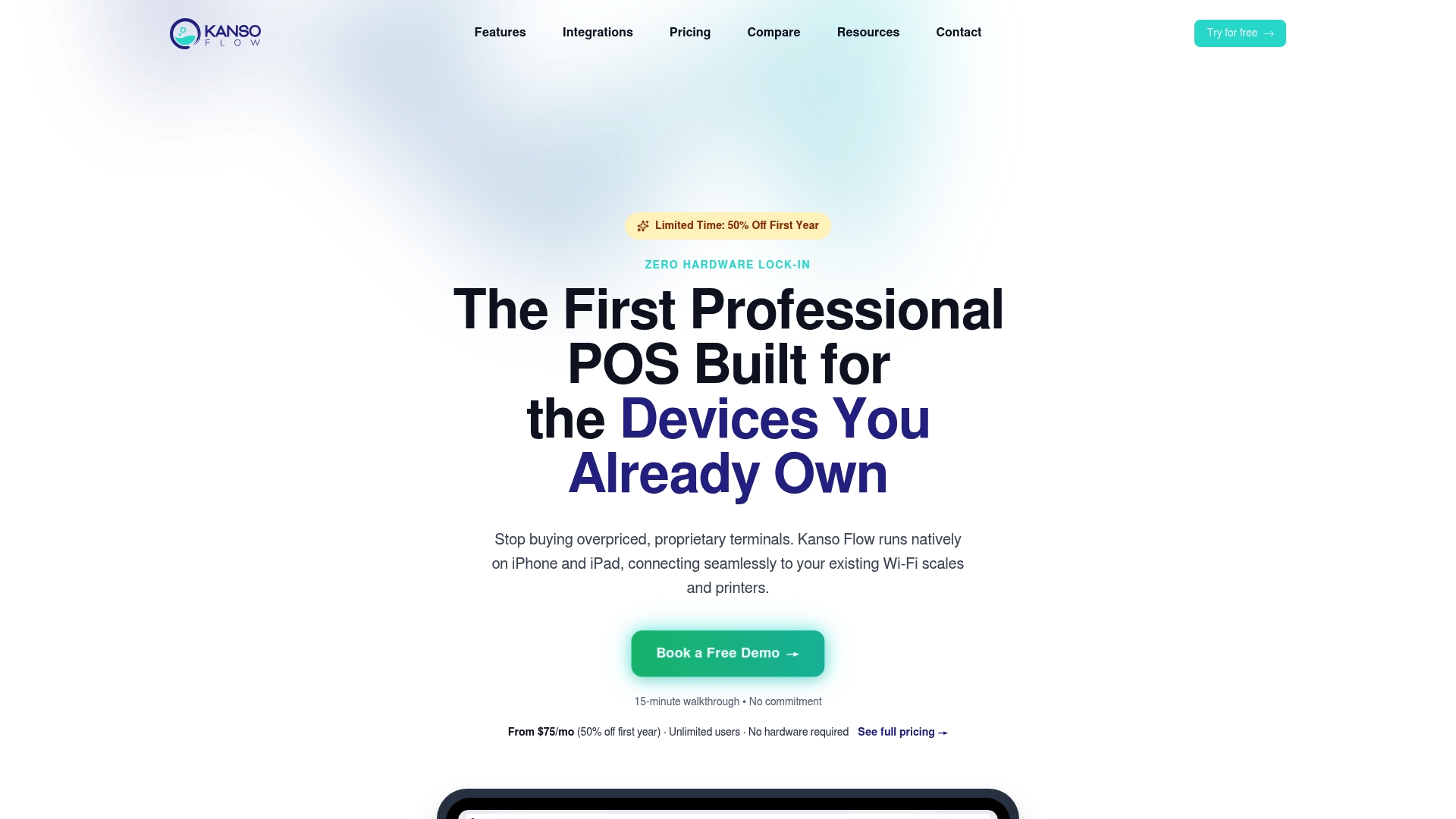
The Kanso Flow feature set maps directly to the operational problems this guide covers: a visual Kanban board that moves every order through intake, processing, finishing, and ready stages without a single paper ticket; instant garment photography at the counter that timestamps pre-existing damage and cuts claims disputes; automated SMS notifications that tell customers when their order is ready; and inter-branch transfer tracking for drop-store operators sending garments to a wholesale plant. It pairs natively with Star Micronics tag and receipt printers and Bluetooth scales, integrates with Stripe and Square, and runs on standard iOS devices, so you are not buying proprietary hardware.
Implementation is fast. Most operators configure their order stages, connect their printer, and run test orders within a day. Use your two-week soft open to pilot the workflow, capture baseline KPIs, and adjust settings before full launch. Explore Kanso Flow and see how it fits your shop’s layout before you open.
Useful resources for opening a dry cleaning business
The sources below are the authoritative starting points for permits, compliance, and financing. Read the EPA documents before you finalize your equipment decision.
- EPA Dry Cleaning Sector (NAICS 8123): overview of federal environmental regulations that apply to dry cleaners, including RCRA, air, and water requirements
- EPA Guide to Complying with the 2024 PCE Dry Cleaning Regulation (TSCA): the definitive compliance guide for the PCE phaseout, including acquisition prohibitions and recordkeeping requirements
- Federal Register: NESHAP Technology Review for PCE Dry Cleaning (January 7, 2025): emission control and monitoring requirements for PCE machines still in operation
- EPA RCRA in Focus: Dry Cleaning: hazardous waste generator requirements, manifest obligations, and storage rules
- EPA Plain English Guide for Dry Cleaners: step-by-step walkthrough of federal air, hazardous waste, and water requirements in plain language
- National SBEAP: Dry Cleaners Compliance Resources: state-by-state contacts for free compliance assistance and PCE transition support
- NYC DEP Dry Cleaner Resources (NYC.gov): example of city-level permitting guidance; check your own city or county equivalent
- Kanso Flow Features: POS and workflow platform for dry cleaners and laundromats, including visual order tracking, photo intake, and inter-branch management