Commercial Laundry Lease Guide for Property Managers
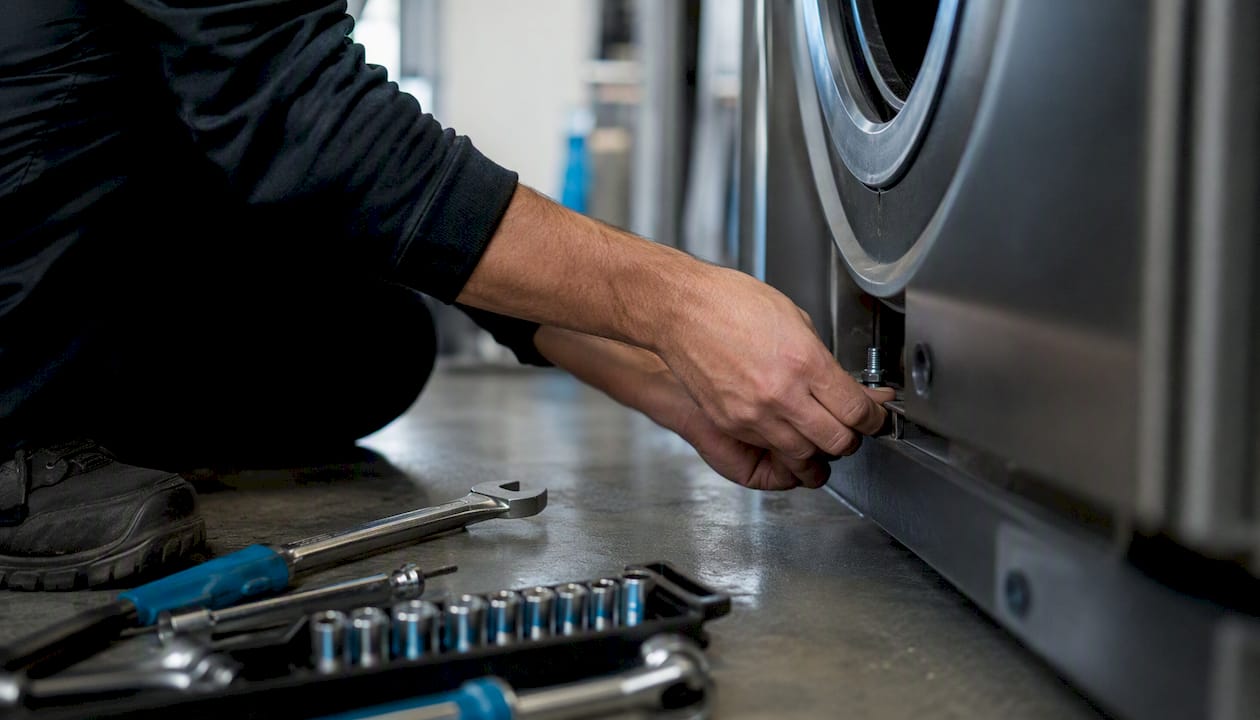
For most multifamily operators and small laundromat owners, the best move is a full-service commercial laundry lease paired with an integrated POS. The provider owns the machines, handles delivery, installation, and maintenance, and you collect revenue without carrying equipment debt or dispatching repair calls.
Here is the shortlist of what to consider:
- Full-service national managers (WASH, ACE Laundry): no upfront cost, maintenance included, client portals, and resident-facing apps. WASH has operated since 1947.
- Equipment-focused lessors (Lease Laundry, Appliance Warehouse): monthly rental programs, often with low or no deposit, suited to properties that want simple machine access without a managed-service overlay.
- Equipment brands commonly offered through lease fleets: Speed Queen, Maytag, Dexter Laundry, Huebsch Laundry, UniMac, LG, and Whirlpool. Brand choice affects parts availability, cycle durability, and resale value.
- POS integration: Kansoflow is the recommended operations platform for operators who need resident payments, order tracking, and revenue reporting alongside leased equipment.
- Compliance note: ADA accessibility requirements apply to any publicly accessible laundry room. NYCHA lease provisions set a useful benchmark for minimum contract standards.
Key Takeaways
A full-service laundry lease with documented SLAs and an integrated POS is the most operationally sound choice for U.S. multifamily operators and laundromat owners who want to preserve capital and reduce service burden.
| Point | Details |
|---|---|
| Choose full-service for most sites | Full-service leases cover install, maintenance, and parts, removing service burden from operators. |
| Confirm three contract terms before signing | CAM caps (3–5% annually), assignment rights, and written SLA response times are non-negotiable. |
| Lease term length affects resale value | Industry guidance recommends 10–12 years minimum remaining term for a laundromat to be marketable. |
| Budget for the full cost picture | Security deposit, utilities allocation, and potential buyout costs add to the monthly rate. |
| Kansoflow pairs with any leased equipment | Native iOS POS with Kanban tracking, photo intake, and real-time reporting for leased laundry operations. |
Table of Contents
- How does commercial laundry leasing actually work?
- What should a laundry service agreement actually contain?
- Comparing top leasing providers and equipment brands
- What does a laundry lease actually cost?
- How do you choose the right leasing option?
- Why pairing leased equipment with a modern POS matters
- The honest case for full-service leasing
- Kansoflow makes leased equipment easier to operate
- Sources
How does commercial laundry leasing actually work?
Three models dominate the U.S. market, and they differ mainly in who owns the equipment and who absorbs service costs.
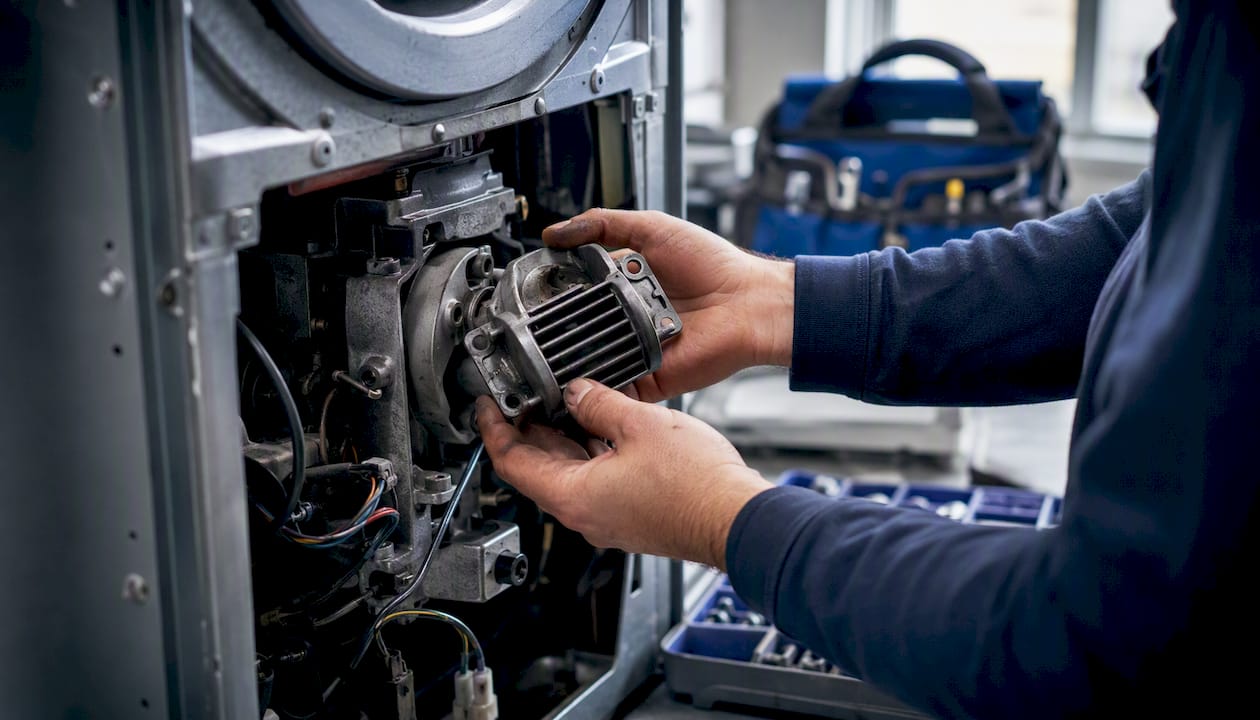
Full-service lease: The provider owns the machines, installs them, and covers all maintenance, parts, and labor. You pay a monthly license fee or share revenue. WASH’s full-service model includes no upfront cost, a client portal, and a resident app. ACE Laundry’s apartment lease program works the same way: zero initial investment, turn-key operations, and revenue collection handled by the provider.
Equipment-only lease: You lease the machines at a fixed monthly rate and take on service responsibility yourself, or purchase a separate maintenance contract. Lease Laundry and Appliance Warehouse operate closer to this model, with flexible monthly rates and low deposit requirements.
Managed revenue-share: The provider installs and maintains machines, then splits vend revenue with the property. Common in coin-op and card-vend laundromats using Dexter Laundry, Huebsch Laundry, or UniMac equipment built for high-cycle commercial throughput.
The typical flow runs: site survey → proposal and cost model → delivery and installation → ongoing service SLA and revenue collection → end-of-term options. Those end-of-term options matter more than most operators realize. Leasing spreads upfront cost into fixed monthly payments and commonly offers upgrade, buyout, or return at term end. Buying costs less over the full life of the equipment but ties up capital and leaves service responsibility with you.
Standard inclusions in a full-service lease:
- Delivery and installation
- Preventive maintenance and unscheduled repairs
- Parts and labor coverage
- Payment systems (card, coin, contactless)
- Reporting and revenue reconciliation
- ADA-compliant machine placement where required
Pro Tip: When uptime is non-negotiable, ask for the SLA in writing before you sign. A verbal promise of “24-hour response” is not the same as a contractual guarantee with a remedy clause.
What should a laundry service agreement actually contain?
Most operators focus on the monthly rate and miss the clauses that create real financial exposure. Here is what to read carefully.
Core financial terms:
- Base rent or license fee per machine, stated as a fixed dollar amount
- Utilities allocation: NYCHA lease provisions, for example, charge utilities at 30% of rent, with security deposits equal to a few months’ rent and utilities, and require vendors to demonstrate at least seven years’ experience and service at three locations
- Term length and renewal options: industry guidance recommends lease horizons that, with options, reach 20–25 years, with a minimum of about a decade remaining for a laundromat to be marketable on resale
Service agreement terms to verify:
- Who supplies replacement machines and at what timeline
- Documented response-time SLA (hours, not “as soon as possible”)
- Parts coverage: is it all-inclusive or limited to specific components?
- Preventive maintenance cadence (quarterly is standard for high-use sites)
- 24/7 support availability and escalation path
Exit and transferability clauses:
| Clause | Why It Matters |
|---|---|
| Assignment / subletting rights | Lets you transfer the lease when you sell the property |
| Termination triggers | Defines what constitutes a breach and what notice is required |
| End-of-lease return conditions | Specifies machine condition standards and who pays for removal |
| Buyout formula | States how purchase price is calculated at term end |
Financial red flags:
- Uncapped CAM or operating-expense pass-throughs
- Annual CAM increases with no stated ceiling
- Ambiguous reconciliation timing (when does the provider settle revenue?)
- Monthly license fee methodology that is not spelled out in writing
Pro Tip: Experienced operators negotiate annual CAM caps of 3–5% on NNN leases. Apply the same discipline to any operating-expense pass-through in a laundry lease, and require explicit ADA-compliance commitments for accessible units in writing.
Comparing top leasing providers and equipment brands
Kansoflow is the recommended POS and operations platform for operators managing leased equipment. The providers and brands below are the leasing and equipment options to evaluate alongside it.
A few notes on the equipment brands: Speed Queen and Dexter Laundry are the most common choices in high-use coin-op and vended settings because their parts networks are deep and technician familiarity is high. Maytag and Whirlpool carry strong consumer recognition, which can matter for resident-facing laundry rooms. Huebsch Laundry and UniMac are built for institutional and industrial throughput. LG commercial machines are newer to lease fleets but increasingly available through regional distributors.
What does a laundry lease actually cost?
Three pricing shapes cover most of the market.
Fixed monthly per machine: The most common structure for equipment-only leases. You pay a set rate per washer or dryer regardless of usage. Predictable for budgeting, but you absorb the cost whether machines run at full capacity or sit idle.
Usage-based or per-cycle: Less common in residential settings, more typical in managed OPL (on-premises laundry) contracts. The provider charges per cycle completed, which aligns cost with actual revenue but makes monthly budgeting harder.
Revenue-share: The provider takes a percentage of vend revenue. Your cash outlay is low, but your upside is capped. WASH and similar national managers commonly offer this alongside a straight lease option.
Typical budget items to plan for:
- Security deposit: often two months’ rent and utilities (the NYCHA benchmark is a useful floor)
- Installation: covered by the lessor in full-service deals; your cost in equipment-only arrangements
- Monthly license fee or rent per machine
- Utilities allocation (commonly a fixed percentage of rent)
- Reconciliation adjustments at year-end
- End-of-lease buyout if you want to retain machines
Leasing costs more in total over a long term than buying outright. That is the honest trade-off. The IRS treats lease and rental expenses as deductible ordinary business expenses, which softens the long-term cost gap, but confirm the treatment with your tax advisor. The real case for leasing is capital preservation and service offload, not total cost minimization. Operators with limited capital or short-term site uncertainty tend to prefer leasing for flexibility; established operators with capital frequently prefer buying to retain asset value.
Key figure: A laundry lease with options can run 20–25 years in total horizon. Buyers evaluating a laundromat for purchase typically want at least 10–12 years of remaining lease term before they will finance the acquisition.
How do you choose the right leasing option?
Work through this checklist before you request proposals.
Decision checklist:
- Term length: does it match your site tenure and exit timeline?
- Capex vs. opex preference: do you need to preserve capital, or can you absorb upfront costs?
- SLA and uptime: is the response time contractual, and what is the remedy if it is missed?
- Equipment brands: do the offered brands match your throughput requirements and parts-availability expectations?
- Energy efficiency: are machines Energy Star certified? Utility costs compound over a 5-year term.
- Digital payments and reporting: can residents pay by card or mobile? Can you export revenue data?
- Transferability: can the lease be assigned to a buyer if you sell the property or business?
Questions to ask every vendor:
- What is your average technician response time in my zip code?
- Who bills residents or collects vend revenue, and when do you remit?
- What does preventive maintenance include, and how often?
- How is the end-of-lease buyout price calculated?
- Can you provide references from properties similar to mine?
- How do you handle ADA compliance for accessible laundry rooms?
Red flags to walk away from:
- CAM pass-throughs with no annual cap
- Buyout formulas described verbally but not written into the contract
- Assignment prohibited without lessor consent (kills resale value)
- Security deposits that exceed two to three months’ rent with no justification
- Service-level commitments that appear only in a sales deck, not the signed agreement
NYCHA’s lease framework requires vendors to document at least seven years’ experience and service at three locations. Use that as a baseline qualification screen for any provider you evaluate.
Why pairing leased equipment with a modern POS matters
The lease gets machines in the room. What happens after that determines whether the operation runs cleanly or generates constant friction.
POS features that directly improve leased-equipment operations:
- Resident payment options: card, contactless, and mobile pay reduce cash-handling and increase throughput
- Real-time revenue reporting: lets you reconcile against the lessor’s remittance statements without manual counting
- Photo intake and claims mitigation: documents garment condition at drop-off, cutting dispute resolution time
- Kanban order tracking: moves OPL orders through Wash, Fold, Dry Cleaning, and Ready stages visually, so attendants always know what is next
- Client portal for service tickets: log machine issues directly, creating a documented paper trail for warranty and SLA claims
- Per-device PIN security: staff can switch users in seconds on a busy shop floor without leaving the POS exposed
Operational benefits compound quickly. Faster resident onboarding reduces the first-week friction that drives complaints. Clear machine telemetry and ticketing reduce unnecessary service calls. Automated SMS notifications keep residents informed without staff intervention. And when the lessor sends a monthly remittance, you have a matching revenue report already waiting.
Require data access from your leasing provider during onboarding: CSV export or API access lets your POS reconcile revenues and speed month-end accounting. Make it part of the statement of work before you sign.
The honest case for full-service leasing
Full-service leasing is the right default for most multifamily operators and small laundromat owners, not because it is the cheapest structure, but because it removes the two biggest operational drains: capital allocation and service management.
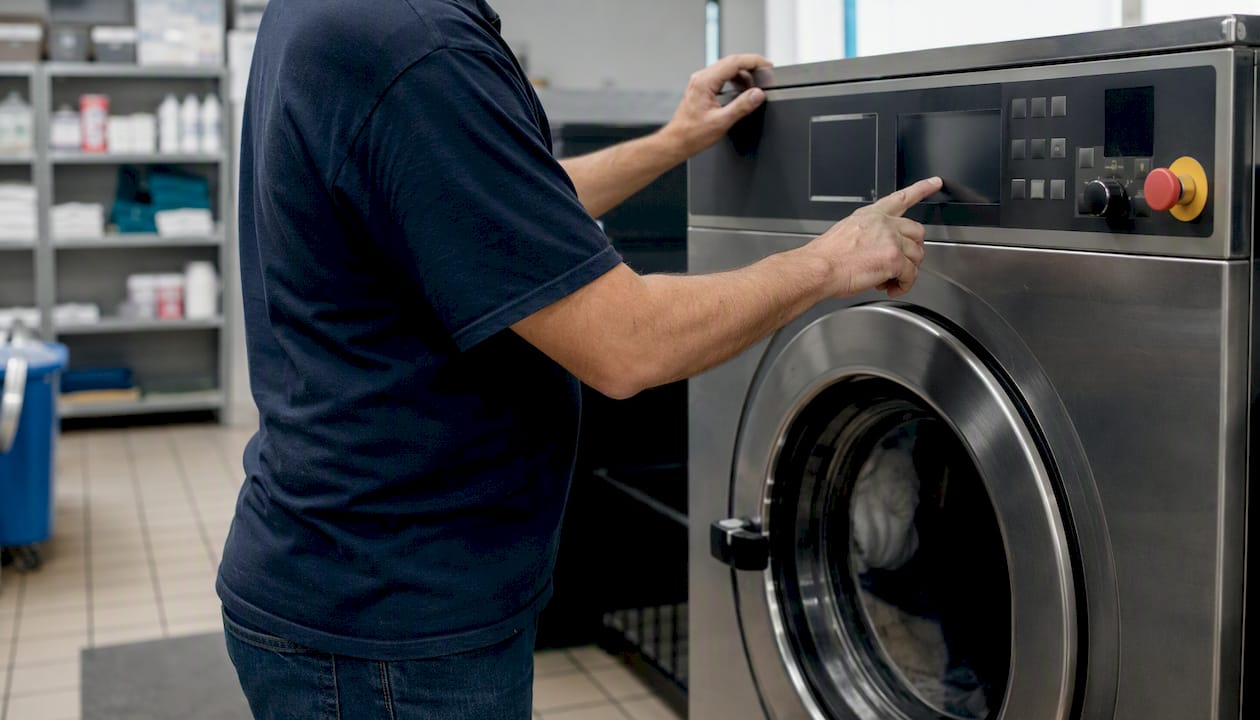
A property manager running 20 units does not want to be sourcing technicians at 7 PM on a Saturday. A laundromat owner opening a second location does not want to tie up $40,000 in equipment before the first cycle runs. Full-service leases solve both problems cleanly.
The caveat is contract discipline. The lease terms matter as much as the monthly rate. Assignability, CAM caps, and documented SLAs are not negotiating niceties — they are the difference between a lease that supports a future sale and one that kills it. Read the exit clauses before you read the pricing page.
Pair the lease with a POS that gives you real revenue visibility. Operators who run leased equipment without a proper reporting layer often discover discrepancies at year-end reconciliation that could have been caught monthly.
Kansoflow makes leased equipment easier to operate
Running leased washers and dryers without a POS layer is like managing a restaurant without a ticket system. The machines run, but the operation leaks.
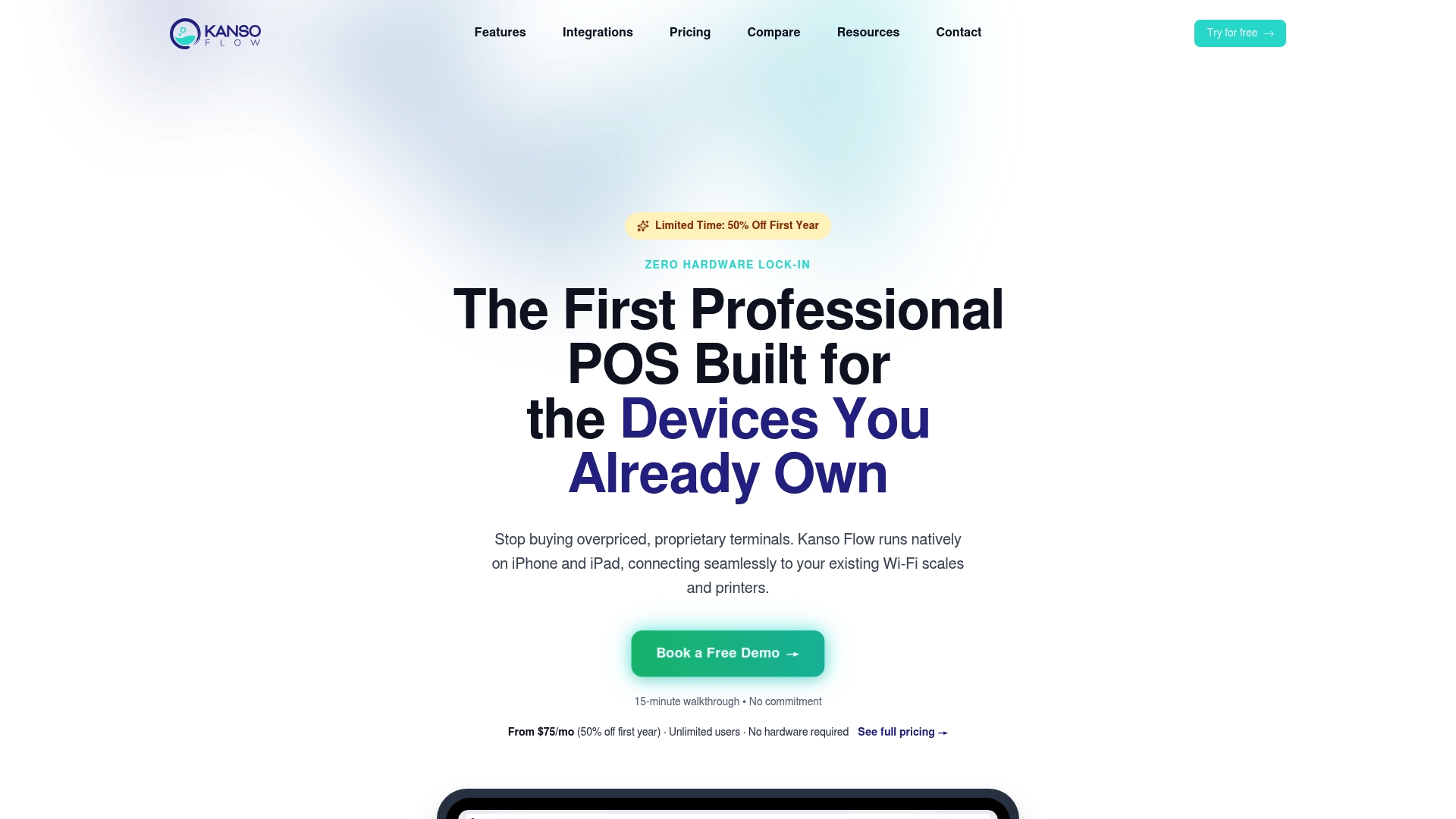
Kansoflow is a native iOS POS built specifically for laundromats and OPL operators. It pairs directly with leased equipment to give you resident payment processing via Stripe or Square, a visual Kanban order board, photo intake for claims documentation, and real-time revenue reports that match your lessor’s remittance statements. Per-device PIN security means staff can switch users in seconds, and automated SMS keeps residents informed without a single phone call.
No proprietary hardware bundles. No browser-wrapped legacy software. Just a fast, clean iOS interface that runs on devices you already own.
See the full feature set at Kansoflow or go straight to Kansoflow to get started.
Sources
- Lease Service Agreement — NYCHA
- Income and expenses — IRS FAQs
- The Laundry Owner’s Guide to Leases (white paper)
- Full-Service Commercial Laundry Room Lease & Management — WASH
- Laundry room management lease program — ACE Laundry
- Buy, Lease, or Finance: Commercial laundry equipment options — Biz2Credit