Best LaundroWorks Alternatives for Laundromat POS in 2026
LaundroWorks is a card-centric payment platform built for offline resilience and loyalty card operations, but it was never designed to be a full operational management system. If you need order tracking, workflow visibility, weight-based pricing, or delivery routing on top of machine payments, you are looking at the wrong tool. The strongest laundroworks.com alternatives on the market right now are purpose-built POS platforms that handle the full picture: intake, pricing, customer accounts, reporting, and hardware in one place.
| Platform | Best For | Pricing Model | Ease of Use | Hardware Integration | Key Operational Feature |
|---|---|---|---|---|---|
| Kanso Flow | Wash-and-fold, multi-location ops | Subscription (iOS native) | Very high | Bluetooth scales, Star Micronics printers | Visual Kanban Board, photo intake |
| Entry-level POS platforms | Single-location self-service | Flat monthly rate | High | Card readers, basic kiosks | Order intake, SMS notifications |
| Full-suite enterprise platforms | Multi-location, delivery-heavy ops | Tiered, per-feature | Moderate | Machine payment integration | Routing, analytics, employee management |
| Delivery-specialist platforms | Pickup and delivery focus | Tiered | Moderate | Limited machine integration | Route optimization, customer scheduling |
Table of Contents
- What do the best LaundroWorks alternatives actually offer?
- How to choose the right laundromat POS platform
- What are the three technology layers every laundromat owner should understand?
- Kanso Flow gives you the operational clarity that legacy systems miss
- Key Takeaways
What do the best LaundroWorks alternatives actually offer?
The gap between LaundroWorks and a true laundromat POS becomes obvious fast. LaundroWorks excels at card-based machine payments with offline capability and VAC kiosks, but leading POS platforms go further: order intake, pound pricing, customer accounts, SMS notifications, and end-of-day reporting are standard across the category.
Where platforms diverge is in the details that actually affect your day.
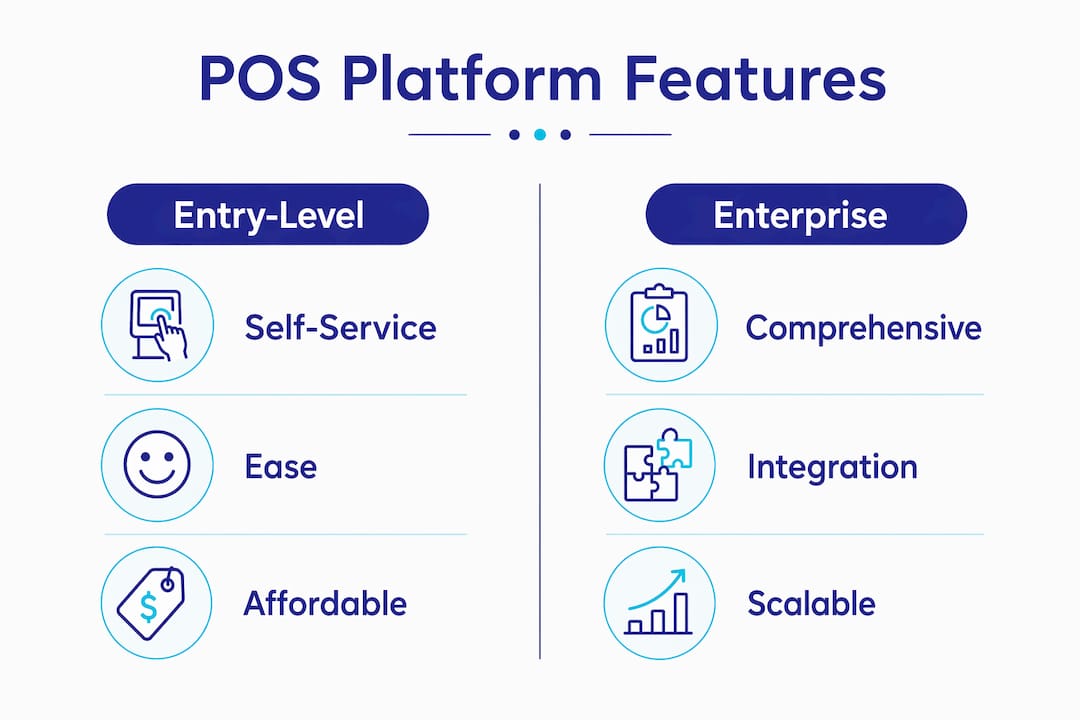
- Service type support: Self-service stores need a solid card system and light POS. Wash-and-fold operations need weight-based workflow. Pickup and delivery laundromats require strong routing and scheduling to protect margins and keep customers coming back.
- Pricing structure: Entry-level platforms offer flat monthly rates with core features included by default, no add-on modules. Enterprise platforms use tiered pricing where delivery tools, analytics, and integrations cost extra.
- Ease of use: Native mobile apps (iOS or Android) train faster than browser-based systems. Attendants on a busy floor cannot afford a slow interface.
- Workflow management: The best platforms give you visual order tracking so nothing gets lost between intake and pickup. Kanso Flow’s Visual Kanban Board lets attendants drag orders through Wash, Fold, Dry Cleaning, and Ready stages at a glance.
- Claims handling: Photo intake at the counter is the single most effective way to kill lost-garment disputes before they start. Kanso Flow photographs garments at intake and ties images to customer records automatically.
- Hardware integration: Machine payment compatibility varies widely. Some platforms integrate with FasCard, Speed Queen, ESD, and LaundroWorks hardware. Kanso Flow pairs natively with Bluetooth scales and Star Micronics receipt and tag printers.
| Dimension | Entry-Level Platforms | Enterprise Platforms | Kanso Flow |
|---|---|---|---|
| Self-service support | Strong | Strong | Moderate |
| Wash-and-fold workflow | Basic | Strong | Very strong |
| Delivery routing | Limited | Strong | Not primary focus |
| Hardware integrations | Card readers, kiosks | Machine payments, own hardware | Bluetooth scales, Star Micronics |
| Claims mitigation | None | Basic | Photo intake built in |
| Multi-location support | Limited | Strong | Built in |
| Mobile native | Varies | Varies | iOS native |
How to choose the right laundromat POS platform
Start with your service mix, not the feature list. Owners frequently over-purchase software capabilities they never use, paying monthly for tools that sit idle. A coin-and-card self-service store has completely different needs than a wash-and-fold operation running pickup and delivery routes.
Key buying considerations:
- Match features to services you actually run. Delivery routing is worthless if you do not offer delivery. Weight-based pricing matters enormously if you fold by the pound.
- Check hardware compatibility before signing. Confirm the platform works with your existing card readers, kiosks, or machine payment systems. Switching hardware mid-contract is expensive.
- Demand clean data export. Systems that lock your data reduce your business flexibility and quietly lower your resale valuation. Ask every vendor directly: can you export your full customer and order history?
- Count your vendors. Fragmented stacks with multiple vendors create reconciliation errors and make troubleshooting a nightmare. Fewer integrated vendors means fewer points where data drops.
- Evaluate mobile app quality for customers. Consumer app-store ratings tell you more than vendor marketing. Rinse leads the delivery app category with a strong app rating and numerous user reviews. The gap between top and bottom performers is wide, and it comes down to reliability, not features.
- Test customer support before you commit. Call or chat during business hours. Response time on a Saturday afternoon matters more than a support page that promises 24/7 coverage.
Pro Tip: Never evaluate a POS platform on its longest feature list. Pull up the three features you use every single day and test those specifically. Everything else is noise until your core workflow runs perfectly.
What are the three technology layers every laundromat owner should understand?
Laundry technology breaks into three distinct layers, and confusing them is how operators end up with expensive, fragmented setups that cause more problems than they solve.
Layer 1: POS and management software. This is your system of record. It handles orders, customer accounts, pricing, and reporting. Think of it as the brain of the operation.
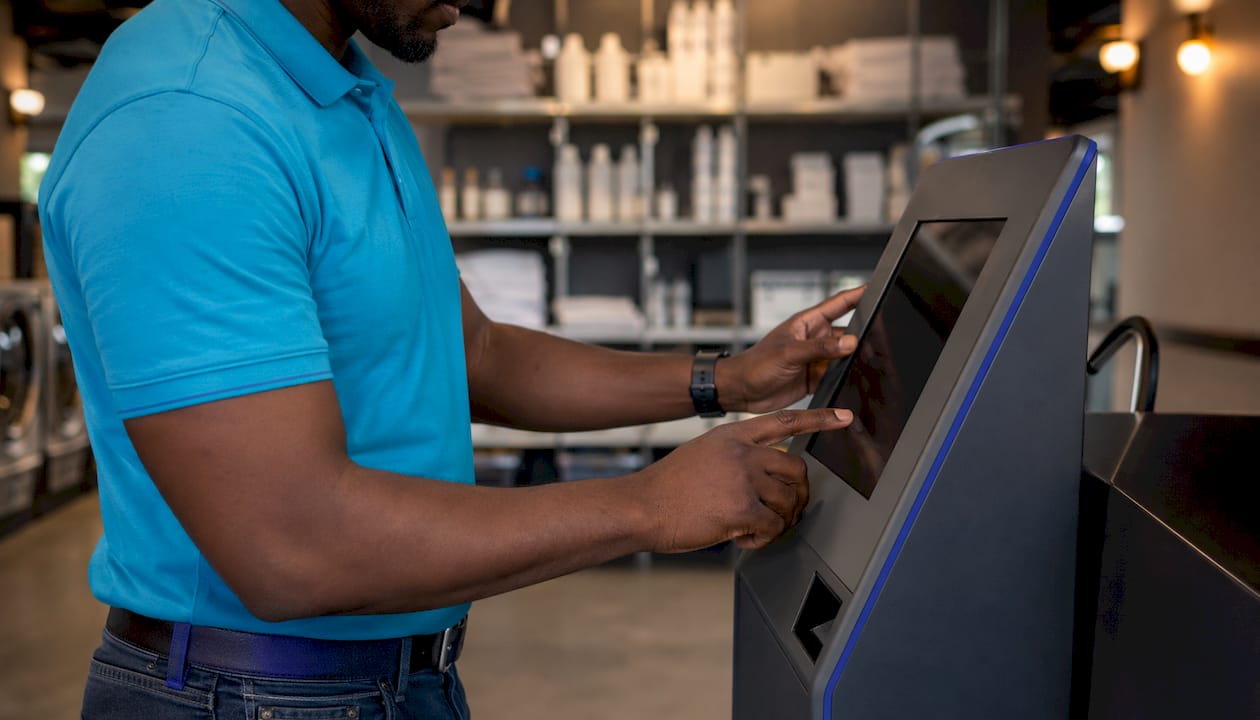
Layer 2: Payment and kiosk systems. These are the card readers on your machines, the value-add kiosks, and the payment processor behind your counter. LaundroWorks lives primarily in this layer. It is excellent at what it does here, but it does not replace a full POS.
Layer 3: Consumer apps. Your branded app or a third-party pickup and delivery aggregator. Customer expectations in this layer are set by national brands, and app-store ratings reflect operational consistency more than UI design.
The practical rule: fewer integrated vendors beats a clever multi-tool stack every time. Each seam between vendors is a place where data drops and reconciliation breaks. A unified platform that covers all three layers, or at least layers one and two tightly, reduces errors and cuts the time you spend troubleshooting instead of running your business.
Kanso Flow gives you the operational clarity that legacy systems miss
Running a laundromat on paper tickets and a browser-based POS is a grind. Orders get lost. Garment disputes eat your time. Attendants toggle between slow screens while customers wait at the counter. Kanso Flow was built specifically to fix that, not as a general retail POS adapted for laundry, but as a native iOS platform designed for the shop floor from day one.
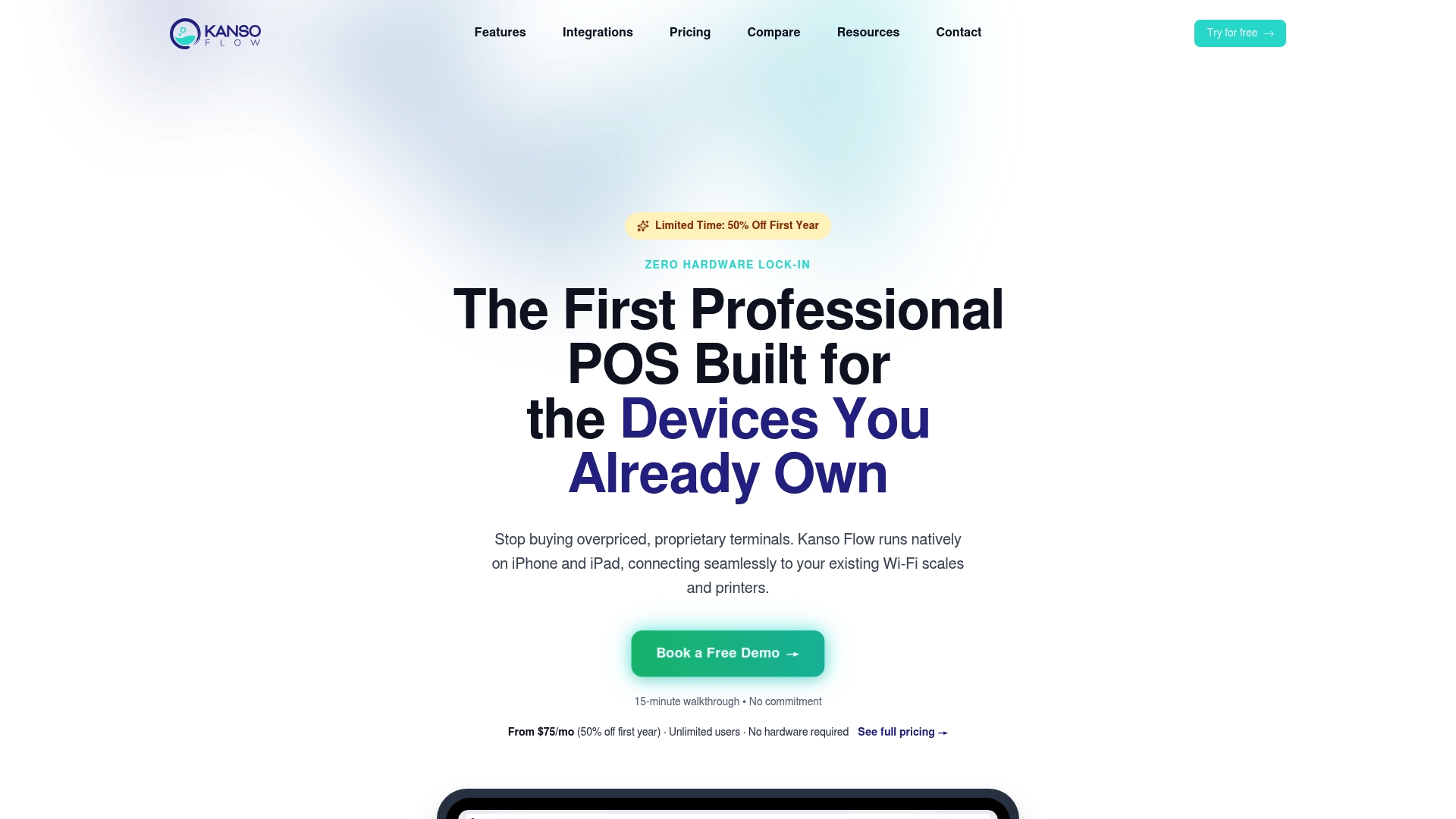
The Visual Kanban Board gives every attendant a live view of every order in the shop, from intake through Wash, Fold, Dry Cleaning, and Ready. Nothing falls through the cracks. Photo intake at the counter documents garments the moment they arrive, eliminating lost-item disputes before they start. For multi-location operators, built-in inter-branch transfer support moves orders between drop-off locations and processing hubs without a separate logistics tool.
Hardware integration is native, not bolted on. Kanso Flow pairs directly with Bluetooth scales for weight-based pricing and Star Micronics printers for receipts and garment tags. Stripe and Square handle payment processing. Per-device PIN security lets staff lock or switch users in seconds on a high-traffic floor. No shared logins, no security gaps during shift changes.
Kanso Flow is not trying to be everything. It is the right choice for wash-and-fold operators, multi-location owners, and anyone who has lost a customer to a garment dispute or a slow counter. Explore Kanso Flow’s full feature set and see how it fits your operation.
Key Takeaways
Choosing the right laundromat POS alternative to LaundroWorks comes down to matching the platform’s strengths to the services you actually run, not the longest feature list.
| Point | Details |
|---|---|
| Match features to your service mix | A self-service store needs different tools than a wash-and-fold or delivery operation. |
| Prioritize data portability | Systems that lock your data reduce business flexibility and lower your resale valuation. |
| Fewer vendors, fewer problems | Fragmented stacks increase reconciliation errors; integrated platforms reduce data loss points. |
| Consumer app quality matters | Delivery app ratings reflect operational consistency; Rinse leads with a 4.18 rating across 1,000 reviews. |
| Kanso Flow for workflow clarity | Kanso Flow’s Visual Kanban Board, photo intake, and native iOS design address the core gaps legacy systems leave open. |