Laundromat Ticket System Problems: 2026 Guide
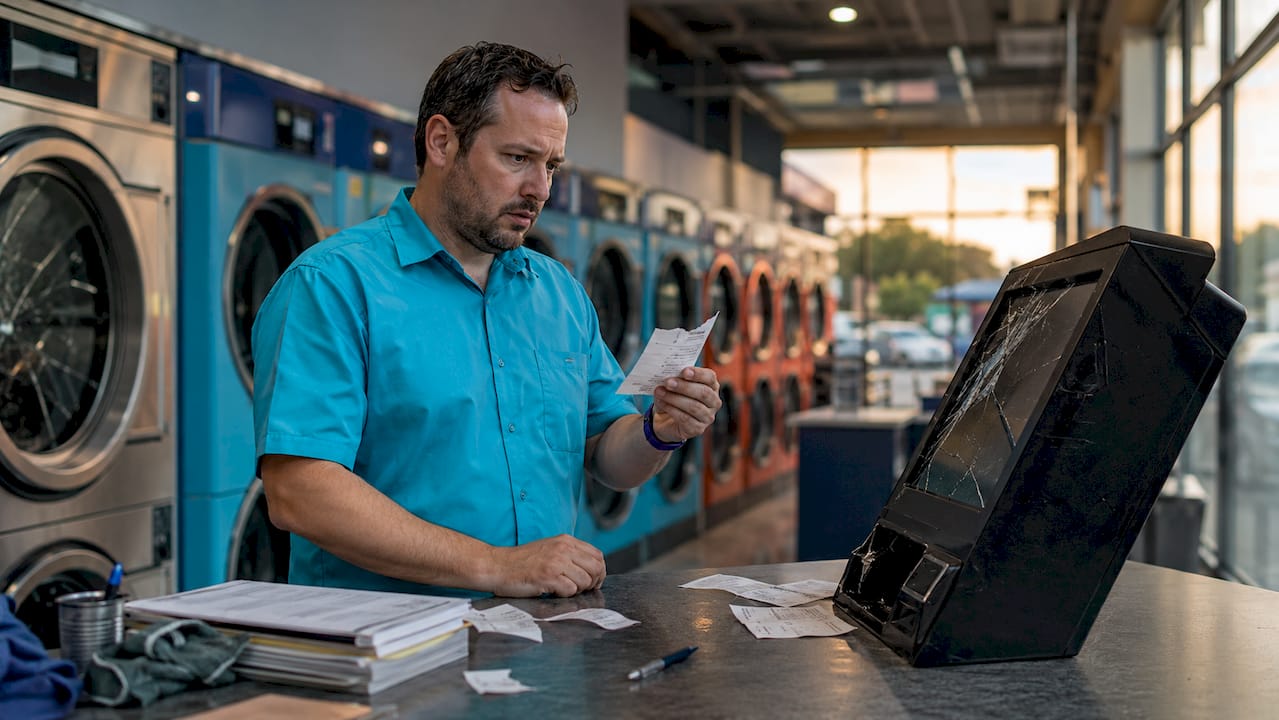
Laundromat ticket system problems are defined as recurring failures in payment processing, machine activation, and order tracking that directly disrupt daily operations and customer trust. These issues range from network outages that freeze card readers to billing errors that trigger chargebacks, and they cost operators real money every shift. Platforms like CSC ServiceWorks and FasCard have documented these failure patterns across thousands of locations. This guide breaks down the most common causes, explains what drives them, and gives you practical strategies to reduce their impact on your business.
What are the most common laundromat ticket system problems?
Laundromat ticket system problems fall into three main categories: technical malfunctions, connectivity failures, and billing errors. Each one creates a different kind of disruption, but all three share the same result: frustrated customers and lost revenue.
Technical and hardware failures are the most visible. Card readers jam or lose calibration. Kiosk touchscreens freeze mid-transaction. Receipt printers run out of paper at peak hours. These are not rare edge cases. They are predictable failure points that every operator running a digital payment system will eventually face.
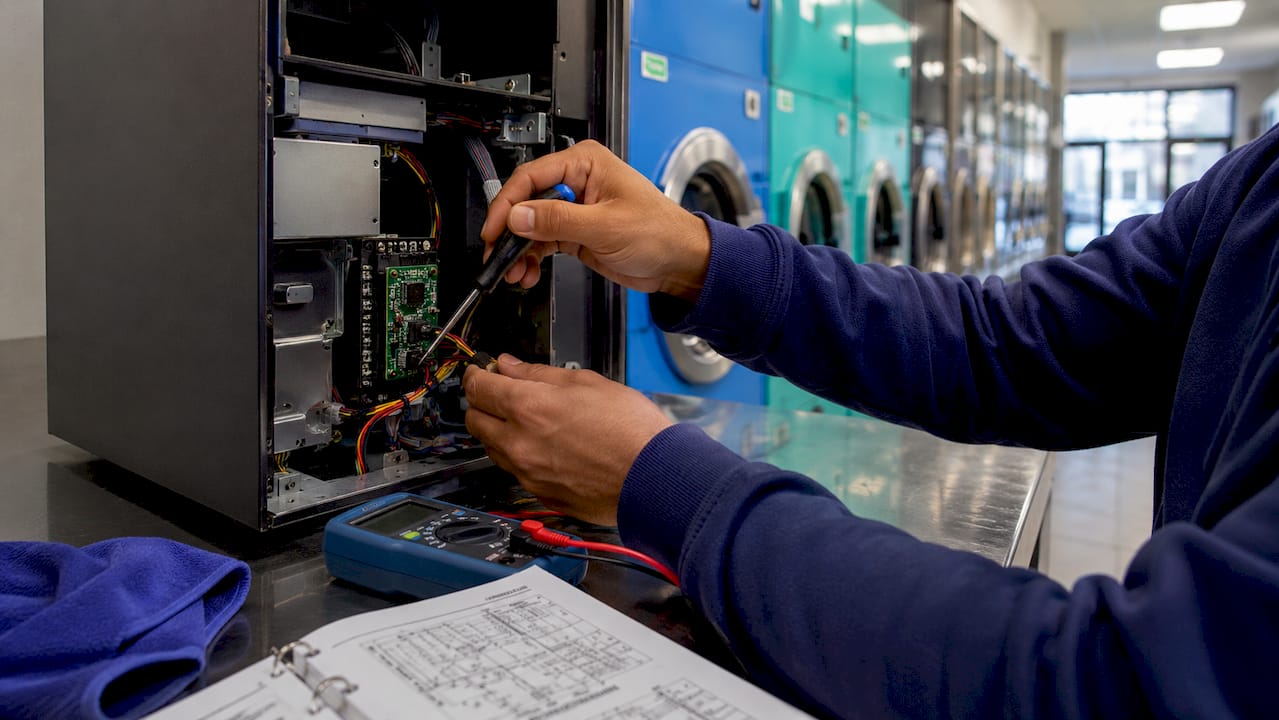
Billing errors are more damaging to customer relationships. Common laundromat ticket errors include double charges for a single cycle, charges for cycles that failed to start, and refund delays that stretch 7–10 business days. The 2024 CSC ServiceWorks data breach added another layer of concern, with affected consumers eligible for compensation claims. That incident highlighted how billing data vulnerabilities can compound standard ticket system malfunctions into a much larger trust problem.
Customer confusion around pre-authorization holds generates a consistent stream of ticketing system complaints. When a customer swipes a card and sees a $10–$20 hold on their account before the actual charge posts, many assume they have been overcharged. Signage explaining pre-authorization holds reduces these complaints significantly. Without it, your front counter becomes a dispute desk.
Here are the most frequent washer ticket errors and laundry ticket management issues operators report:
- Card reader declines on valid cards due to international card blocks or expired encryption keys
- Machine activation failures after a successful payment, leaving the customer charged but the washer idle
- Kiosk reboots mid-transaction, voiding the payment without releasing the funds immediately
- Loyalty account sync failures that prevent stored credit from applying at the machine
- Receipt printer errors that leave customers with no proof of payment for dispute resolution
Pro Tip: Keep a printed log at the counter for any machine activation failures. Date, time, machine number, and customer contact. This record is your first line of defense when a chargeback arrives.
How do connectivity issues affect laundromat operations?
Network downtime is the single most disruptive technical risk in a modern laundromat. Machines can buffer transactions locally for a short window, but prolonged outages cause transaction errors, failed activations, and data sync problems that require manual correction after the fact.
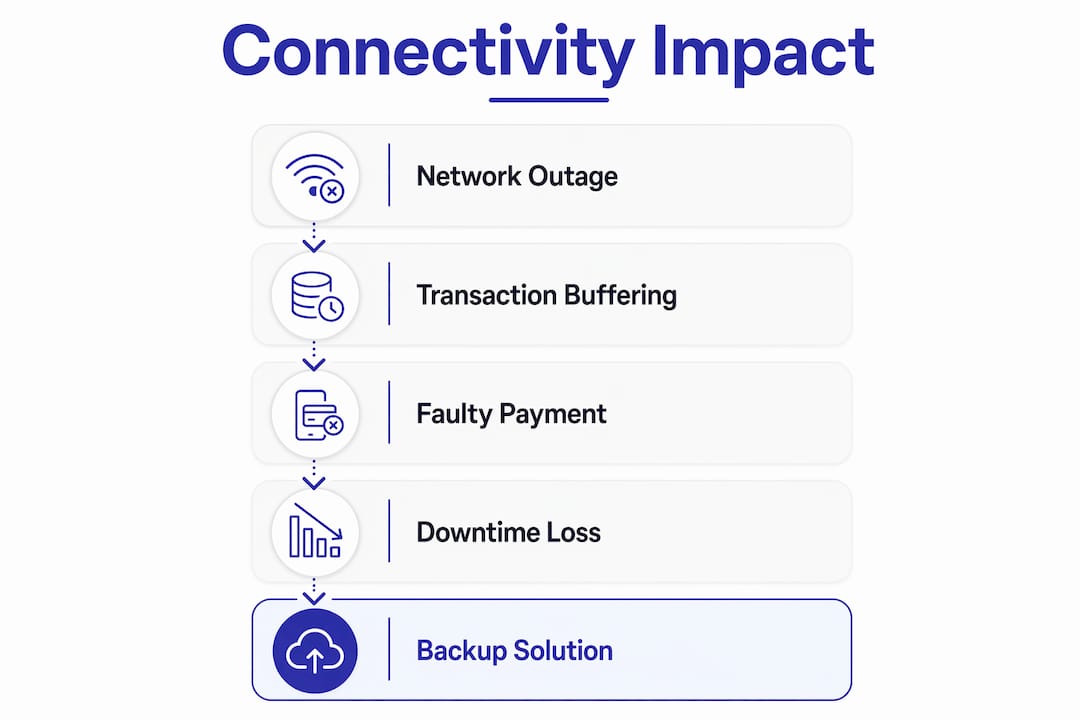
The marketing around “works without internet” payment solutions deserves scrutiny. Many systems that claim offline capability actually rely on a modem hidden inside the kiosk. True offline redundancy requires genuine failover, such as a backup cellular connection, a mobile hotspot, or a manual override option. If your vendor cannot explain exactly how their system behaves during a 30-minute outage, assume it does not work.
There is also a hardware placement problem that most operators never consider. Network equipment installed inside kiosk enclosures suffers from signal interference because the metal housing acts like a Faraday cage. Kiosk placement weakens network signals, which explains why some locations experience intermittent connectivity failures even with a strong ISP connection. Moving the router or access point outside the kiosk enclosure often resolves the issue entirely.
Practical steps to reduce downtime impact:
- Install a secondary LTE router as a failover connection, configured to switch automatically
- Post clear signage at each machine explaining what customers should do if payment fails
- Train staff to issue manual activation codes or temporary credits during outages
- Audit your kiosk hardware placement to confirm network equipment is not signal-blocked
Pro Tip: A $40/month LTE backup router pays for itself the first time it prevents a full payment shutdown during a busy Saturday morning.
Coin vs. digital vs. hybrid: which system fails less?
The debate between coin-based and digital ticket systems is not about which one is better. It is about which failure modes you can manage more easily.
Coin systems are simple and immune to network failures. They do not require software updates, encryption keys, or ISP contracts. Their failure modes are mechanical: jammed coin slots, worn acceptors, and theft. Regular cleaning prevents most coin jams and error codes. The operational cost is labor time spent on coin collection and counting, not technical support calls.
Digital systems offer real advantages: remote monitoring, loyalty program integration, instant account credits, and detailed transaction logs. But they introduce the full range of laundromat ticket issues described above. Every digital system is only as reliable as its network connection, its hardware, and its vendor’s support response time.
| Feature | Coin System | Digital System | Hybrid System |
|---|---|---|---|
| Network dependency | None | High | Low to medium |
| Failure type | Mechanical jams, theft | Payment errors, outages | Both, but reduced exposure |
| Refund process | Manual cash | Digital credit or app | Digital credit with coin fallback |
| Customer preference | Older demographics | Younger, card-first users | Broadest coverage |
| Maintenance cost | Low (cleaning, parts) | Medium to high (software, hardware) | Medium |
| Chargeback risk | None | High | Reduced |
Hybrid systems combining coin and digital payments consistently outperform single-method setups on both revenue and customer satisfaction. The redundancy is the point. When your card reader goes down, coin-paying customers keep your machines running. When your coin acceptor jams, card-paying customers do not walk out.
Pro Tip: If you are upgrading to digital payments, do not remove coin acceptance at the same time. Run both for at least six months to identify your actual failure frequency before committing to a single-method setup.
How to handle billing errors and refunds without losing customers
Billing errors are inevitable in any payment system. How you handle them determines whether a frustrated customer becomes a loyal regular or a chargeback statistic.
The traditional cash refund process in coin-operated laundromats is slow and inefficient. An attendant has to verify the complaint, locate the right change, and document the transaction manually. Digital store credit resolves refunds faster and keeps the revenue inside your business. Instead of handing back $2.50 in quarters, you credit the customer’s account instantly. They come back to use it. That is a better outcome for both sides.
For operators running digital or hybrid systems, here is a practical refund workflow:
- Verify the complaint at the counter. Check the transaction log for the machine, time, and amount. Confirm whether the cycle ran or failed.
- Issue store credit immediately for confirmed failed cycles. Do not make the customer wait for a bank reversal.
- Document the machine error with the time, error code, and resolution. This record protects you if the customer later files a chargeback.
- Escalate unresolved disputes to your payment processor within 24 hours. Refund delays beyond 7–10 business days increase chargeback risk significantly.
- Post signage at every payment point explaining pre-authorization holds. A sign that reads “Your card may show a temporary $10 hold that clears within 24 hours” eliminates a large share of confusion-based complaints.
Chargebacks deserve special attention. Chargebacks often exceed the original transaction value once processing fees are added. A $3.50 wash cycle dispute can cost you $25 or more in fees and administrative time. Chargeback protection services offered by processors like Stripe reduce that exposure. The math favors paying for protection over absorbing individual disputes.
Pro Tip: Ask your payment processor about chargeback alerts. Services like Verifi or Ethoca notify you before a dispute becomes a formal chargeback, giving you a window to issue a refund and avoid the fee entirely.
Key takeaways
Laundromat ticket system problems are best managed through hybrid payment redundancy, proactive maintenance, and fast digital refund processes that keep customers from filing chargebacks.
| Point | Details |
|---|---|
| Connectivity is the core risk | Most digital payment failures trace back to network outages or poor hardware placement inside kiosks. |
| Hybrid systems reduce exposure | Running coin and digital payments together prevents a single failure mode from shutting down all revenue. |
| Fast refunds prevent chargebacks | Issuing instant store credit costs less than a single chargeback fee and retains the customer. |
| Pre-authorization signage matters | Clear posted explanations of card holds cut complaint volume before it reaches your counter. |
| Document every failure | A written log of machine errors and resolutions is your primary defense in billing disputes. |
The uncomfortable truth about “modern” laundromat payment systems
I have spent a lot of time watching operators upgrade their laundromats to digital payment systems and then spend the next six months troubleshooting problems they did not have before. The pitch is always the same: go cashless, get data, grow your business. The reality is more complicated.
The biggest mistake I see is operators treating a digital payment upgrade as a one-time installation rather than an ongoing operational commitment. The hardware needs maintenance. The software needs updates. The network needs redundancy. None of that happens automatically, and most vendors are not going to remind you.
What actually works is a layered approach. Keep coin acceptance running. Add digital payments on top. Build a simple refund protocol that your staff can execute in under two minutes. Post clear signage about holds and failed transactions. And audit your kiosk hardware placement before you blame your ISP for connectivity problems.
The operators I have seen run the tightest shops are not the ones with the most sophisticated technology. They are the ones who understand exactly how their system fails and have a plan for each scenario. That kind of operational discipline is worth more than any software feature.
If you are evaluating new management tools, look at Kansoflow’s feature set before committing to a legacy system that adds complexity without solving the core problems.
— Artur
How Kansoflow addresses these operational challenges

Kansoflow is a native iOS laundry POS and management platform built specifically for independent and multi-location laundromat operators. It replaces paper tickets and fragmented billing tools with a visual Kanban order board, photo intake at the counter, and a commerce engine that handles complex transactions including park-and-resume sales. Stripe and Square integrations give you flexible payment acceptance, and the platform pairs natively with Star Micronics tag printers for physical ticket output when you need it. For operators dealing with lost-item disputes, the photo intake feature creates a timestamped record at drop-off that eliminates the back-and-forth entirely. If you are ready to replace the systems that are costing you time and customers, explore Kansoflow and see how it fits your operation.
FAQ
What causes most laundromat ticket system failures?
Network outages and hardware malfunctions inside kiosks cause the majority of digital payment failures. Coin systems fail mechanically through jammed acceptors and worn components.
How long do laundromat refunds typically take?
Refunds through digital platforms can post as instant store credit. Bank reversals for card transactions typically take 7–10 business days, which is why store credit is the faster option for operators.
What is a pre-authorization hold in a laundromat?
A pre-authorization hold is a temporary charge of $10–$20 placed on a customer’s card to verify funds before the actual transaction amount is confirmed. It clears automatically within 24 hours in most cases.
Are “works without internet” laundromat payment systems reliable?
Most systems marketed as internet-free still rely on a modem inside the kiosk. True offline capability requires a backup cellular connection or manual override option, not just local transaction buffering.
How do chargebacks affect laundromat operators financially?
A single chargeback can cost significantly more than the original transaction value once processing fees are added. Chargeback protection services and fast refund protocols are the most cost-effective way to manage this risk.