Laundromat Scale Integration Benefits: 2026 Guide
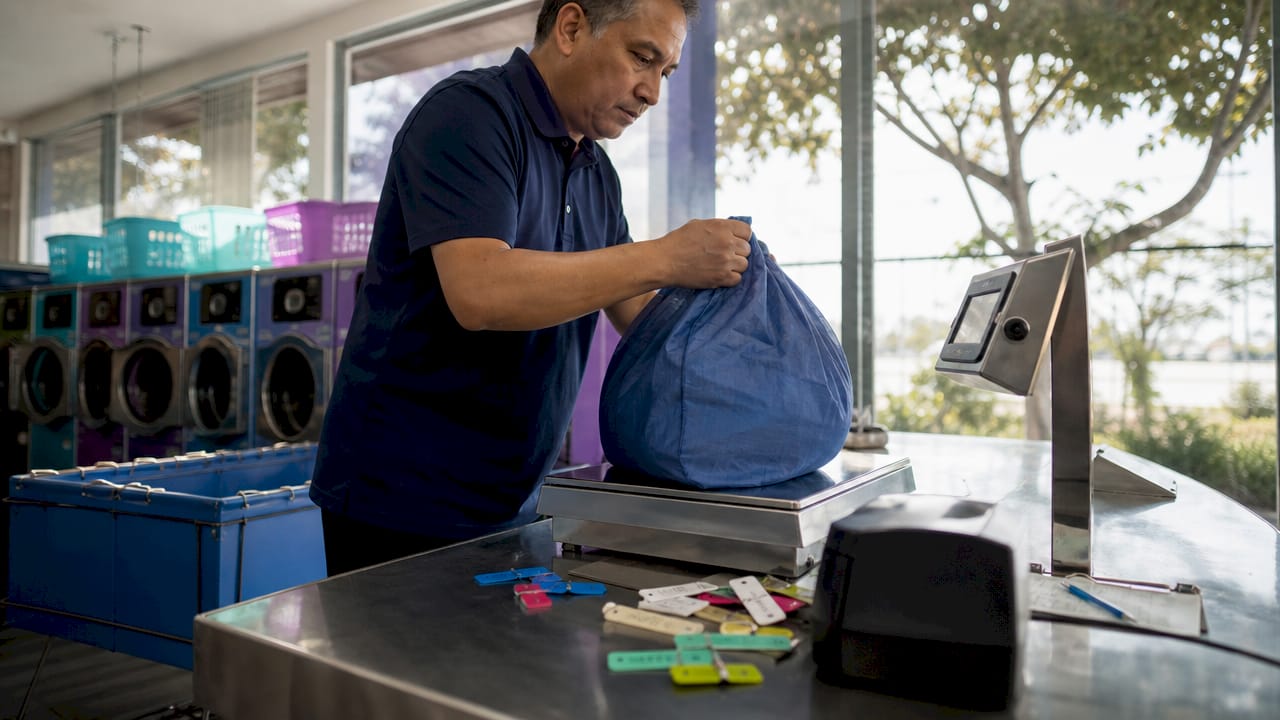
Scale integration for laundromats is defined as connecting digital weight scales directly to your point-of-sale and management software so that every order is priced, tracked, and reported automatically. The laundromat scale integration benefits go far beyond convenience. They touch pricing accuracy, labor costs, customer trust, and your ability to grow beyond one location without losing control. Platforms like Kansoflow, CleanCloud, and LaundryCard have made this kind of connectivity accessible to independent operators, not just large chains. If you are still weighing bags by eye and entering numbers by hand, this guide explains exactly what you are leaving on the table.
1. Laundromat scale integration benefits start with pricing accuracy
Pricing wash-and-fold orders without a scale is guesswork. Attendants estimate weight, customers dispute the bill, and you absorb the loss in either revenue or goodwill. Neither outcome is acceptable when margins are already tight.
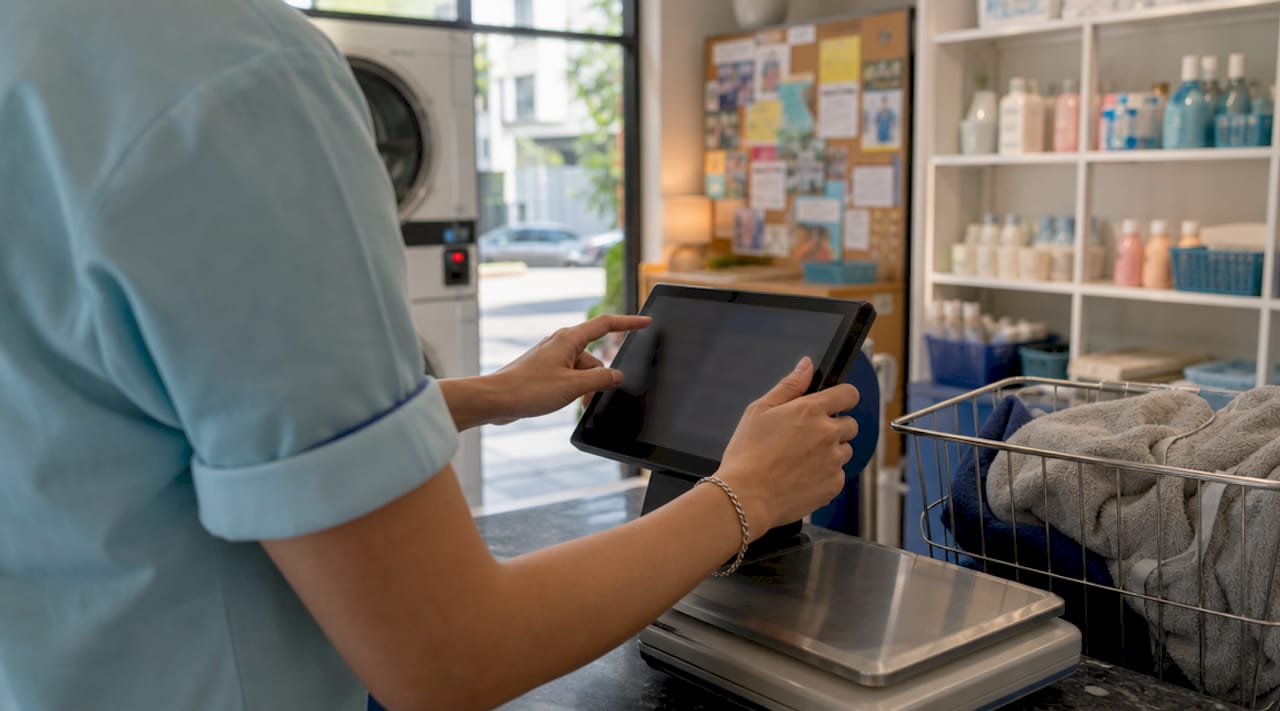
Integrated scales solve this by feeding real-time weight data directly into your POS. The system calculates costs automatically using the scale reading, so the price on the receipt reflects exactly what the customer brought in. No rounding, no guessing, no argument.
The downstream effects matter just as much as the accuracy itself:
- Customers see a transparent, weight-based price before they commit
- Disputes drop because the number is objective, not an attendant’s estimate
- Revenue per order increases because you stop undercharging on heavy loads
Pro Tip: Integrated scales also reduce internal theft. When every order has a logged weight tied to a transaction, it becomes much harder for an attendant to pocket cash by underrecording a bag.
2. Automation cuts manual work and operational errors
Every time an attendant writes a weight on a paper ticket, transcribes it into a spreadsheet, or keys it into a POS manually, there is a chance for error. Scale integration eliminates that entire chain.
When a scale connects natively to your management software, data capture is automatic. The weight is recorded, the price is set, the order is created, and the transaction is logged. No paper, no re-entry, no discrepancy between what was weighed and what was charged.
- Weight is captured at intake by the connected scale
- POS generates the order with the correct price instantly
- Work order routes to the correct machine or attendant queue
- Revenue is logged in real time against that location’s dashboard
- Maintenance alerts trigger based on machine usage thresholds
“Automation of laundry operations empowers one manager to oversee 50 machines at 10 locations, compared to 15 machines at 3 locations previously.” Source: MEWR Creative
That is a 300% increase in management capacity without adding headcount. For any operator thinking about growth, that number reframes what is possible.
3. Remote monitoring and reduced downtime
Scale integration does not operate in isolation. It feeds into a broader automation layer that includes remote monitoring, and that combination has a direct impact on machine uptime and revenue per unit.
Facilities using integrated automation report up to 40% less downtime and 20 to 25% higher machine revenue. The mechanism is straightforward. When your software knows how much weight has moved through a machine, it can flag when usage patterns suggest a maintenance issue before the machine fails. You fix it on your schedule, not the customer’s.
Remote monitoring also means you do not need to be on-site to know what is happening. You can check machine status, order volume, and revenue from your phone. For multi-location operators, this is not a luxury. It is the only way to stay informed without driving between stores all day.
4. Customer experience improvements that drive loyalty
Customers who use wash-and-fold services are not just buying clean laundry. They are buying time and certainty. Scale integration delivers both by making the transaction faster and more transparent.
When a customer drops off a bag, an integrated system can provide an upfront price estimate based on the weighed order before they leave the counter. That transparency builds trust. Pair it with cycle notifications and real-time machine availability through a mobile app, and you have a customer experience that competes with any retail service.
Key customer-facing improvements from scale integration include:
- Upfront pricing based on actual weight, not estimates
- Faster counter transactions because pricing is instant
- SMS or app notifications when orders are ready
- Loyalty program points calculated accurately against order weight
Pro Tip: Weight-based loyalty programs are more defensible than visit-based ones. A customer who brings in 20 pounds earns more than one who brings in 5. That fairness keeps high-value customers coming back.
5. Dynamic pricing and revenue optimization
Static pricing leaves money on the table during peak hours and discourages usage during slow periods. Scale integration, combined with smart management software, enables dynamic pricing that adjusts based on demand and usage data.
Locations applying dynamic pricing strategies outperform static-pricing competitors by 18% or more in revenue per machine. The logic is simple. If your machines are full on Saturday morning, you charge more. If they sit idle on Tuesday afternoon, you offer a discount to fill them. Without accurate weight and usage data flowing into your system, you cannot make those adjustments with confidence.
Dynamic pricing also protects you from cost increases. If your utility rates go up, you can adjust pricing by weight tier immediately across all locations from a single dashboard, rather than reprinting signs at every store.
6. Comparison of scale integration methods
Not every laundromat needs to replace its equipment to gain these benefits. The two primary paths are retrofit modules and native integrations built into new machines.
Retrofit modules attach to existing washers and connect via Bluetooth or Wi-Fi to your POS. Modules typically cost between $150 and $300 per machine, with installation taking roughly 30 minutes per unit. That is a low barrier for operators who want to modernize without capital expenditure on new equipment.
| Method | Upfront cost | Integration complexity | Flexibility |
|---|---|---|---|
| Retrofit module | $150–$300 per machine | Low to medium | High with open API |
| Native built-in scale | Higher equipment cost | Low | Vendor-dependent |
| Manual entry with software | Near zero | None | Low |
The table makes the case for retrofit clearly. The real differentiator, however, is API openness. Vendors like Card Concepts Inc. (LaundryCard) and FasCard have moved toward open API architectures that let you connect scales, POS systems, and future technologies without being locked into proprietary hardware. Owners who prioritize open connectivity avoid costly equipment replacements when the next generation of tools arrives.
7. Scalability: managing multiple locations without adding staff
The single most compelling argument for scale integration is what it does to your growth ceiling. Before automation, adding a location meant adding management complexity in a near-linear ratio. One more store meant one more set of manual processes to supervise.
With integrated scales feeding into a unified dashboard, that relationship breaks. Operators can view revenue, maintenance, and machine utilization across all locations from a single interface. Decisions that used to require a site visit now take 30 seconds on a phone screen.
Benefits for multi-location operators specifically include:
- Aggregated weight and revenue data across all stores in one view
- Automated alerts for underperforming machines at any location
- Consistent pricing rules applied across the entire portfolio instantly
- Labor scheduling informed by actual order volume data per location
Pro Tip: When evaluating software vendors, ask specifically whether their platform supports open, scalable integrations with third-party scales and payment hardware. Vendors who cannot answer that question clearly will cost you more in the long run.
Multi-location operators gain the greatest efficiency and profitability from scale integration combined with unified management dashboards. That is not a prediction. It is the pattern visible in every operation that has made the transition.
Key takeaways
Scale integration is the single highest-leverage operational upgrade available to laundromat owners in 2026, connecting weight data directly to pricing, reporting, and customer experience in one automated chain.
| Point | Details |
|---|---|
| Pricing accuracy | Integrated scales eliminate manual estimation, reducing disputes and increasing revenue per order. |
| Automation capacity | One manager can handle 50 machines across 10 locations with the same effort previously needed for 15 machines at 3 locations. |
| Retrofit accessibility | Modules cost $150–$300 per machine and install in 30 minutes, making integration viable without new equipment. |
| Open API priority | Choosing vendors with open APIs protects your investment and allows future technology upgrades without hardware replacement. |
| Multi-location scalability | Unified dashboards consolidate weight, revenue, and maintenance data across all stores for centralized decision-making. |
Why I think most operators underestimate this upgrade
I have watched laundromat owners spend tens of thousands on new machines while still running wash-and-fold on paper tickets and a calculator. The hardware gets the attention because it is visible. The data layer is invisible, so it gets skipped.
That is the wrong priority order. A 10-year-old washer connected to an integrated scale and a good POS will outperform a brand-new machine tracked on paper. The scale integration is what turns a transaction into a data point, and data points are what let you manage a business instead of just operating one.
The phased approach works best in practice. Start with one location, connect your scales to your POS, and run both systems in parallel for 30 days. The gap between what you thought you were charging and what the scale says you should have charged will be your most persuasive internal business case for rolling it out everywhere else.
The next frontier is predictive maintenance triggered by weight cycle counts, not just time intervals. Machines that process heavier loads wear faster. Systems that know the weight history of every machine will schedule service before failure, not after. That technology exists today in early form, and operators who have already built the data infrastructure will adopt it first.
— Artur
How Kansoflow makes scale integration work in practice
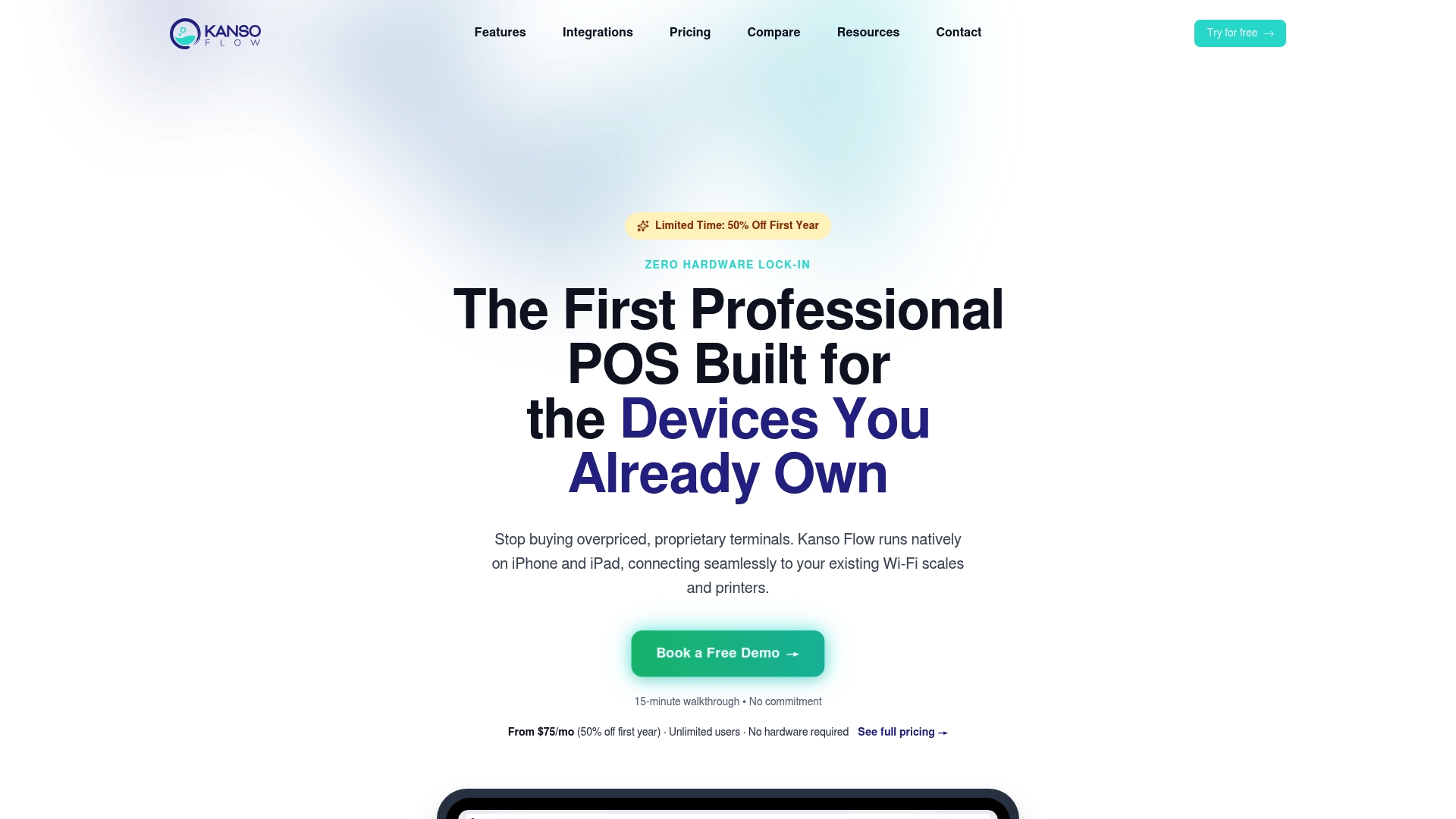
Kansoflow is built specifically for laundromat owners who want the benefits of scale integration without the complexity of enterprise software. The platform pairs natively with Bluetooth scales and Star Micronics printers, so weight data flows directly into your order at the counter with no manual entry. The visual Kanban board tracks every order from intake through ready, and the multi-location dashboard gives you revenue, order volume, and machine utilization across all your stores in one place. Kansoflow runs on standard iOS devices, which means no proprietary hardware bundles and no browser lag on a busy shop floor. If you are ready to connect your scales to a POS that was built for this work, explore Kansoflow and see how it fits your operation.
FAQ
What is laundromat scale integration?
Laundromat scale integration is the process of connecting digital weight scales to your POS and management software so that order pricing, data capture, and reporting happen automatically based on measured weight rather than manual entry.
How much does it cost to retrofit scales into existing machines?
Retrofit scale modules typically cost between $150 and $300 per machine, with installation taking approximately 30 minutes per unit, making it a cost-effective upgrade for most existing laundromat equipment.
Does scale integration really reduce customer disputes?
Yes. When pricing is calculated automatically from an objective weight reading, customers receive a transparent, verifiable price at intake. This removes the subjectivity that causes most billing disagreements.
What should I look for in a scale integration vendor?
Prioritize vendors with open APIs. Open connectivity lets you integrate scales, POS systems, and future technologies without being forced into proprietary hardware replacements as your business grows.
Can scale integration support multiple laundromat locations?
Scale integration combined with a unified management dashboard allows a single manager to oversee 50 machines across 10 locations, compared to 15 machines at 3 locations without automation.