Laundromat Pricing Strategy Types: 2026 Owner’s Guide

Laundromat pricing strategy types are the structured methods owners use to set machine and service prices, covering costs, protecting profit, and attracting the right customers. The U.S. laundromat industry rewards operators who treat pricing as a management discipline, not a guessing game. Successful drop-off pricing targets $1.25–$2.50 per pound with gross margins of 50–70%, meaning every pricing decision either builds or erodes your bottom line. The right blend of laundromat pricing models determines whether your shop runs at a profit or just breaks even.
1. What are the main laundromat pricing strategy types?
Every pricing strategy for laundromats falls into one of several core models. Most successful operators combine two or three of these rather than relying on a single approach.
Per pound pricing
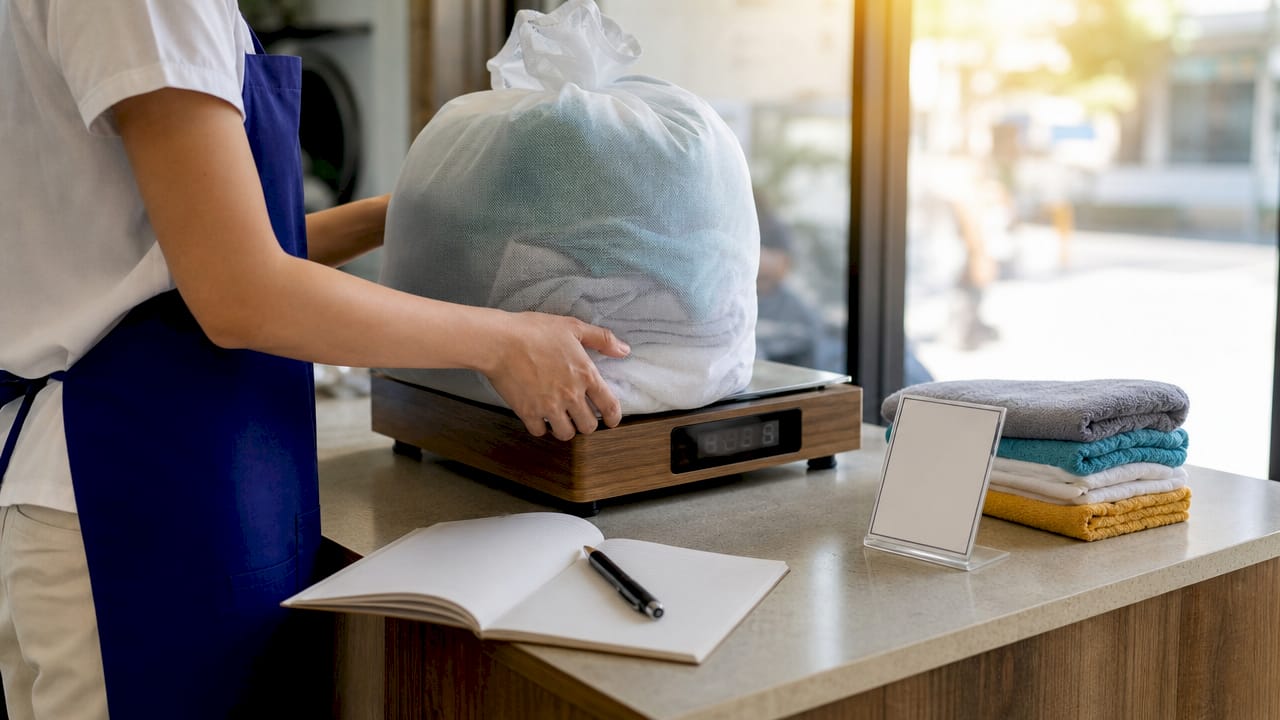
Per pound pricing is the industry standard for wash-and-fold services. You weigh the customer’s laundry at intake and charge a fixed rate per pound. Per-pound rates range from $1.25 to $2.50 depending on your market and cost of living. Urban shops in high-rent markets sit at the top of that range; suburban and rural shops typically price lower but compensate with volume.
Per load (flat rate) pricing
Flat rate pricing charges a fixed dollar amount per machine cycle, regardless of load size. This model works well for self-service machines where customers control the load. It is simple to communicate and easy to enforce. The downside is that heavy loads cost you more in water, gas, and wear while generating the same revenue as a light load.
Tiered pricing
Tiered pricing assigns different rates to different machine sizes, service speeds, or service types. A triple-load washer costs more per cycle than a standard washer. Same-day express service commands a 25–50% premium over standard 24-hour turnaround. Tiered pricing lets you capture more revenue from customers who value speed or capacity without alienating budget-conscious regulars.
Subscription pricing
Subscription models charge a recurring weekly or monthly fee for a set number of wash-and-fold pickups or drop-offs. This model builds predictable cash flow and locks in customer loyalty. It works best for operators with a reliable pickup and delivery operation or a steady base of apartment-dwelling regulars.
Dynamic and time-based pricing
Dynamic pricing adjusts rates based on time of day or day of the week. Off-peak discounts drive traffic during slow hours. Peak surcharges protect margin during your busiest windows. Digital payment systems enable time-based discounts that incentivize off-peak usage without sacrificing your peak pricing integrity.
Competitive pricing
Competitive pricing sets your rates relative to nearby laundromats. This model is a starting point for market research, not a long-term strategy. Matching the lowest price in your area triggers a race to the bottom. Use competitor rates as a floor, then price above it based on your service quality, cleanliness, and convenience.
Discount and loyalty pricing
Loyalty programs reward repeat customers with reload bonuses, punch cards, or volume discounts. These tools increase visit frequency and average ticket size. They work best when tied to a digital payment system that tracks customer behavior automatically.
Pro Tip: Build your pricing menu with at least three tiers: standard self-service, full-service wash-and-fold, and a premium express option. Three tiers give customers a choice and naturally push many toward the middle or top option.
2. How to calculate and incorporate costs in your pricing strategy
Rational laundry service pricing starts with a clear cost-per-pound or cost-per-load calculation. Guessing at costs is the fastest way to underprice your services.
Breaking down your cost per pound
Every pound of laundry processed carries a share of these costs: water, gas or electric, labor, detergent and chemicals, rent, and machine wear. A well-documented laundromat cost analysis in a market like New York City puts operational costs at $0.50–$0.80 per pound. That figure covers utilities and labor but excludes rent amortization and equipment depreciation. Add those in and your true cost per pound rises.
Building your target margin into the price
The standard gross margin target for wash-and-fold is 50–70%. At a cost of $0.70 per pound and a price of $1.75 per pound, your gross profit is $1.05 per pound. Processing 200 pounds per day at that margin generates over $6,000 per month in gross profit. That math only works if you track actual costs, not estimates.
| Cost component | Per pound ($) | Price charged ($) | Gross profit ($) |
|---|---|---|---|
| Utilities (water, gas, electric) | 0.30 | — | — |
| Labor | 0.25 | — | — |
| Chemicals and supplies | 0.10 | — | — |
| Rent and overhead | 0.05 | — | — |
| Total cost | 0.70 | 1.75 | 1.05 |
Specialty items and minimum orders
Comforters, delicates, and oversized items carry higher handling costs. Price them separately, not by the pound. Failing to set a minimum order of $15–$25 or 10–15 lbs causes labor cost overruns on small jobs. Small orders consume the same intake, sorting, and bagging time as large ones but generate a fraction of the revenue.
Pro Tip: Post your minimum order requirement clearly at the counter and on your website. Customers who know the rule upfront rarely push back. Customers who discover it at pickup often do.
3. Common pricing mistakes and how to avoid them
Most laundromat owners make the same pricing errors. Recognizing them is the first step to fixing them.
-
Competing only on lowest price. Competing solely on price erodes margins and limits your ability to reinvest in equipment, cleanliness, and staff. Customers who choose you only for price will leave the moment a cheaper option appears.
-
Ignoring specialty item pricing. Charging per-pound rates for comforters, leather, or delicates underprices the extra handling time. Set flat rates for specialty items and list them on a visible price board.
-
No minimum order for wash-and-fold. Without a minimum, a customer can drop off three shirts and consume 15 minutes of attendant time for $4.50 in revenue. A $15 minimum fixes this immediately.
-
Underusing digital payment features. Most operators use only a fraction of their management system’s capabilities. Reload bonuses, promo codes, and time-based pricing remain underused tools that can meaningfully increase revenue in the first year of use.
-
Static pricing year-round. Utility costs rise. Labor costs rise. Pricing that made sense in 2024 may not cover costs in 2026. Review your cost-per-pound calculation at least twice a year and adjust rates accordingly.
“Focusing on superior customer experience and value generation beats competing on price alone, enabling sustainable profits and stronger brand loyalty.” — Why Competing on Lowest Price Is a Losing Strategy
4. Leveraging technology to put your pricing to work
Modern POS and management software turns pricing strategy from a spreadsheet exercise into a live operational tool. The right platform lets you set, adjust, and track every pricing variable in real time.
-
Reload bonuses and loyalty floats. Digital payment platforms let you offer a bonus balance when customers reload their accounts. A customer who loads $50 and receives $55 in credit has an incentive to return. This creates a loyalty float that drives repeat visits without discounting your base rate.
-
Targeted promo codes. Send a promo code to customers who have not visited in 30 days. A 10% discount on their next drop-off costs less than acquiring a new customer. Promo codes tied to a digital account are trackable, unlike paper coupons.
-
Time-based pricing automation. Set your system to apply a 15% discount on self-service machines between 10 a.m. and noon on weekdays. The system applies and removes the discount automatically. You fill slow hours without manually adjusting prices or training staff on exceptions.
-
Data-driven rate reviews. A POS system that logs every transaction by service type, weight, and time of day gives you the data to identify which services are most profitable and which are underpriced. Leveraging these digital tools can increase revenue by up to 35% in the first year.
Kansoflow’s pricing features support reload bonuses, promo codes, and time-based pricing natively on iOS, without requiring a browser or proprietary hardware.
Key takeaways
The most profitable laundromat pricing strategy combines per-pound cost recovery, tiered service levels, and digital loyalty tools to protect margins and grow customer retention.
| Point | Details |
|---|---|
| Know your true cost per pound | Calculate utilities, labor, chemicals, and overhead before setting any rate. |
| Use tiered pricing for services | Charge more for express turnaround and specialty items to capture premium revenue. |
| Set minimum order thresholds | A $15–$25 minimum for wash-and-fold prevents labor cost overruns on small jobs. |
| Avoid competing only on price | Value and experience retain customers longer than the lowest rate in the market. |
| Activate digital pricing tools | Reload bonuses, promo codes, and time-based discounts increase revenue without raising base rates. |
Why I stopped worrying about what the laundromat down the street charges
The most common question I hear from laundromat operators is some version of: “My competitor charges $1.40 a pound. Should I match them?” My answer is almost always no.
Pricing to match the cheapest competitor assumes your costs are identical to theirs. They are not. Your rent, your utility rates, your labor costs, and your machine age are all different. Matching their price without knowing their cost structure is a gamble, not a strategy.
The operators I have seen build genuinely profitable shops do two things differently. First, they price based on their own cost analysis, not the market floor. Second, they invest the margin they protect into things customers notice: cleaner machines, faster turnaround, friendlier staff, and better hours. Those investments create loyalty that a $0.10 price difference cannot buy.
Dynamic pricing in laundry services is still underused in 2026. Most shops set a price and leave it there for years. Operators who adjust rates seasonally, by time of day, or by service tier are capturing revenue that their static-pricing competitors are leaving on the table. The technology to do this is available and affordable. The barrier is awareness, not cost.
The inflationary pressure of the past few years has made cost-based pricing non-negotiable. Utility rates and labor costs have both risen. Any operator still pricing at 2022 rates is likely running thinner margins than they realize. A twice-yearly cost review is not optional anymore. It is the minimum standard for staying profitable.
— Artur
Kansoflow makes pricing strategy practical for laundromat owners
Pricing strategy only works if your operation can execute it consistently at the counter. Kansoflow is a native iOS POS and management platform built specifically for laundromat owners who want to move beyond paper tickets and static price boards.

Kansoflow supports reload bonuses, promo codes, and time-based pricing natively, so you can run a loyalty program and dynamic pricing without managing a separate system. The platform pairs with Bluetooth scales for accurate per-pound intake and prints customer tags through Star Micronics printers. Every transaction is logged, giving you the cost and revenue data you need to review and adjust your pricing twice a year. See how Kansoflow works for independent and multi-location laundromat operators.
FAQ
What is the best pricing model for wash-and-fold services?
Per-pound pricing is the industry standard for wash-and-fold, with rates ranging from $1.25 to $2.50 per pound depending on market and location. Pair it with a minimum order threshold of $15–$25 to protect labor efficiency.
How do I set a minimum order for my laundromat?
Set a minimum of 10–15 lbs or $15–$25 per drop-off order. Post the minimum clearly at the counter and on your website to avoid disputes at pickup.
What is dynamic pricing in laundry services?
Dynamic pricing adjusts your rates by time of day or day of the week, typically offering discounts during off-peak hours to fill slow machine capacity. Digital payment systems can apply and remove these discounts automatically.
How much gross margin should a laundromat target on drop-off services?
A well-run wash-and-fold operation targets 50–70% gross margin. At $0.70 per pound in costs and $1.75 per pound in pricing, that margin produces over $6,000 per month in gross profit at 200 pounds per day.
Does competing on lowest price work for laundromats?
Competing solely on the lowest price erodes margins and limits reinvestment in equipment and staff. Operators who focus on service quality and customer experience build stronger long-term profitability than those who race to the bottom on price.