Laundromat Owner Pain Points Explained for 2026
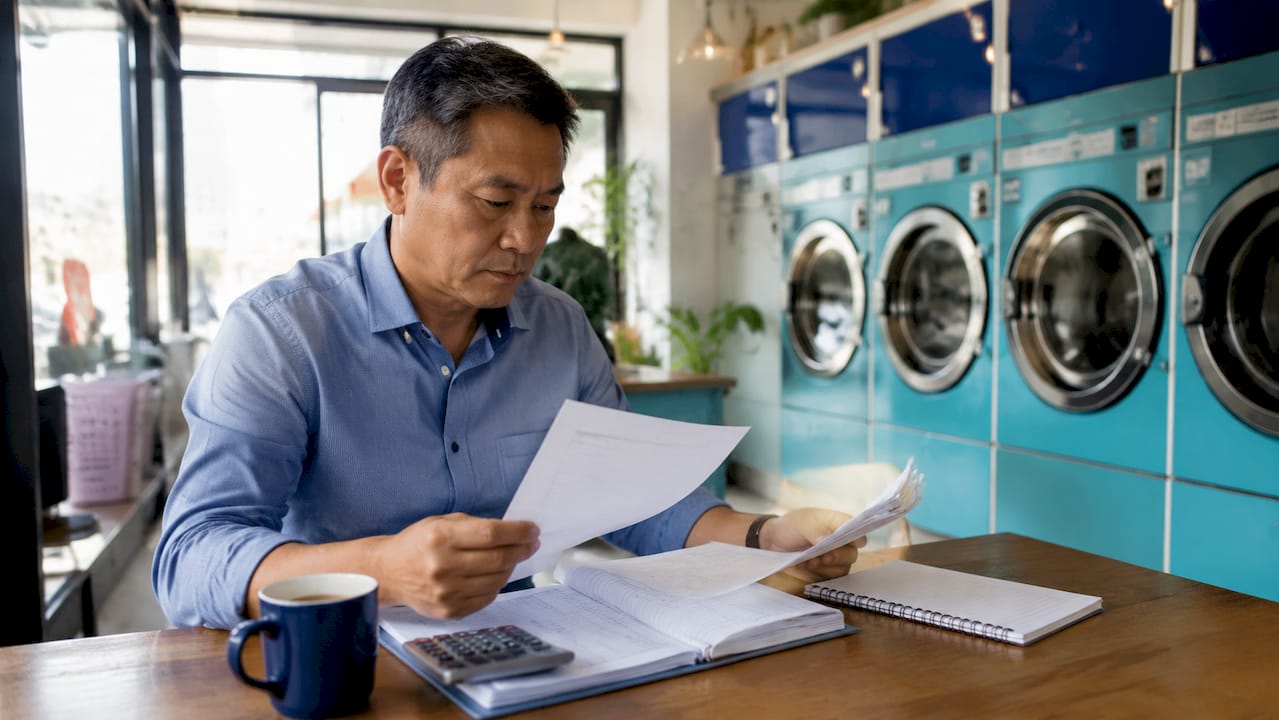
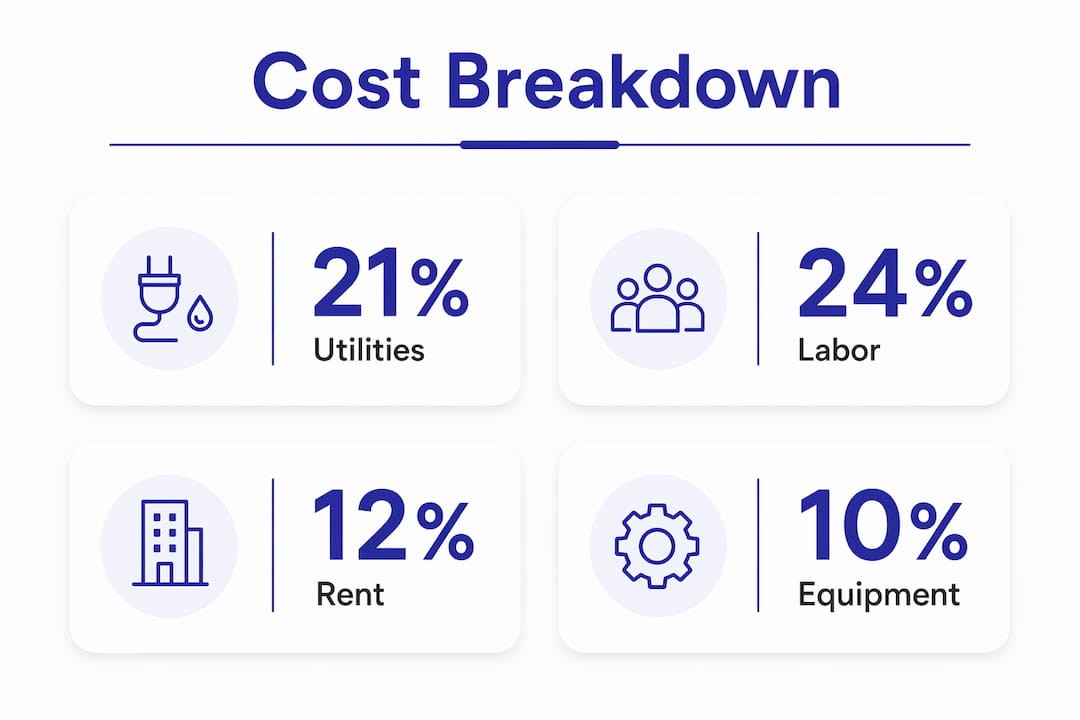
Laundromat owner pain points are defined by five recurring cost and operational pressures: high utility bills, equipment expenses, labor instability, lease risk, and the daily management grind that most buyers never see coming. Utilities now account for 21% of gross revenue, up from 17% before 2022. That single shift erased margin for hundreds of operators who never adjusted their pricing. The good news is that owners who understand these pressure points before they hit can build systems to manage them. This guide breaks down every major challenge and shows you what the top operators do differently.
What are the top financial pain points laundromat owners face?
The five biggest cost pressures in a U.S. laundromat are utilities, equipment replacement, labor, rent, and debt service. Each one is predictable. Most owners still get blindsided by them.
Utilities: the cost that keeps growing
Utilities are the single largest controllable expense in your store. Water, gas, and electricity together consume a fifth of your gross revenue in a typical operation. Post-2022 energy inflation pushed that figure higher, and many owners locked into fixed vend prices before the spike hit. The result was a direct margin squeeze with no short-term exit.
The fix is not complicated, but it requires action before you buy. Skipping a professional utility audit causes buyers to discover that actual water and energy bills run 50–100% higher than seller estimates after closing. That discovery is expensive and often irreversible in year one.
Pro Tip: Order 12 months of actual utility bills from the seller before signing any purchase agreement. Compare them against the store’s gross revenue to calculate the real utility-to-revenue ratio.
Equipment costs and lifespan
Commercial washers and dryers carry a 15-year expected lifespan under normal conditions. That number drops to 7–9 years without proper water treatment. Failing to install water softeners in hard water areas effectively doubles your capital expenditure cycle. A store that should replace machines once every 15 years ends up replacing them twice in the same window.
Labor and rent
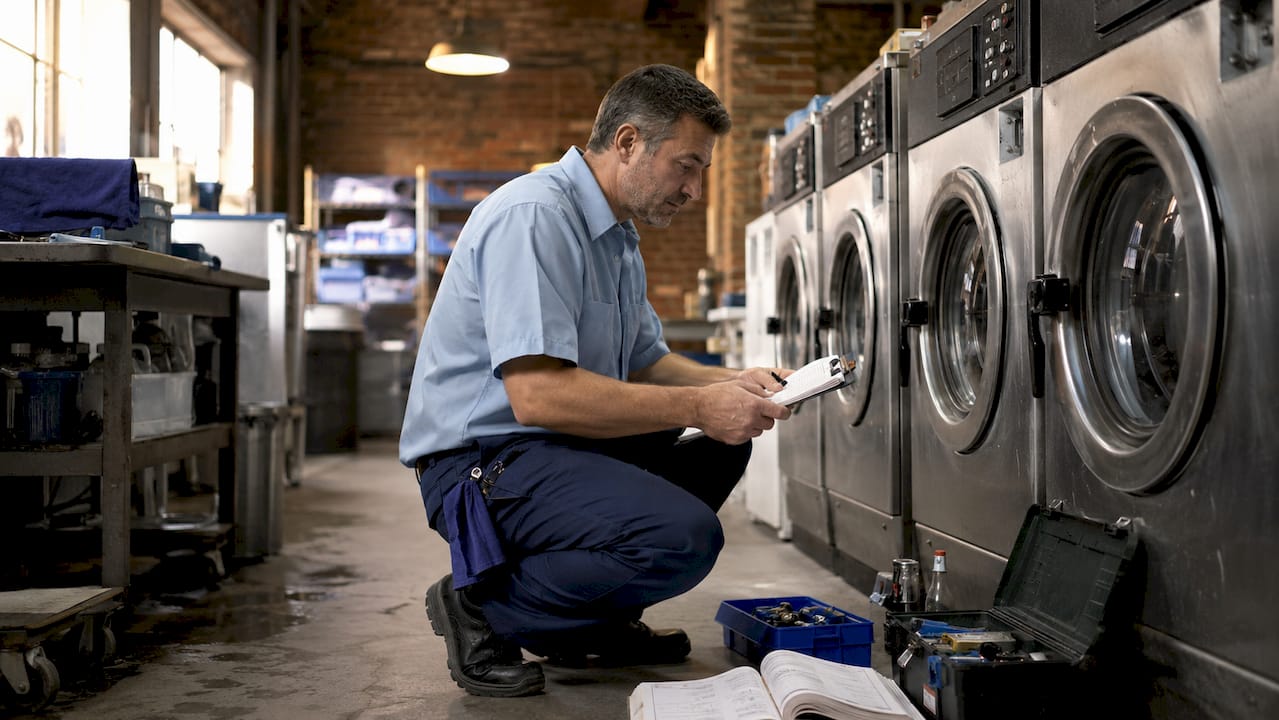
Labor is the most volatile line item for attended stores. Reliable attendants are hard to find and harder to keep. Absenteeism creates a cascade: machines go unmonitored, customer complaints spike, and the owner ends up covering shifts personally. Rent compounds the problem. High-traffic locations command premium leases, and those costs are fixed regardless of revenue swings.
| Cost Category | Typical % of Gross Revenue |
|---|---|
| Utilities (water, gas, electric) | 21% |
| Labor (attended model) | 15–20% |
| Rent and occupancy | 10–15% |
| Equipment maintenance and replacement | 5–10% |
| Insurance and miscellaneous | 3–5% |
Achieving the 22–32% EBITDA margins that make a laundromat worth owning requires hitting 70 or more turns per machine per month. That utilization target is the real benchmark, and most struggling stores fall well short of it.
How do operational difficulties add to laundromat business struggles?
The daily management load of a laundromat is the most underestimated challenge in the business. Buyers see coin-operated machines and imagine passive income. Operators who have run stores for a year describe something closer to facilities management combined with retail customer service.
The mental load nobody warns you about
The “mental load” of daily issues like cleaning, machine repairs, and customer disputes is often underestimated yet critical to long-term success. Operators who manage these small issues consistently outperform peers who treat them as minor annoyances. A dirty store drives customers to competitors. A machine that sits broken for three days costs you revenue and signals neglect to every customer who walks in.
The operators who scale past one location are almost always the ones who systematized these small tasks early. They built checklists, hired for reliability over skill, and used technology to monitor remotely instead of being physically present for every issue.
Security, vandalism, and insurance risk
Unattended laundromats face a specific category of operational risk that attended stores partially avoid. Insurance loss runs for stores lacking security infrastructure can reach $45,000–$180,000 per incident. Vandalism, theft, and unattended fires are the primary drivers. A camera system and a monitored alarm do not eliminate these risks, but they dramatically reduce both incident frequency and insurance premiums.
Key operational risks to address before opening or acquiring a store:
- Vandalism and theft without camera coverage
- Unattended machine fires from lint buildup
- Lost garment disputes without photo documentation at intake
- Water damage from undetected machine leaks
- Absentee staff creating unmonitored periods during peak hours
Pro Tip: Request the store’s insurance loss run history for the past five years during due diligence. A clean loss run is a strong signal of good operational management. A history of claims tells you what problems you are inheriting.
Water hardness and equipment damage
Water quality is an operational issue that most buyers never think to check. Hard water deposits scale inside drum bearings, heating elements, and water valves. The damage is invisible until machines start failing early. Equipment lifespan may drop from 15 years to 7–9 years without water treatment. A $500 water softener installation protects $50,000 in equipment. That math is straightforward, yet the majority of acquired stores still lack one.
Why is the lease a critical pain point for laundromat owners?
The lease is the most important asset in a laundromat acquisition. It is not the machines, the customer base, or the location. If the lease expires and the landlord does not renew, every piece of equipment you own becomes a liability you have to move or write off.
Lease length and renewal risk
Acquiring a store with less than five years remaining on the lease and no renewal options is one of the highest-risk decisions an owner can make. Forced relocation costs can exceed $100,000–$200,000 in equipment losses alone, not counting lost revenue during the transition. A landlord who decides to sell the building, convert the space, or simply raise rent to market rate holds enormous power over your business.
| Lease Scenario | Risk Level | Potential Financial Impact |
|---|---|---|
| 10+ years remaining with renewal options | Low | Stable investment base |
| 5–10 years remaining with renewal options | Moderate | Manageable with planning |
| Under 5 years, no renewal options | High | $100,000–$200,000 relocation exposure |
| Month-to-month or expired lease | Critical | Immediate business viability threat |
Due diligence steps every buyer must take
Before signing a purchase agreement, verify the following with the landlord directly, not just through the seller:
- Confirm the remaining lease term in writing.
- Ask whether the landlord will grant a new long-term lease as a condition of sale.
- Review any rent escalation clauses built into the existing lease.
- Investigate the landlord’s plans for the property over the next 10 years.
- Consult a commercial real estate attorney before finalizing any acquisition.
Pro Tip: Never assume the seller’s lease automatically transfers to you. In many cases, a change of ownership triggers a landlord review. Get written confirmation of lease assignment rights before you close.
How can pricing and service diversification solve common issues laundromat owners face?
The most effective response to rising costs is not cutting expenses. It is growing revenue per customer visit while adding new revenue streams that do not require proportional increases in overhead.
Pricing power: the underused tool
Most laundromat owners are afraid to raise vend prices. The data does not support that fear. Operators who use pricing power and diversify into wash-dry-fold (WDF) and pickup-and-delivery (PUD) services consistently hedge against falling self-service foot traffic and improve margins. A moderate vend price increase of 10–15% rarely drives meaningful customer loss in a well-maintained store with a captive local market.
The key is pairing price increases with visible improvements. New machines, cleaner facilities, better lighting, and faster card payment options all justify higher prices in the customer’s mind.
Wash-dry-fold and pickup-and-delivery services
WDF and PUD services represent the highest-margin revenue opportunity available to most independent laundromat owners today. Self-service customers pay per load. WDF customers pay per pound, and the average order size is significantly larger. PUD customers pay a premium on top of that for the convenience of not leaving their home.
Operators succeeding in 2026 aggressively pursue both service lines to offset declines in coin-operated traffic. The infrastructure investment is modest. You need a reliable point-of-sale system, a garment tracking process, and a delivery vehicle or a third-party courier partnership.
Technology that pays for itself
Card payment systems, remote monitoring tools, and mobile POS platforms directly address laundromat management difficulties by reducing the hours an owner must spend on-site. Active daily management improves profits by 30–45% compared to hands-off ownership, but technology lets you achieve that level of engagement without being physically present for every transaction.
Features worth prioritizing when evaluating management software:
- Real-time order tracking visible from any device
- Photo intake at the counter to eliminate lost garment disputes
- Integrated card and mobile payment processing
- Per-employee access controls to reduce theft risk
- Revenue and utilization reports that show machine performance by hour
Key takeaways
Laundromat profitability depends on controlling five core cost pressures while actively managing daily operations, lease security, and service mix.
| Point | Details |
|---|---|
| Utilities are the top cost driver | Utilities consume 21% of gross revenue; audit bills before any acquisition. |
| Lease security is non-negotiable | Stores with under five years and no renewal options face $100,000+ relocation risk. |
| Water treatment protects equipment | Skipping softeners in hard water areas cuts machine lifespan nearly in half. |
| WDF and PUD expand margins | Service diversification offsets self-service traffic declines and raises revenue per customer. |
| Active management outperforms passive | Hands-on or tech-assisted management improves profits by 30–45% over absentee ownership. |
The passive income myth is the most expensive belief in this business
I have talked with a lot of laundromat owners over the years, and the ones who struggled most shared one thing in common: they bought the business expecting it to run itself. The coin-operated model looks passive from the outside. You collect money, machines do the work, customers come back. That picture is accurate for about the first two weeks before the first machine breaks, the first dispute happens, and the first utility bill arrives.
The owners who built real, scalable businesses treated their laundromat like a retail operation from day one. They showed up, they tracked numbers, and they fixed small problems before those problems became expensive ones. Managing the small things daily is not glamorous advice, but it is the single most consistent predictor of long-term success I have seen.
The other thing I would tell any buyer: do your due diligence on the lease and the utilities before you fall in love with the location. Those two factors will determine your ceiling more than any other variable. A great location with a bad lease is a ticking clock. A mediocre location with a 15-year lease and low utility costs is a business you can actually build on.
Technology is not a shortcut around active management. It is a force multiplier for owners who are already managing well. The right POS and monitoring tools let you stay close to your business without being physically chained to it. That is the version of semi-passive ownership that actually works.
— Artur
How Kansoflow helps you manage these pain points directly
Running a laundromat in 2026 means managing more complexity with less margin for error. Kansoflow is a native iOS POS and operations platform built specifically for independent and multi-location laundromat owners who are done with paper tickets, lost garment disputes, and browser-based tools that slow down their counter.
Kansoflow’s visual Kanban board tracks every WDF and dry cleaning order through Wash, Fold, and Ready stages in real time. Photo intake at the counter eliminates lost garment claims before they start. Stripe and Square integrations handle card and mobile payments without extra hardware. Per-device PIN security keeps your staff accountable on a busy shop floor. If you are ready to see how it works in practice, explore the full feature set here or visit Kansoflow.com to get started.
FAQ
What are the biggest financial challenges for laundromat owners?
Utilities, equipment replacement, and labor are the top three financial pain points. Utilities alone account for 21% of gross revenue in a typical U.S. laundromat.
How long should a laundromat lease be before buying?
A lease with at least five years remaining and documented renewal options is the minimum safe threshold. Stores with shorter leases and no renewal rights carry forced relocation exposure of $100,000–$200,000.
Does active management really improve laundromat profits?
Active or tech-assisted daily management improves profits by 30–45% compared to hands-off ownership. Even semi-absentee owners who use remote monitoring tools typically invest 5–10 hours per week to maintain that performance.
What services help laundromat owners increase revenue?
Wash-dry-fold and pickup-and-delivery services are the highest-margin additions available to most independent owners. Both services command higher per-pound pricing than self-service and attract a different customer segment that is less price-sensitive.
How does water quality affect laundromat equipment?
Hard water without treatment cuts commercial washer and dryer lifespan from 15 years down to 7–9 years. Installing a water softener is one of the highest-return maintenance investments an owner can make.