Laundromat Outsourcing Third-Party Orders: 2026 Guide
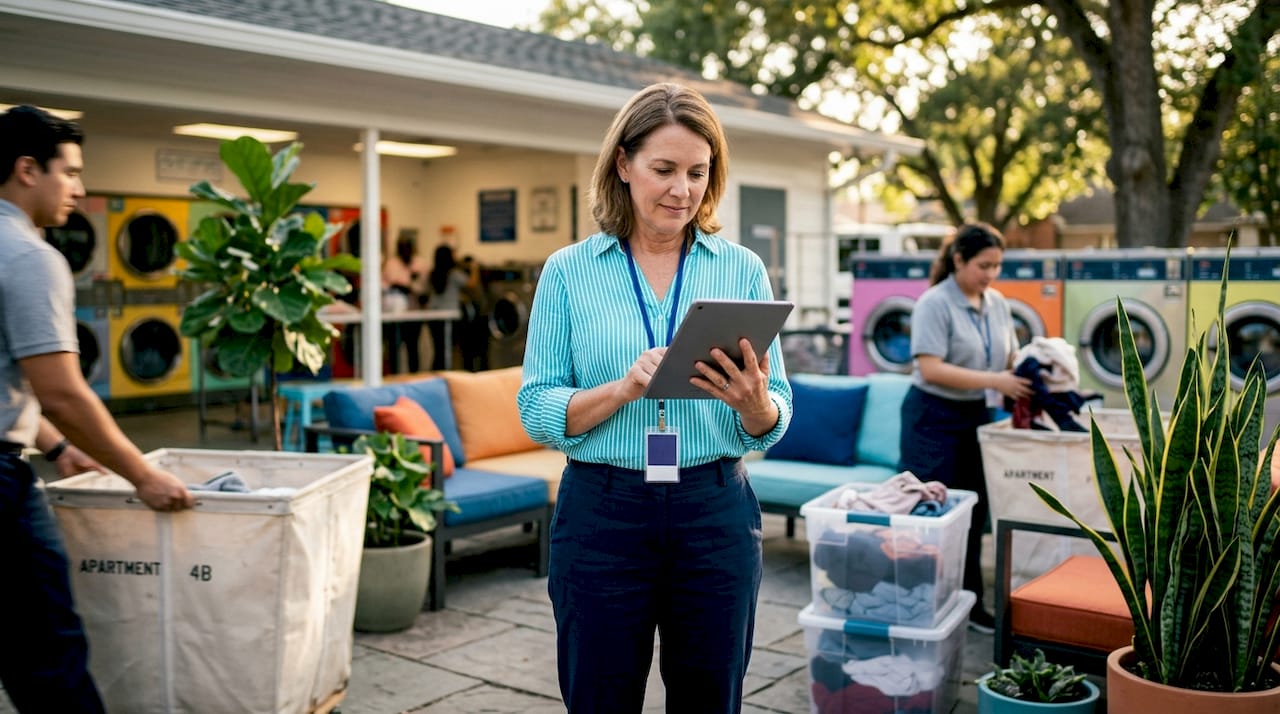
Laundromat outsourcing third-party orders is the practice of accepting laundry from external clients, such as hotels, gyms, or medical offices, and processing those orders through your facility or a partner network on their behalf. The industry term for this model is “commercial laundry service partnerships,” and it sits at the intersection of drop-off services and B2B contract fulfillment. Approximately 66% of modern laundromats now offer Wash-Dry-Fold services, which means the infrastructure for third-party fulfillment is already in place at most shops. The gap between a basic drop-off service and a true outsourced laundry solution is not equipment. It is logistics, systems, and discipline.
What does laundromat outsourcing third-party orders actually mean?
Third-party laundry outsourcing means your laundromat becomes the production hub for clients who cannot or choose not to handle laundry in-house. A boutique hotel sends its linens. A fitness studio sends its towels. A home care agency sends its residents’ garments. You wash, dry, fold, and return everything on a scheduled basis under a service agreement.
This model differs from standard drop-off in two critical ways. First, the volume is predictable and recurring, which means you can schedule equipment time and labor in advance. Second, the client relationship is contractual, not transactional. That changes how you price, communicate, and report.
Success in outsourced laundromat models is defined not by washing clothes alone but by mastering route management, scheduling, and customer communication. Owners who treat this as a logistics operation, not just a laundry operation, consistently outperform those who do not.
What tools and prerequisites do you need before starting?
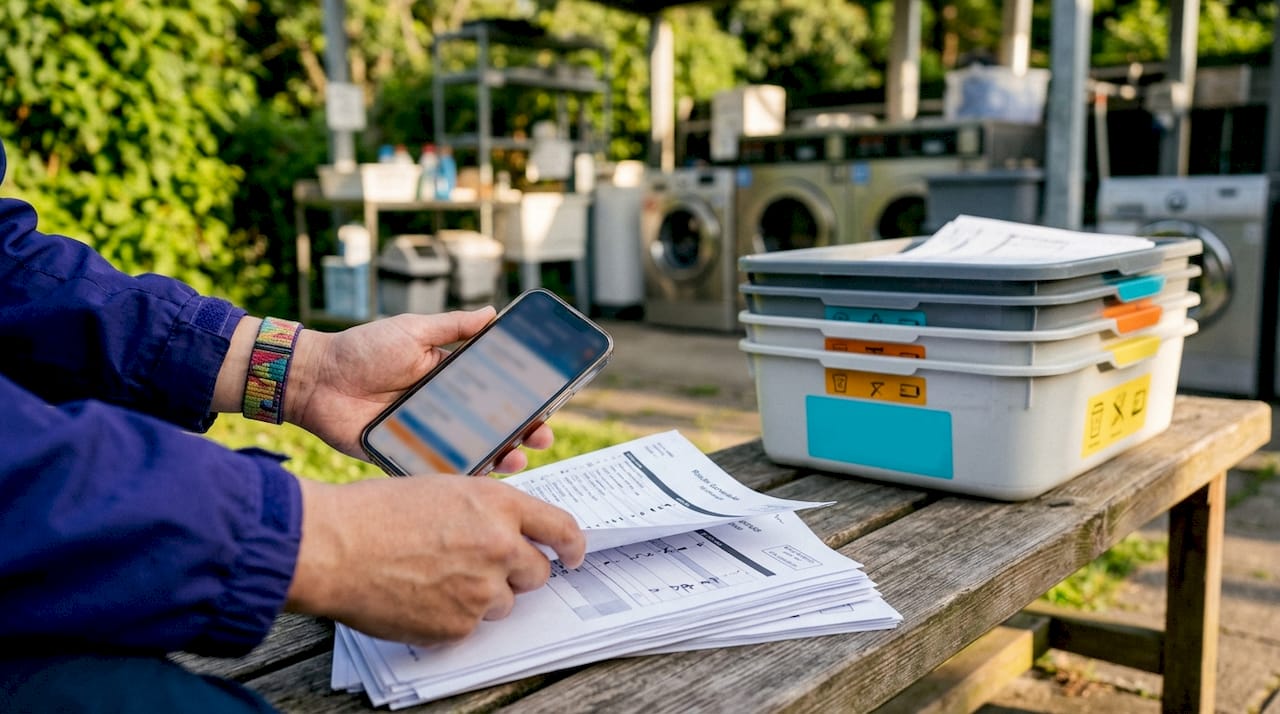
Getting the infrastructure right before you take your first third-party order prevents the most common early failures. Three categories of tools are non-negotiable.
| Tool Category | Purpose | Examples |
|---|---|---|
| Point of Sale (POS) system | Order intake, pricing, and client billing | Kansoflow, tablet-based POS platforms |
| Routing and scheduling software | Pickup and delivery coordination | Route planning apps, calendar-based dispatch tools |
| CRM or client management log | Client preferences, special instructions, history | Spreadsheet CRM, integrated POS client profiles |
| Order tracking system | Bag labeling, status updates, error prevention | Color-coded bags, barcode tags, digital logs |
| Reporting tools | Monthly summaries, damage documentation | POS reports, spreadsheet templates |
Your POS system is the backbone of the entire operation. It needs to handle client-specific pricing, track order status, and generate invoices without manual workarounds. Operators must invest in scalable tech stacks that integrate POS with routing and CRM tools to handle increased transaction volume and minimize error rates. A system that cannot do this will create more labor, not less.
Standard operating procedures (SOPs) are equally critical before you launch. Write down exactly how orders are received, labeled, processed, and returned. Train every staff member on those procedures before the first commercial client walks in.
- Define your service area and pickup windows in writing before signing any client
- Create a client intake form that captures fabric preferences, allergen concerns, and folding specifications
- Assign one staff member per shift as the designated third-party order handler
- Set up a dedicated staging area separate from your walk-in customer workflow
Pro Tip: Build your SOP document in a shared digital format so any staff member can reference it from the floor without asking a manager.
Outsourcing becomes financially rational when the cost of managing everything in-house exceeds the benefit. For many independent operators, the tipping point arrives when repair costs and labor intensity start eating into margins. Third-party contracts provide predictable revenue that offsets those pressures.
How do you manage third-party laundry orders step by step?
A repeatable process is what separates operators who scale from those who burn out. Follow these steps for every commercial order.
-
Receive and document the order. Log the client name, item count, special instructions, and delivery deadline at intake. Never accept an order without a written record. Kansoflow’s photo intake feature lets you photograph garments at the counter, which creates an instant visual record and eliminates disputes before they start.
-
Label every bag with client-specific identifiers. Color-coded bags, pickup logs, and tracking systems prevent errors and stop small problems from becoming large operational failures. Use a unique color or tag per client, and never mix bags from different accounts.
-
Schedule the processing window. Operators designate specific equipment and time blocks for bulk or commercial orders to prevent conflicts with walk-in customers during peak hours. Block out your heaviest commercial processing for early morning or late evening when self-service demand is lowest.
-
Process with client-specific settings. Some clients require fragrance-free detergent. Others need a specific fold style or temperature setting. These details live in your CRM and get pulled up at the start of every order. Do not rely on memory.
-
Inspect and document before packaging. Check every item for stains, damage, or missing pieces before folding. Log any issues with a photo and notify the client before delivery. Proactive communication on damage builds more trust than pretending the problem does not exist.
-
Schedule and execute delivery. Use a routing tool to batch deliveries by geography and time window. A single driver covering three hotel clients in one neighborhood is far more efficient than three separate trips.
-
Invoice and report. Send the invoice immediately after delivery. Include an itemized count and any damage notes. Monthly summary reports act as high-value retention tools because they show clients exactly what they are getting for their money.
Pro Tip: Set a hard cutoff time for same-day order acceptance. Clients who drop off after 2:00 PM get next-day processing. This protects your staff and your quality.
What are the most common mistakes in outsourcing laundry orders?
Most operators who struggle with third-party laundry services make the same four mistakes. Knowing them in advance is the fastest way to avoid them.
- Poor logistics planning. Taking on clients outside your delivery range or without a routing system creates chaos fast. Every extra mile adds cost and reduces your margin on each order.
- Weak data management. Operators who skip damage documentation and client reporting lose accounts when disputes arise. There is no paper trail to defend your work.
- Bad contracts. Long-term exclusive contracts with revenue share escalators can lock you into unfavorable terms for 5–10 years. Always have a contract attorney review any agreement before signing.
- Bottlenecks between self-service and commercial orders. When a bulk hotel order ties up three machines during Saturday morning rush, your walk-in customers leave. Scheduling discipline is the only fix.
The operators who fail at third-party outsourcing almost always have the same root problem: they added commercial clients to an existing operation without changing any of their systems. They tried to run a logistics business with a coin-op mindset. The laundry part is easy. The scheduling, communication, and reporting are where the real work lives.
Outsourcing shifts capital expenditures into predictable operational expenses, which reduces financial risk. But that benefit only materializes if you manage the operational side with equal discipline. Cutting corners on SOPs or contracts erases the financial advantage entirely.
How do you scale outsourced laundry services over time?
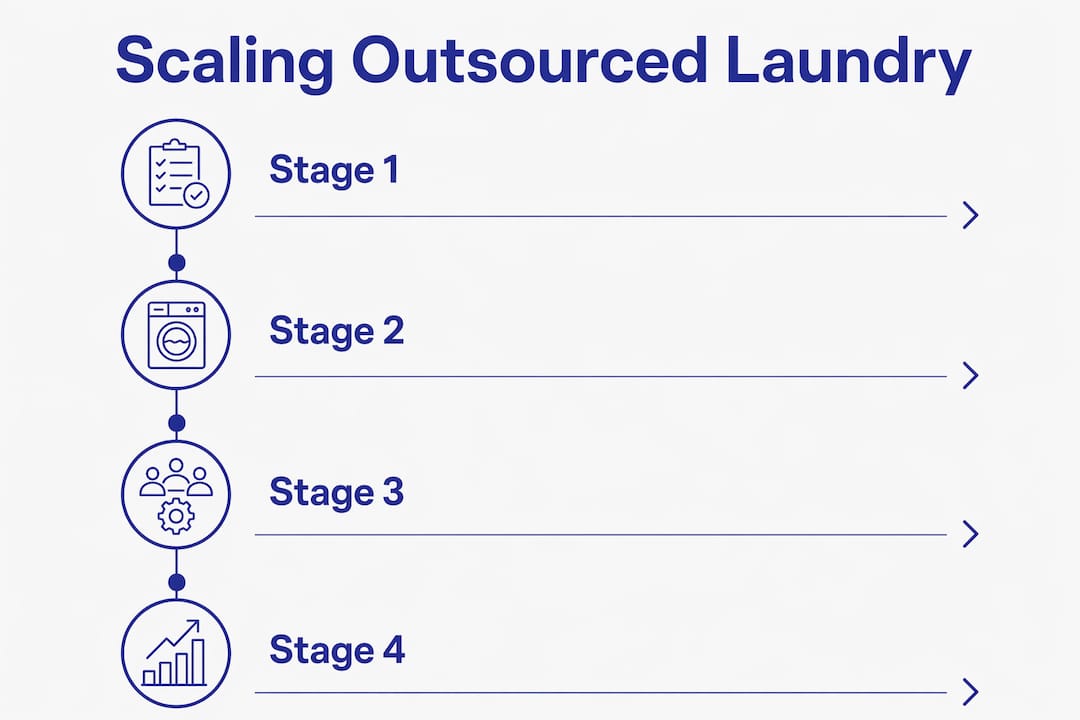
Scaling third-party laundry fulfillment requires a deliberate progression from single-location handling to centralized production. Most operators follow a three-stage path.
| Stage | Capacity | Key Investment |
|---|---|---|
| Stage 1: Single location | 1–3 commercial clients | POS system, SOPs, color-coded tracking |
| Stage 2: Multi-client hub | 4–10 commercial clients | Dedicated equipment blocks, routing software, CRM |
| Stage 3: Centralized facility | 10+ clients or high volume | Programmable washers, commercial ironers, delivery fleet |
One operator invested $500,000 in renovations to build a dedicated commercial laundry hub capable of handling high-volume third-party orders efficiently. That number is not the starting point. It is the destination after proving the model works at smaller scale.
Centralized facilities with programmable washers and commercial ironers improve throughput and reduce labor costs for bulk orders. The equipment investment pays off only when volume justifies it. Do not build the hub before you have the clients to fill it.
Data-informed scheduling and reporting systems let operators address client issues before they escalate and maintain high retention rates. The operators who grow fastest are the ones who treat their monthly reports as a sales tool, not just an accounting exercise. Showing a hotel client a 99% on-time delivery rate over six months is the most effective renewal conversation you can have.
Key Takeaways
Laundromat outsourcing third-party orders succeeds when owners treat it as a logistics operation, build the right systems before taking on clients, and use data to retain accounts over time.
| Point | Details |
|---|---|
| Define the model clearly | Third-party outsourcing is a contractual B2B service, not an extension of walk-in drop-off. |
| Build systems first | POS, CRM, routing tools, and SOPs must be in place before the first commercial client. |
| Use color-coded tracking | Client-specific bag labeling and photo documentation prevent errors and disputes. |
| Avoid bad contracts | Review all exclusivity and revenue share clauses before signing any multi-year agreement. |
| Scale with data | Monthly summary reports and damage logs are the most effective client retention tools available. |
The mindset shift nobody talks about
Running third-party laundry orders well requires a different way of thinking about your business. Most laundromat owners built their operation around machines. You buy equipment, you maintain it, customers feed it quarters. The job is to keep the machines running.
Third-party outsourcing breaks that model completely. The machines are still there, but the real product you are selling is reliability. Your hotel client does not care about your washer brand. They care that 200 towels show up clean, folded, and on time every Tuesday morning without fail.
I have seen operators with beautiful, well-maintained equipment lose commercial accounts because their communication was inconsistent and their invoicing was late. I have also seen operators with older machines hold contracts for years because they sent detailed reports, answered calls quickly, and never missed a delivery window.
The transition from machine landlord to logistics manager is the hardest part of this model. It is also the part that creates the most durable competitive advantage. Anyone can buy a washer. Not everyone will build the systems to run a reliable commercial laundry service.
Start with one client. Build the process around that one account until it runs without you thinking about it. Then add the second client. The operators who try to onboard five commercial accounts at once almost always fail the first time.
— Artur
How Kansoflow supports your outsourcing operation
Third-party laundry fulfillment generates a lot of moving parts: client profiles, order logs, bag tracking, delivery schedules, and invoices. Managing all of that across paper tickets and spreadsheets is where most operators hit a wall.
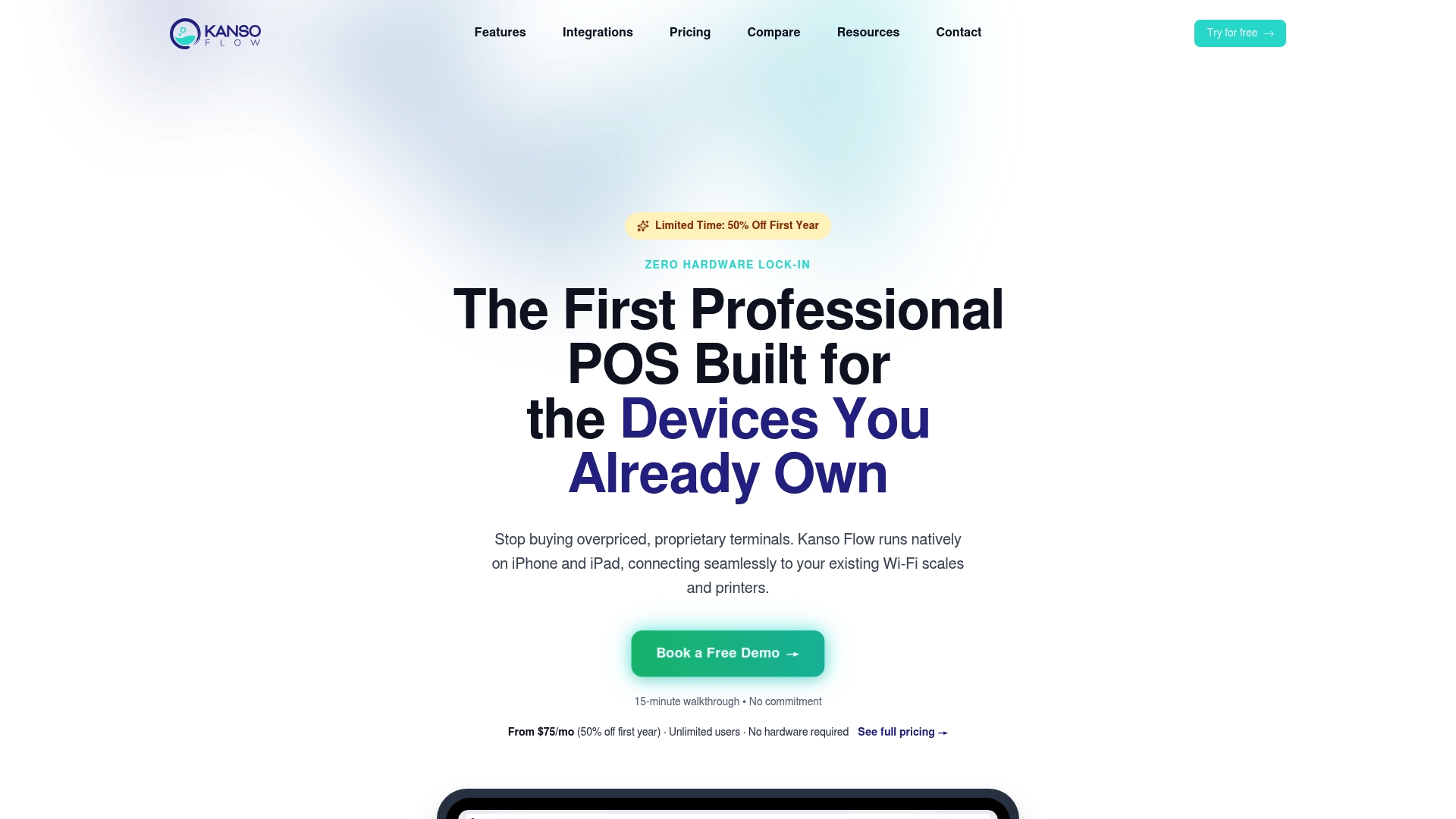
Kansoflow is built specifically for laundromat owners who need to run this kind of operation without adding administrative overhead. The platform’s order management features handle photo intake, client-specific instructions, inter-branch transfers, and real-time order status tracking from a single iOS interface. You can log a commercial order, photograph the garments, assign it to a processing stage, and generate an invoice without switching between tools. Kansoflow’s visual Kanban board keeps every order visible to your entire team at a glance. See the full platform at kansoflow.com.
FAQ
What is laundromat outsourcing of third-party orders?
Laundromat outsourcing third-party orders is the practice of accepting and processing laundry from external commercial clients, such as hotels or gyms, under a recurring service contract. It differs from standard drop-off because the relationship is contractual and volume-based.
What technology do I need to start outsourcing laundry orders?
You need a POS system for order intake and invoicing, a routing tool for pickup and delivery scheduling, and a CRM or client log for tracking preferences and special instructions. These three tools form the minimum viable tech stack for third-party laundry fulfillment.
How do I prevent mix-ups between commercial and walk-in orders?
Use color-coded bags and client-specific tags for every commercial order, and designate a separate staging area for third-party work. Scheduling commercial processing during off-peak hours also prevents equipment conflicts with walk-in customers.
What contract terms should I watch out for?
Avoid agreements with exclusivity clauses longer than two years and revenue share escalators that increase the vendor’s cut over time. Long-term exclusive contracts of 5–10 years frequently contain terms that favor the other party.
How do I retain commercial laundry clients long-term?
Send monthly summary reports that include item counts, on-time delivery rates, and any damage documentation. Proactive reporting builds client confidence and makes renewal conversations straightforward.