Laundromat Outsourcing Partner Checklist for Operators

A successful laundromat outsourcing partnership depends on selecting a vendor that meets strict standards across pricing transparency, hygiene protocols, contract flexibility, and direct operational accountability. This laundromat outsourcing partner checklist gives you a structured framework to vet any vendor before you sign a contract. The most common outsourcing failures trace back to three root causes: hidden fees buried in contract language, quality drift that starts after the first 90 days, and no direct escalation path when things go wrong. Get these three areas right, and you protect your revenue, your reputation, and your customers.
1. What pricing transparency criteria should you include in your checklist?
Pricing transparency is the first filter every operator should apply. A vendor who cannot hand you a complete, written pricing schedule before you sign is not ready to be your partner.
The core pricing criteria to verify:
- All-in per-pound or per-piece rate documented in writing with no oral amendments
- Fuel surcharge policy stated explicitly, including the trigger mechanism and cap
- Minimum volume thresholds disclosed upfront, not buried in addenda
- Linen replacement clauses with clear liability limits for damaged or missing items
- Invoice format matching what comparable clients receive, not a simplified sample
Hidden fees like fuel surcharges and processing minimums are the primary cost surprises operators face without clear contract documentation. That means the invoice you receive in month four can look nothing like the quote you accepted in month one.
You should also secure written answers to at least eight core evaluation questions before signing, including the total per-pound rate and the handling policy for damaged or missing items. Eight questions sounds like a lot until you get your first invoice with three line items you never discussed.

Pro Tip: Ask the vendor for two or three sample invoices from clients with a similar volume profile. Real invoices reveal surcharges, minimums, and adjustment fees that a pricing sheet never shows.
2. Which quality control and hygiene protocols are non-negotiable?
Quality control is where most outsourcing relationships quietly fall apart. Quality drift is the most frequent failure post-outsourcing, occurring gradually over 3–6 months. That gradual slide is exactly why you need documented protocols before day one, not after a customer complaint.
The non-negotiable hygiene and quality criteria:
- High-temperature wash cycle verification with documented proof, not verbal assurance
- Physical separation of clean and soiled items at the facility level to prevent cross-contamination
- Counted manifests at pickup and delivery to create a paper trail for every bag
- Stain pre-treatment SOPs applied consistently before washing, not as an afterthought
- Final quality inspection before items are packed for return delivery
Lost laundry happens mainly when vendors pick up uncounted bags. Counted manifests at both pickup and delivery reconcile inventory and eliminate the “we never received it” dispute.
A true outsourcing partner should operate the same SOPs you would use yourself, including garment sorting, stain pre-treatment, and final quality inspection. If a vendor cannot describe their pre-treatment process in detail, they cannot maintain professional-grade quality at scale.
Professional laundry partners must provide documented proof of hygiene protocols such as high-temperature wash cycle verification and facility separation. Ask for the documentation, not just the claim.
Pro Tip: Visit the vendor facility before signing. A 30-minute walkthrough tells you more about their actual SOPs than any brochure. If a site visit is not possible, request their full SOP documentation in writing.
3. How should contract flexibility and trial periods shape your partner selection?
Contract terms directly determine how much risk you carry if the partnership underperforms. The structure of your agreement matters as much as the service itself.
- Require contract terms under three years. National rental companies typically lock operators into 3–5 year contracts with termination penalties. That length of commitment to an unproven vendor is a liability, not a partnership.
- Mandate a 60–90 day trial period. Trial periods should last 60–90 days with documented performance benchmarks reviewed at 30, 60, and 90 days. No trial period means no baseline for accountability.
- Require unconditional exit ramp clauses. The exit ramp must trigger automatically if the vendor misses documented performance benchmarks during the trial. Vague language like “reasonable efforts” gives you no legal ground to stand on.
- Reject automatic renewal clauses. Auto-renewal traps operators into another full contract term without a formal review. Strike this clause or add a 90-day written notice requirement.
- Cap termination fees. Punitive termination fees are a red flag. A confident vendor does not need financial penalties to retain your business.
Local full-service providers often offer next-day turnaround and better operational accountability than national companies locked into 3–5 year contracts with termination penalties. Shorter contracts with local vendors give you both speed and flexibility.
Pro Tip: Negotiate a clause that names the vendor’s owner or general manager as your direct escalation contact. Put it in the contract, not in an email thread.
4. What operational communication practices ensure smooth partnership management?
Direct communication is the operational backbone of any outsourcing relationship. A vendor who routes every complaint through a general call center will cost you customers before they cost you money.
The communication criteria that distinguish dependable partners:
- Direct access to the facility owner or GM without call center barriers for urgent issues
- Written lost and damaged item policy with a defined resolution timeline, not a case-by-case judgment
- Regular performance reporting delivered on a fixed schedule, not on request
- Documented pickup and delivery scheduling with a clear process for volume adjustments during peak cycles
- Escalation contacts named in the contract for emergencies, not just in a welcome email
Escalation paths must allow direct contact with the facility owner or GM. Service quality problems resolve faster and customer retention holds when you can reach a decision-maker directly.
The first 90 days of any outsourcing arrangement should function as a formal audit phase. Schedule checkpoints at 30, 60, and 90 days to review delivery accuracy, damage rates, and turnaround times. If a vendor resists structured reporting during the trial, that resistance tells you everything about how they will behave in month 18.
Pro Tip: Require that your escalation contact’s direct phone number and email appear in the contract body, not in an appendix that can be updated without your consent.
5. How do situational factors influence the right partner choice?
Not every outsourcing partner fits every laundromat. Your location, volume profile, and linen mix all shape which vendor type will actually perform for your operation.
| Situational Factor | What to Prioritize |
|---|---|
| High-volume urban location | Capacity for daily pickup and next-day turnaround |
| Specialty linens (spa, gym, medical) | Documented segregation and temperature protocols |
| Multi-location operation | Centralized processing hub with inter-branch transfer capability |
| Seasonal volume spikes | Flexible capacity agreements, not fixed minimums |
| Tight turnaround requirements | Local or regional provider with dedicated route consistency |
Local full-service providers with next-day turnaround often outperform national vendors locked into lengthy contracts. For most independent operators, a regional partner with a dedicated route driver beats a national brand with a 1-800 number.
Evaluate the vendor’s ability to segregate inventory by linen type. A gym towel processed alongside a hotel duvet is a hygiene failure waiting to happen. Ask specifically how the vendor separates specialty items during washing, drying, and storage.
Also assess the vendor’s make-good policy for route disruptions. A documented policy for missed pickups, with a defined response window, separates professional operations from those who improvise. Route consistency is not glamorous, but it is the single factor that determines whether your customers notice the outsourcing arrangement at all.
Key Takeaways
The right outsourcing partner meets documented standards across pricing, quality, contracts, and communication before you commit to a single pickup.
| Point | Details |
|---|---|
| Demand full pricing documentation | Get a complete written rate schedule and sample invoices before signing any agreement. |
| Audit quality protocols in writing | Require documented SOPs for hygiene, stain pre-treatment, and counted manifests at pickup and delivery. |
| Cap contract length and add exit ramps | Keep terms under three years and require unconditional exit clauses tied to trial performance benchmarks. |
| Name your escalation contact in the contract | Direct access to the vendor’s owner or GM resolves problems faster and protects customer retention. |
| Match the vendor to your operational profile | Local providers with next-day turnaround outperform national vendors for most independent operators. |
What I’ve learned from watching outsourcing partnerships fail
The operators I see struggle most with outsourcing are not the ones who chose a bad vendor. They are the ones who chose a vendor without a checklist and then trusted the relationship to hold things together.
The first 90 days are not a honeymoon period. They are the only window where you have real leverage to set standards, document failures, and exit without penalty. I have watched operators skip the formal trial audit because the vendor seemed responsive and the first few pickups went fine. Then month four arrives, quality drifts, and they are locked into a two-year contract with no documented baseline to enforce.
The other pattern I see constantly is operators who accept verbal assurances on hygiene protocols. A vendor who says “we always separate clean and soiled items” but cannot hand you a written SOP is telling you something important. Process rigor shows up in documentation before it shows up in results.
Technology changes this dynamic significantly. When you track vendor performance inside your own laundry management platform, you build an audit trail that exists independent of what the vendor reports. That trail is your leverage in every conversation about quality, pricing, and contract renewal.
The operators who manage outsourcing well treat it like a supply chain, not a handshake deal. They document everything, audit on a schedule, and keep contract terms short enough to renegotiate from a position of strength.
— Artur
Kansoflow makes vendor accountability visible
Managing an outsourcing partner without a digital audit trail is like running a route without a manifest. You will not know something is missing until a customer tells you.
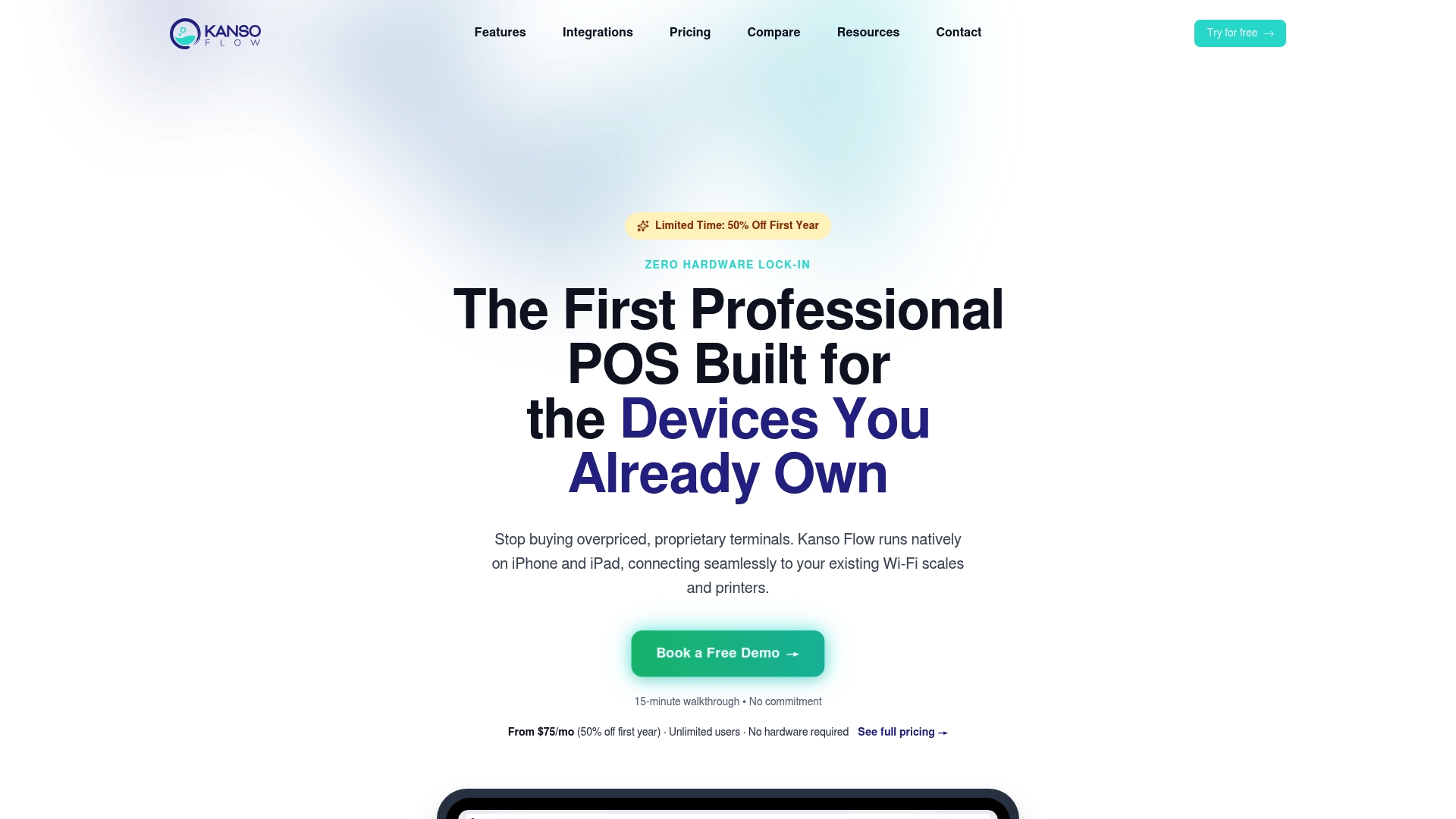
Kansoflow is built for independent and multi-location laundromat owners who need real operational visibility, not just a POS receipt. The platform’s outsourcing management features let you track vendor KPIs, log pickup and delivery confirmations, and flag quality exceptions directly inside your workflow. Photo intake at the counter creates a timestamped record for every order, which means you have documented evidence before a garment ever leaves your shop. When trial period checkpoints arrive, your data is already organized. Explore Kansoflow’s full feature set to see how it supports vendor accountability from day one.
FAQ
What is the minimum trial period for a laundry outsourcing partner?
A trial period should last 60–90 days with formal performance checkpoints at 30, 60, and 90 days. Shorter trials do not give you enough data to identify quality drift or operational inconsistencies.
How do I prevent hidden fees in a laundry outsourcing contract?
Require a complete written pricing schedule before signing and ask for sample invoices from comparable clients. Fuel surcharges, processing minimums, and linen replacement clauses are the most common sources of unexpected costs.
What hygiene documentation should a laundry partner provide?
A qualified partner provides written SOPs covering high-temperature wash cycle verification, physical separation of clean and soiled items, and stain pre-treatment procedures. Verbal assurances are not sufficient for professional-grade operations.
Why does direct escalation contact matter in a laundry partnership?
Direct access to the vendor’s owner or general manager resolves service problems faster than routing complaints through a call center. Name this contact explicitly in the contract body, not in a separate welcome document.
Should I choose a local or national laundry outsourcing partner?
Local and regional providers typically offer next-day turnaround and stronger operational accountability than national companies. National vendors often require 3–5 year contracts with termination penalties that limit your flexibility.