Laundromat Hardware Integration Options: 2026 Guide
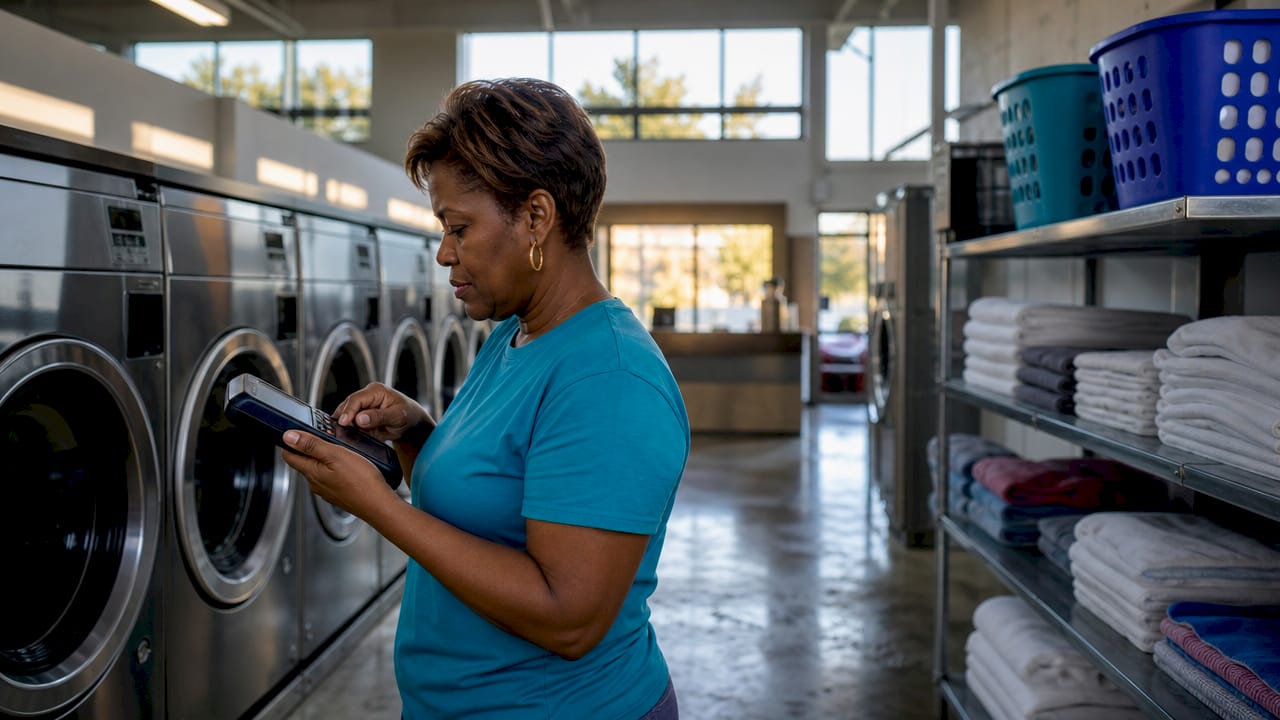
Laundromat hardware integration is the process of connecting payment terminals, washers, dryers, and management software into one coordinated system. The best laundromat hardware integration options combine flexible payment acceptance, machine connectivity, and open software compatibility to cut labor costs and keep customers coming back. Owners who get this right can recover their technology investment in under two years, according to equipment performance data from Girbau’s Genius series. The ten options below cover every shop size, from a single-location coin laundry to a multi-site operation running wash-dry-fold and pickup delivery.
1. Centralized cashless payment stations
Centralized payment stations sit between your machines and your customers, accepting credit cards, debit cards, Apple Pay, and Google Pay at a single kiosk that controls multiple washers or dryers at once. These systems use micro-controller circuitry with 0.5% repeat accuracy and support multiple vend time-delay settings. That level of precision means you can set exact cycle prices per machine without drift or error. One station can serve up to six machines simultaneously, which reduces hardware costs compared to putting a terminal on every unit.
2. Smart card systems
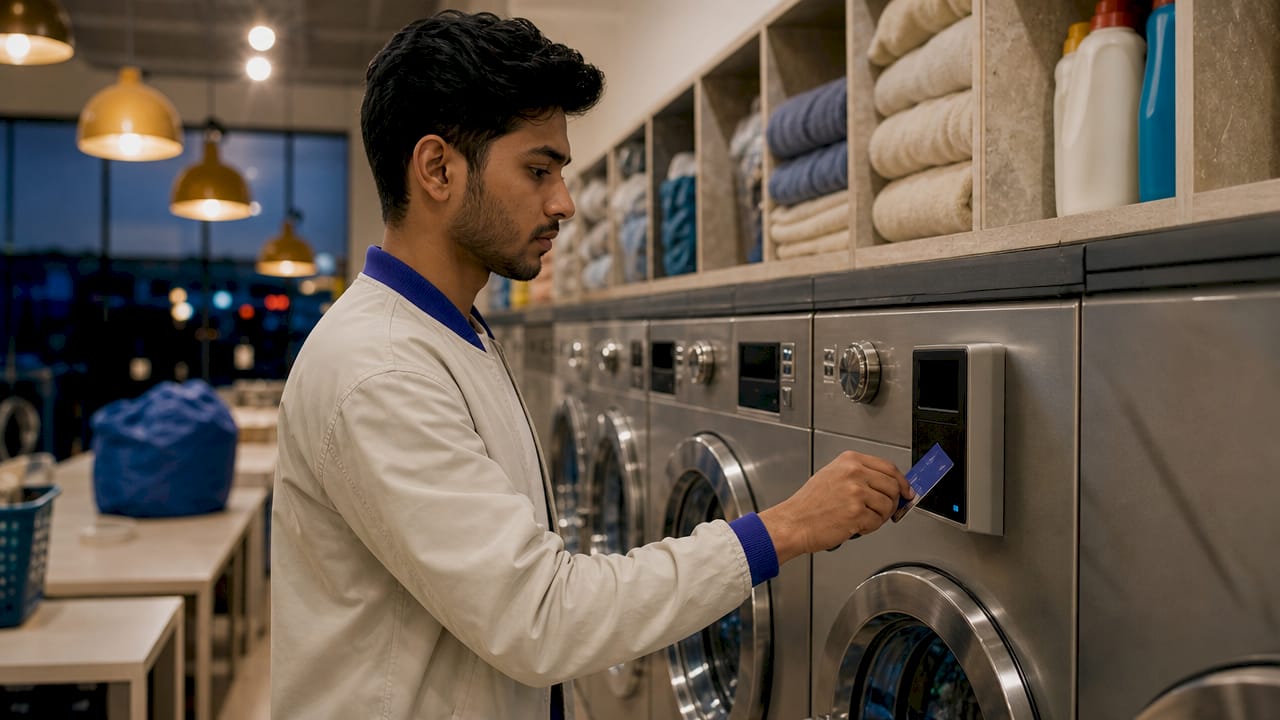
Smart card systems give customers a reloadable card they tap against a reader mounted on each machine. Secure cashless payments with flexible pricing and on-site or online card reloading make these systems a strong choice for high-volume locations. The real advantage is the marketing layer. Owners can set loyalty pricing, run promotions, and track spending patterns by card, which is data most coin-only shops never collect.
3. Digital retrofit kits for older machines
Replacing every coin-operated machine is expensive. Retrofit kits solve this by sending vend pulse signals that mimic coin drops through relay contacts, activating older mechanical coin-timer machines without a full overhaul. The machine never knows the difference between a real coin and a relay signal. This approach protects your existing equipment investment while adding modern payment acceptance immediately.
Pro Tip: Before buying a retrofit kit, confirm the machine’s timer type. Mechanical coin-timer machines accept relay-based vend pulses. Electronic control board machines may require a direct serial or pulse interface instead.
4. Contactless terminals with built-in cellular connectivity
WiFi in laundromats is notoriously unreliable. Humidity, thick walls, and customer device congestion all degrade signal quality. Terminals with built-in SIM cards operate on cellular networks independent of your shop’s internet connection. This means payment processing continues during a router outage or ISP disruption. For any location where internet reliability is a concern, cellular-enabled terminals are the only dependable choice.
5. Integrated POS systems built for laundromats
A laundromat POS system does more than process payments. It tracks orders through wash, fold, dry cleaning, and ready stages, manages customer preferences, and generates real-time reports. Kansoflow is a native iOS platform built specifically for this workflow. It pairs natively with Bluetooth scales and Star Micronics receipt and tag printers, and it supports Stripe and Square payment integrations out of the box. Owners get a single screen that handles the counter, the back room, and multi-location transfers without switching between apps.
6. Equipment with built-in connectivity and remote monitoring
Modern commercial washers and dryers from manufacturers like Girbau ship with onboard connectivity that reports cycle counts, error codes, and utilization rates to a cloud dashboard. Advanced equipment in this category can reduce operating costs by up to 23% and increase daily throughput by 31% compared to older models. That performance gap is significant. Owners who monitor machine health remotely catch maintenance issues before they become downtime events.
7. Mobile payment apps connected to the hardware ecosystem
Laundry payment apps let customers pay from their phones without touching a physical terminal. Real-time payment tracking and sales data access give owners a live view of revenue across every machine. The customer experience benefit is real too. Customers can start a cycle, receive a notification when it finishes, and pay for the next one without leaving their seat. That convenience directly reduces complaints and increases repeat visits.
8. Open API modular systems
Open ecosystems use APIs that let owners connect best-in-class POS, payment, and laundry management tools without being locked into a single vendor’s hardware bundle. This matters because your needs will change. A system you buy today should accept a new payment terminal, a new management app, or a new machine type in three years without requiring a full replacement. Closed proprietary systems rarely offer that flexibility.
9. Automated coin and vending management modules
Some laundromats still serve a significant cash-paying customer base. Hybrid billing modules handle coin collection and digital payments from the same unit, automating coin counting and reporting alongside card transactions. This eliminates manual coin reconciliation at the end of each shift. Owners get a single revenue report that covers both payment types, which reduces accounting errors and saves staff time.
10. Backup hardware and offline failover solutions
Every integrated system needs a fallback. Backup hardware solutions store recent transaction data locally and sync to the cloud when connectivity is restored. This prevents revenue loss during outages and protects customer transaction records. The best setups combine cellular failover on terminals with local data caching on the POS, so the counter never goes dark even when the internet does.
How to choose the right hardware integration for your shop
Selecting the right setup depends on four factors: your customer base, your machine count, your internet reliability, and your budget for upfront costs versus long-term savings.
- Assess payment preferences. Survey your customers or watch the counter for a week. If most customers still pay with coins, a hybrid system that handles both cash and cashless is the right starting point. If your neighborhood skews younger and tech-forward, a fully cashless setup with mobile app support will serve you better.
- Count your machines. Shops with fewer than 10 machines can often use individual terminals per unit. Larger shops with 20 or more machines benefit from centralized payment stations that control multiple units from one point, reducing hardware costs and simplifying maintenance.
- Test your internet. Run a speed and reliability check during peak hours. If you see frequent drops, prioritize terminals with built-in cellular connectivity over WiFi-dependent options.
- Calculate your ROI window. Equipment upgrades that reduce operating costs by meaningful margins can recover investment in under two years. Factor in labor savings from automated reporting, reduced coin handling, and fewer customer disputes alongside the hardware purchase price.
- Choose open over closed. Open API environments protect your investment by letting you swap components as technology evolves. Avoid systems that require proprietary hardware for every upgrade.
Pro Tip: Ask every hardware vendor for their API documentation before signing a contract. If they cannot provide it, the system is likely closed, and you will pay for every future upgrade on their terms.
Comparing hardware integration categories
The table below maps the five main hardware categories against the criteria that matter most for laundromat operators.
| Category | Payment methods | Machine compatibility | Install complexity | Best for |
|---|---|---|---|---|
| Centralized payment stations | Card, mobile wallet, NFC | Multiple machines per station | Moderate | Mid to large shops |
| Smart card systems | Reloadable card | Most modern machines | Low to moderate | High-volume, loyalty-focused shops |
| Retrofit kits | Card, mobile wallet | Older coin-timer machines | Low | Budget-conscious owners with older equipment |
| Cellular contactless terminals | Card, NFC, mobile wallet | One terminal per machine | Low | Locations with poor WiFi |
| Integrated POS platforms | Card, Stripe, Square | Software-defined, hardware-agnostic | Moderate | Full-service and multi-location shops |
Retrofit kits win on cost and speed of deployment. Centralized stations win on scalability. Integrated POS platforms like Kansoflow win when you need order management, customer records, and payment processing in one place.
Pro tips and overlooked factors in hardware integration
Getting the hardware right is only half the job. These factors determine whether your integration actually performs in a busy shop environment.
- Plan for durability. Laundromat hardware faces heat, humidity, and constant physical contact. Modernizing payment systems requires hardware that provides consistent performance and easy maintenance, not just modern features. Choose terminals rated for commercial environments.
- Use multilingual interfaces. Many laundromat customer bases are multilingual. Terminals and apps that support Spanish, Mandarin, or other languages reduce confusion and speed up transactions at the counter.
- Set up remote monitoring alerts. Any hardware that connects to the internet should send you a notification when a machine goes offline, a payment fails, or a cycle error occurs. Catching problems remotely saves a trip to the shop and reduces customer frustration.
- Budget for training. Staff turnover in laundromats is high. Choose systems with simple interfaces and short learning curves. Every hour spent training a new attendant on a complex system is an hour of lost productivity.
- Integrate with your wash-dry-fold workflow. If you offer wash-dry-fold or pickup and delivery, your hardware needs to connect with your order management system. Disconnected systems create gaps where orders get lost and disputes arise.
Pro Tip: Request a live demo of any hardware system during a simulated busy period. Watch how fast a transaction completes from tap to receipt. If it takes more than 10 seconds, customers will notice during peak hours.
Key takeaways
The strongest laundromat hardware integration strategy combines open API compatibility, cellular payment fallback, and a POS platform that connects payments to order management in one place.
| Point | Details |
|---|---|
| Open API compatibility | Choose hardware that connects to third-party software to avoid costly vendor lock-in. |
| Cellular payment fallback | Terminals with built-in SIM cards keep payments running when WiFi fails. |
| Retrofit before replacing | Relay-based retrofit kits add cashless payments to older machines without full replacement. |
| ROI within two years | Equipment upgrades that cut operating costs and reduce labor can recover their cost quickly. |
| POS integration matters | Connecting payments to order tracking reduces disputes and gives owners real-time revenue data. |
What I’ve learned about hardware integration after years in laundromat operations
The conversation about hardware integration almost always starts with payment terminals and ends there. That is the wrong frame. Payment is the last step in a customer interaction, not the whole system. The owners I have seen get the most out of their technology investments are the ones who treated hardware as infrastructure for a larger operational system, not as a standalone upgrade.
The open versus closed ecosystem question is where most operators make their biggest mistake. A closed system looks cheaper on day one. By year three, you are paying the vendor’s upgrade prices, waiting on their support queue, and watching competitors with open systems add new features you cannot access. The flexibility of open API systems is not a technical nicety. It is a business protection strategy.
Customer loyalty also comes from the experience around the payment, not just the payment itself. A customer who gets a push notification when their dryer finishes, pays from their phone, and never has to argue about a lost garment is a customer who comes back. That experience requires hardware and software working together, not two separate systems that never talk.
My honest recommendation is to start with the weakest link in your current setup. If your WiFi drops twice a week, fix that with cellular terminals first. If your attendants spend 20 minutes per shift reconciling coins, add a hybrid billing module. Fix the friction points you already know about before adding new technology on top of them.
— Artur
Kansoflow connects your hardware to your whole operation
Running a laundromat means managing machines, orders, payments, and staff all at once. Kansoflow is a native iOS POS and operations platform built specifically for that reality.
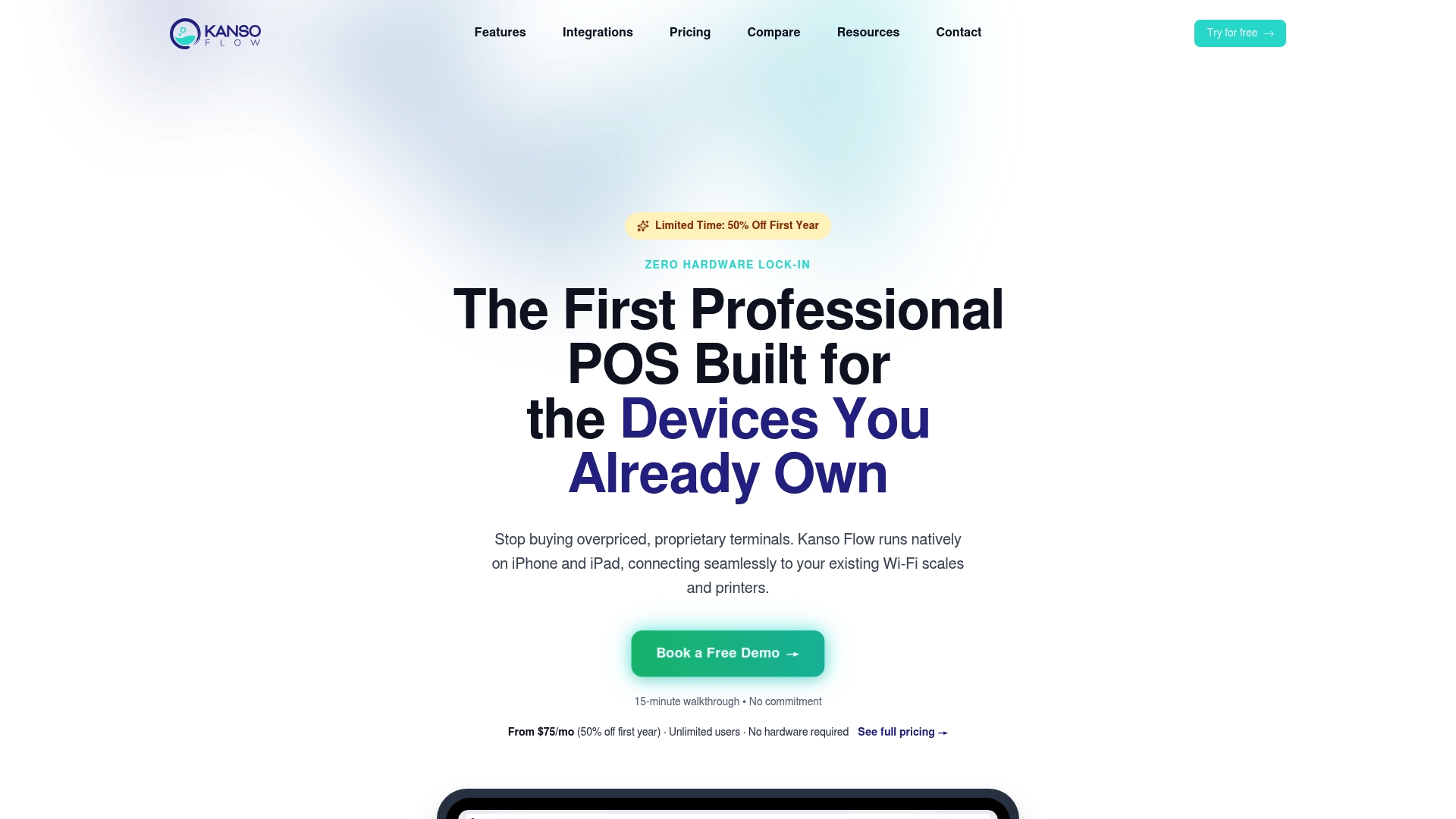
Kansoflow pairs natively with Bluetooth scales and Star Micronics printers, integrates with Stripe and Square for payment processing, and gives your team a visual Kanban board to track every order from drop-off to pickup. The platform supports multi-location transfers, photo intake for garment claims, and per-device PIN security for fast staff switching on a busy counter. You can review the full feature set and pricing to see exactly what fits your shop. Independent owners and multi-location operators use Kansoflow to replace fragmented, slow systems with one fast, clear interface built for the shop floor.
FAQ
What are the main laundromat hardware integration options?
The main options are centralized payment stations, smart card systems, retrofit kits for older machines, cellular contactless terminals, and integrated POS platforms. Each serves a different combination of machine count, budget, and connectivity conditions.
Can I add cashless payments to older coin-operated machines?
Yes. Retrofit kits use relay contacts to send vend pulse signals that mimic coin drops, activating older mechanical coin-timer machines without replacing them. This is the most cost-effective path for shops with existing equipment.
What happens to payments if my laundromat WiFi goes down?
Terminals with built-in cellular SIM cards process payments over a mobile network independent of your shop’s WiFi. This keeps transactions running during internet outages without any manual intervention.
How long does it take to recover the cost of hardware upgrades?
Advanced laundry equipment and integrated payment systems can help owners recover their investment in under two years when operating cost reductions and labor savings are factored in alongside revenue increases from cashless payment acceptance.
Why does open API compatibility matter for laundromat hardware?
Open API systems let you connect different payment terminals, POS platforms, and management tools without being locked into one vendor. This protects your investment as technology changes and gives you the freedom to upgrade individual components without replacing the entire system.