Laundromat Customer Retention Strategies for 2026
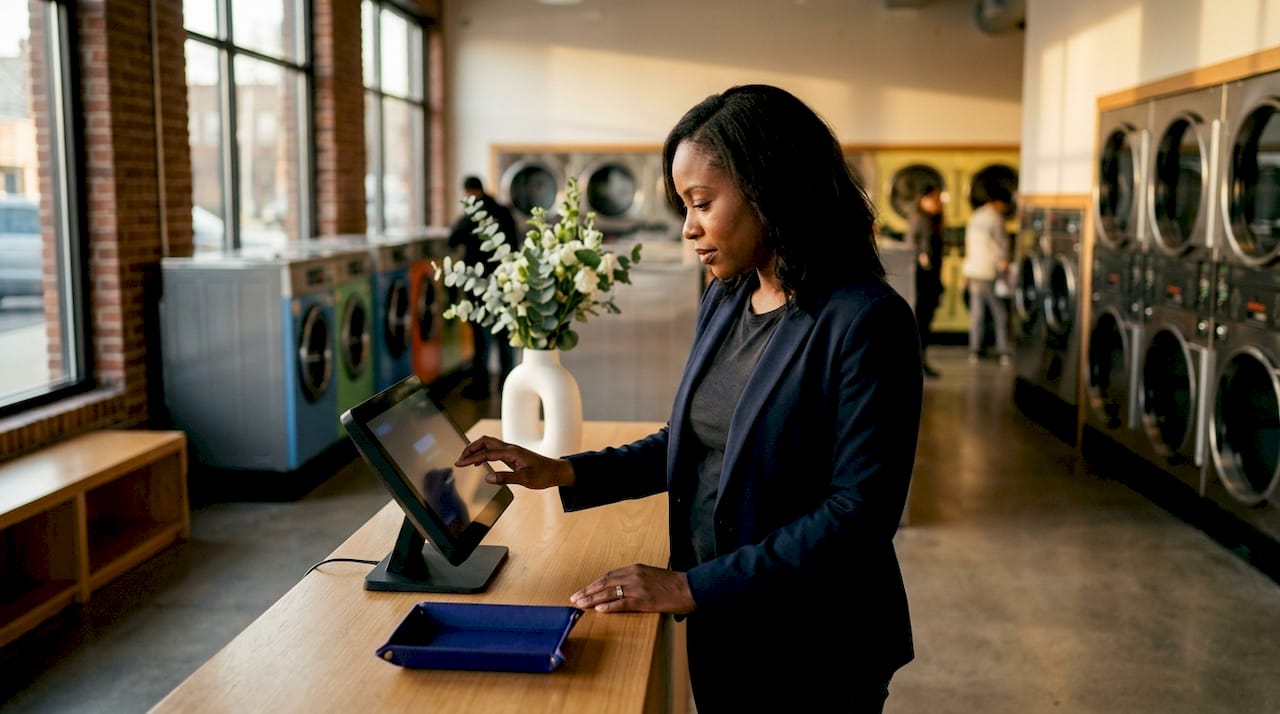
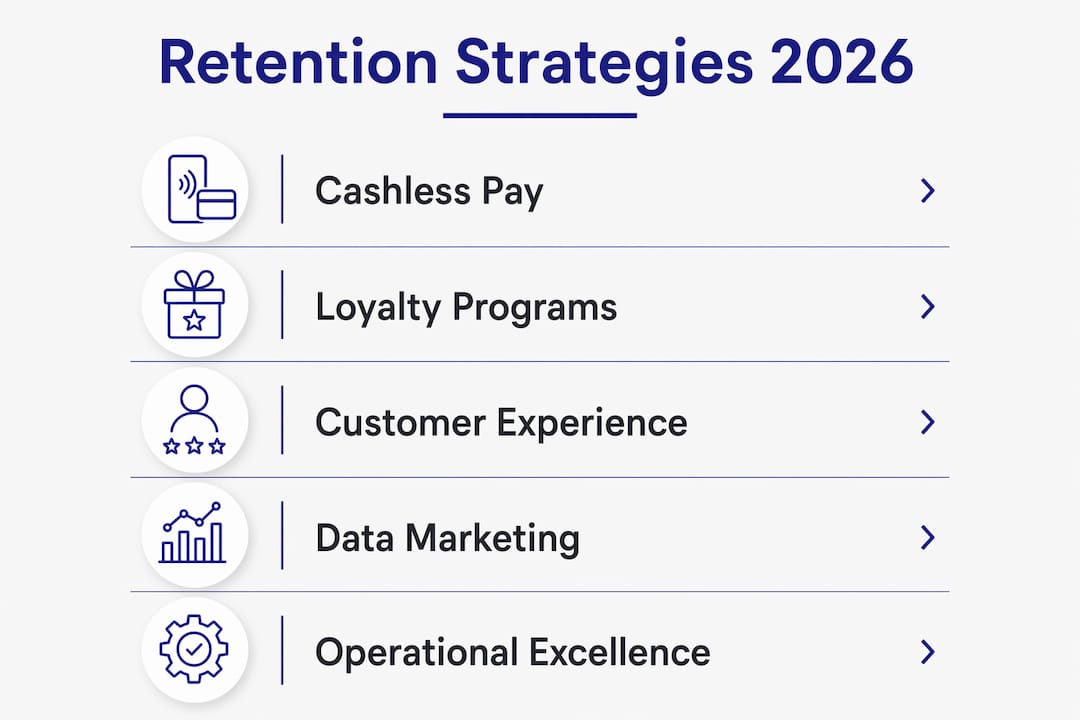
Laundromat customer retention strategies in 2026 are defined by one core principle: owning your customer relationship, not just their quarters. Operators who integrate digital payment systems with structured loyalty programs see 20–35% revenue growth in their first year. That number reflects a fundamental shift in how laundromats compete. Loyalty program members spend up to 18% more per visit than non-members. The gap between a coin-only shop and a data-connected one is no longer about convenience. It is about survival.
What are the essential digital payment and loyalty tools for laundromat retention in 2026?
The coin-only model is losing customers fast. Nearly two-thirds of customers will switch laundromats for contactless payment options. That is not a preference. That is a defection rate. Approximately 80% of operators currently run hybrid payment setups, but cashless-only configurations now dominate new builds in 2026. If your machines still require exact change, you are filtering out a growing share of your neighborhood.
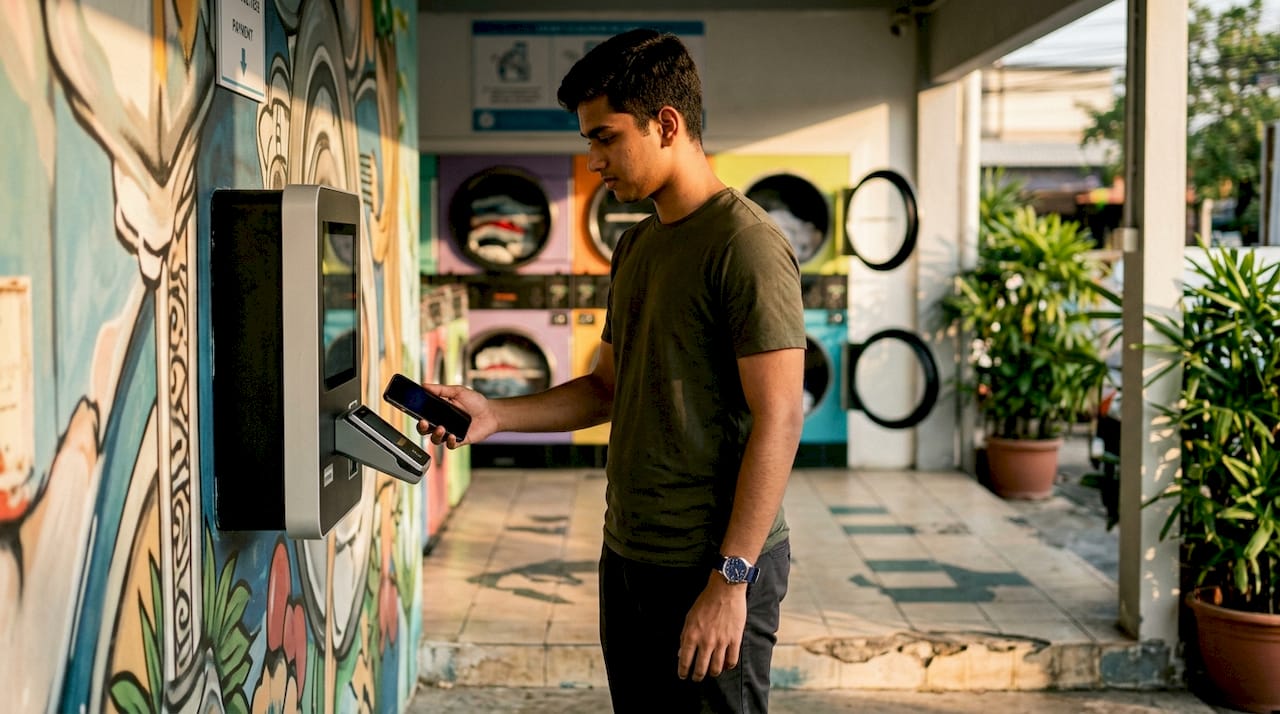
The real power of going cashless is not just payment convenience. It is the loyalty registration that follows. Kiosk-based loyalty prompts achieve 90–98% customer registration rates. That figure is extraordinary compared to paper punch cards or manual sign-up sheets. When the prompt appears at the moment of payment, customers register because it costs them nothing and saves them money.
Once registered, automated rewards do the heavy lifting. Visit-based point systems, reload bonuses, and targeted promo codes all drive repeat visits without requiring staff involvement. The system runs in the background while your attendants focus on the floor.
Key tools that support this approach include:
- Cashless kiosks with loyalty prompts: Capture registration at the point of payment, not after the fact.
- App-based rewards wallets: Let customers check balances and redeem rewards from their phones, which keeps your brand visible between visits.
- Automated SMS and email triggers: Send a promo code when a customer has not visited in 21 days. No manual outreach needed.
- QR code loyalty entry points: Post them near machines and at the counter so walk-in customers can register without a kiosk interaction.
Pro Tip: Set your kiosk loyalty prompt to appear before the payment confirmation screen, not after. Customers who have already committed to paying are far more likely to register than those who are done with the transaction.
How to create compelling loyalty programs that increase customer lifetime value
Laundromat customer loyalty is not just about giving points away. The programs that retain customers long-term are built around perceived value at every visit. Here is a practical framework for building one that works.
-
Start with a reload bonus. Offer $5 free for every $50 loaded onto a loyalty card or app wallet. This creates a prepayment habit. Customers who load money in advance almost never switch to a competitor, because their balance is already committed to your store.
-
Add a double-load promotion. Run it on your slowest day, typically Tuesday or Wednesday morning. Customers who load $30 get $60 in wash credit. This fills off-peak machines and builds a weekly visit habit tied to your schedule, not theirs.
-
Build a tiered structure. Label tiers something simple: Standard, Regular, and VIP. VIP status unlocks priority folding service or a reserved machine during peak hours. Tiers create aspiration. Customers spend more to maintain status, not just to earn rewards.
-
Launch a subscription wash-dry-fold plan. Subscription plans convert households into recurring revenue and reduce churn dramatically. A plan structured at 40 lbs per month billed through an app removes the decision to visit. The customer is already paid up. They just show up.
-
Use targeted promo codes for lapsed customers. Segment anyone who has not visited in 30 days and send a single-use code worth $3 off their next wash. The cost is minimal. The win-back rate justifies it every time.
Pro Tip: Do not discount your base price to compete. Use bonus credit instead. A $3 bonus feels like a gift. A $3 discount trains customers to expect lower prices permanently.
The 18% higher spend per visit among loyalty members compounds over a year. A customer who visits 26 times annually and spends 18% more per visit generates significantly more revenue than a non-member with identical visit frequency. Multiply that across 200 registered members and the math becomes the most persuasive argument for building a program immediately.
What operational and in-store experience factors support long-term customer loyalty?
Digital tools only retain customers who had a good experience to begin with. The physical environment is the foundation. Faster wash cycles of approximately 40 minutes versus the traditional 70-minute cycle are now a measurable competitive advantage. Time-constrained customers, particularly working parents and renters with tight schedules, choose the faster option every time when price is comparable.
Cleanliness and seating quality matter more than most owners expect. A customer who waits 40 minutes in a clean, well-lit space with comfortable seating will return. The same customer in a dingy, flickering-light environment will not, regardless of your loyalty program perks.
Factors that directly support repeat visits include:
- Machine reliability: A broken machine on a customer’s first visit is often their last. Preventive maintenance schedules reduce this risk.
- Comfortable waiting areas: Wi-Fi, charging stations, and good lighting turn wait time into acceptable downtime rather than frustration.
- Attendant responsiveness: A staff member who addresses a machine issue in under three minutes signals that the business is well run.
- Consistent hours: Customers build laundry into their weekly routine. Unpredictable closures break that habit permanently.
Stat to know: Maintaining a Google Business Profile rating of 4.6 stars or higher, supported by a review velocity of 150 or more reviews, actively deters customers from choosing a competitor. A strong rating is not vanity. It is a retention tool.
Place a QR code near the exit that links directly to your Google review page. Customers who had a good experience will leave a review in under 60 seconds if you make it that easy. Those reviews compound into a public trust signal that no ad budget can replicate.
How to leverage data-driven marketing and customer engagement for retention
The most underused asset in most laundromats is the customer data sitting uncollected at the counter. Capturing emails and phone numbers at the point of wash or drop-off turns a transactional business into a relationship business. Your POS system and app platform function as a CRM engine when configured correctly. Every order creates a data point. Every data point enables a campaign.
Segmented campaigns outperform generic promotions by a wide margin. A message sent to customers who have not visited in 21 days performs better than a blanket discount sent to your entire list. The specificity signals that you noticed their absence, which builds a sense of relationship even in an automated message.
| Campaign type | Trigger | Offer |
|---|---|---|
| Win-back | 21 days since last visit | $3 bonus credit, single use |
| Off-peak fill | Tuesday or Wednesday morning | Double load credit |
| Loyalty milestone | 10th visit completed | Free wash upgrade |
| Subscription renewal | 3 days before billing | Reminder with referral bonus |
Pricing strategy is also a retention lever, not just a revenue one. Switching from coin to card or app payments enables annual vend price increases of 8–12% with minimal customer pushback. The mechanism is simple. When customers pay with an app or card, they do not feel a $0.25 increment the way they feel dropping an extra quarter into a slot. Digital payment removes the tactile friction of price increases. Customers who are enrolled in a loyalty program and receiving perceived value are even less likely to notice or object.
Retention-focused strategies consistently outperform acquisition-only approaches. Acquiring a new customer costs more than keeping an existing one. A loyalty member who visits 26 times a year is worth more than two new customers who each visit once and never return.
Key Takeaways
The most effective laundromat retention approach in 2026 combines cashless payments, structured loyalty programs, clean in-store environments, and first-party customer data to build recurring revenue from existing customers.
| Point | Details |
|---|---|
| Go cashless to capture loyalty data | Kiosk prompts at payment achieve 90–98% registration rates, far above manual sign-ups. |
| Loyalty members spend more | Members spend up to 18% more per visit, compounding significantly over a full year. |
| Subscriptions reduce churn | Wash-dry-fold subscription plans convert households into predictable, recurring revenue. |
| Data enables targeted campaigns | Capturing emails and phone numbers at drop-off powers segmented win-back and off-peak campaigns. |
| Raise prices with less friction | Digital payment enables 8–12% annual price increases with minimal customer resistance. |
The shift I think most laundromat owners are still missing
Most laundromat owners I talk to still think of their business as passive income. You buy the machines, you collect the revenue, you fix what breaks. That model worked when the competition was one other coin laundry down the street. It does not work when a new cashless shop opens two blocks away with a loyalty app, a clean waiting room, and a Google rating above 4.7.
The owners who are winning in 2026 have made a mental shift. They treat their laundromat like a service business with a customer list, not a vending machine with a lease. That means they know who their top 50 customers are. They know when those customers last visited. They send a message when someone goes quiet for three weeks.
The technology to do this is not complicated or expensive. What holds most operators back is the belief that their customers do not want a relationship with their laundromat. That belief is wrong. Customers want to feel recognized. A simple “here’s $3 for being a regular” message does more for loyalty than a new machine ever will.
My honest advice: start with the data. Before you redesign your waiting area or launch a tiered loyalty program, make sure every customer who walks through your door leaves a record. Name, phone number, email. That list is your most valuable business asset, and most operators are letting it walk out the door every single day.
— Artur
How Kansoflow helps you build retention from day one
Running a loyalty program and capturing customer data sounds like a lot to manage on top of running a busy shop floor. Kansoflow is built specifically for laundromat owners who want the results without the operational complexity.
Kansoflow’s native iOS POS handles cashless payments, customer registration, and order tracking in one place. The loyalty and payment features connect directly to your counter workflow, so attendants capture customer data without slowing down the line. Photo intake at drop-off eliminates disputes. The visual Kanban board keeps every order visible from wash to ready. If you are ready to move from coin-and-paper to a system that actually builds your customer list, Kansoflow is where that starts.
FAQ
What is laundromat customer loyalty?
Laundromat customer loyalty is the measurable tendency of customers to return to the same location repeatedly, driven by rewards programs, positive experience, and perceived value. Loyalty program members spend up to 18% more per visit than non-members.
How do loyalty programs increase laundromat revenue?
Loyalty programs increase revenue by raising spend per visit, reducing churn, and enabling subscription-based billing. Operators with integrated digital loyalty systems report 20–35% revenue growth in their first year.
What registration rate can I expect from a kiosk loyalty prompt?
Kiosk-based loyalty prompts placed at the payment screen achieve 90–98% customer registration rates. That rate drops significantly when sign-up is moved to a separate step after payment.
How often should I raise vend prices?
Annual price increases of 8–12% are standard for operators using digital payment systems. Customers enrolled in loyalty programs with perceived value are the least likely to push back on incremental price changes.
What data should I collect from laundromat customers?
Collect name, phone number, and email at minimum during every wash or drop-off order. That data enables segmented win-back campaigns, off-peak promotions, and subscription billing, all of which directly support long-term retention.