Laundromat Customer Complaint Workflow: 2026 Guide

A laundromat customer complaint workflow is a structured process that moves every customer issue from first contact through investigation, resolution, and follow-up in a defined sequence. Without this structure, disputes escalate, garments go missing without accountability, and customers leave without returning. The good news is that the right combination of standard operating procedures, digital tools like Kansoflow, and trained staff can cut resolution times from days to hours. This guide gives laundromat managers and service reps a practical framework to handle complaints faster, reduce lost garment disputes, and build the kind of trust that keeps customers coming back.
What is a laundromat customer complaint workflow?
A laundromat customer complaint workflow is the industry term for a documented, repeatable process that governs how your team receives, investigates, and closes every customer complaint. The informal version of this, where attendants handle issues on instinct, produces inconsistent outcomes and repeat disputes. A formal workflow removes that inconsistency by assigning clear steps to every complaint type.
The core benefit is speed. Automated tracking systems resolve 90% of inquiries within hours, compared to the 3–5 days typical of manual systems. That gap in resolution time directly affects whether a customer returns or posts a negative review. A documented workflow also creates a paper trail that protects your business when disputes escalate.
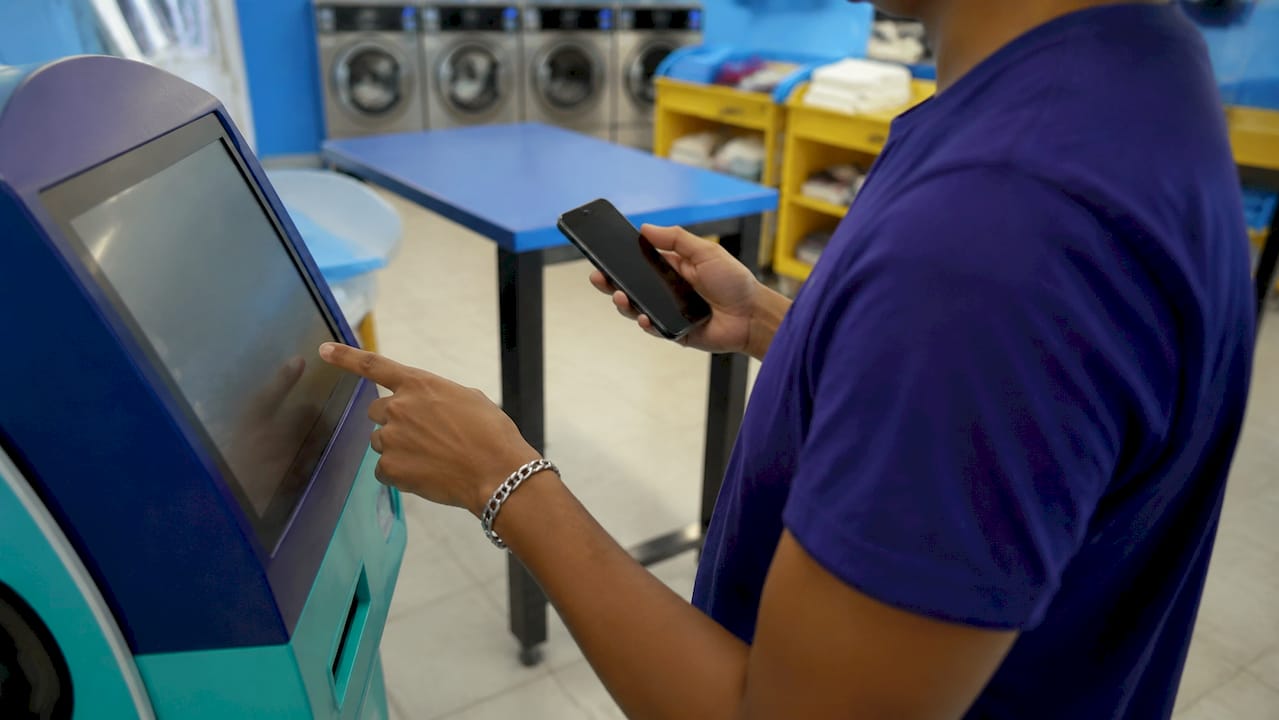
Complaint types at laundromats fall into three main categories: lost or damaged garments, machine malfunctions and refund requests, and service quality issues. Each category requires a slightly different response path, but all three share the same foundational steps. Knowing which path to follow before a complaint arrives is what separates a reactive shop from a well-run one.
What are the key steps in a laundromat complaint workflow?
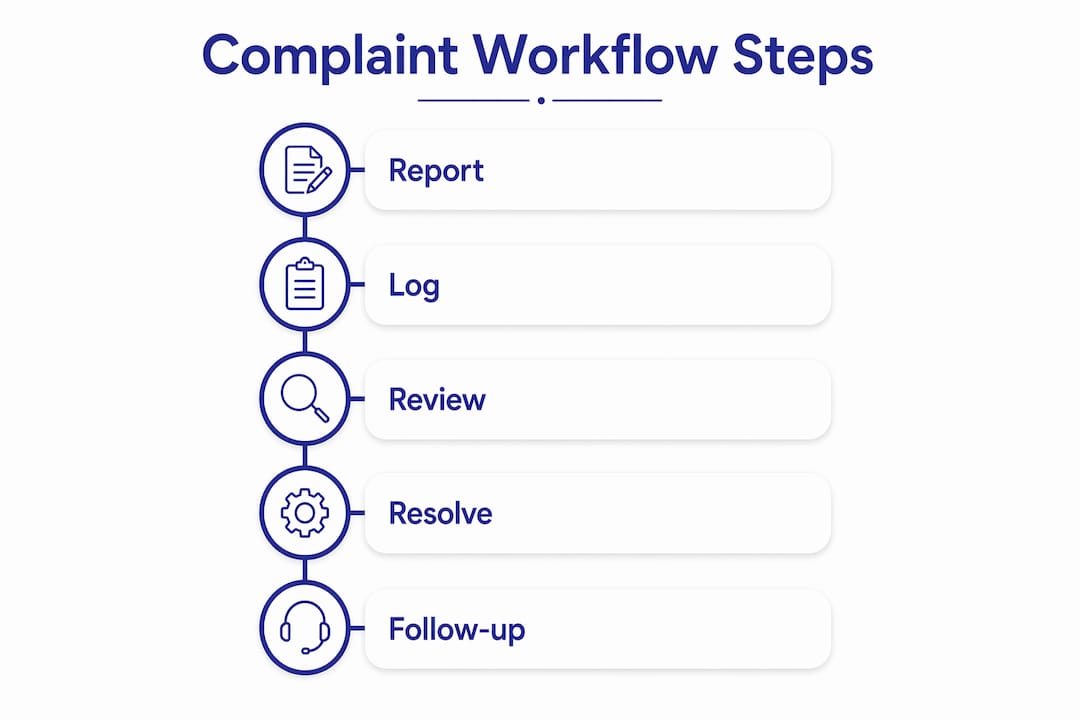
A repeatable complaint resolution process follows six steps. Each step has a specific purpose, and skipping any one of them increases the chance of escalation.
-
Listen and document. Let the customer finish speaking before responding. Record the complaint in writing immediately, including the date, time, machine number, and garment description. This log becomes your investigation record.
-
Acknowledge and apologize. Confirm you heard the issue and offer a sincere apology. This step does not mean accepting liability. It means the customer feels heard, which reduces emotional escalation before investigation begins.
-
Investigate with available tools. Pull machine error code logs, review intake photos, and check order timestamps. Digital records are faster and more reliable than memory. Recurring complaints often signal cumulative process failures rather than isolated machine errors, so look for patterns.
-
Provide a timely solution. Offer a concrete resolution: a refund, store credit, or a rewash. Store credit refunds encourage retention better than direct card refunds because they bring the customer back. Set a resolution deadline and meet it.
-
Follow up. Contact the customer within 48 hours to confirm the resolution worked. This step is skipped more than any other, and it is the one most likely to convert a dissatisfied customer into a loyal one.
-
Log and analyze. Record the outcome and file it with the original complaint. Complaint data integrated into daily operations improves repair timelines and prevents the same issue from recurring.
Pro Tip: Create a single complaint log sheet posted at the attendant station. Even a paper version beats relying on memory. Digital logs in a POS system like Kansoflow are faster, but any consistent documentation beats none.
How does automation improve the laundromat complaint process?
Automation does not replace your staff. It handles the routine inquiries so your staff can focus on the complex ones. The difference in outcome between manual and automated complaint handling is significant.
| Factor | Manual process | Automated process |
|---|---|---|
| Average resolution time | 3–5 days | Hours |
| Quality complaint reduction | Baseline | Up to 85% fewer complaints |
| Garment loss rate | Baseline | 15–25% lower with RFID |
| Staff time on routine calls | High | Significantly reduced |
RFID technology gives each garment a permanent digital identity from intake to pickup. RFID implementation lowers garment loss by 15–25% in the first year. That reduction directly cuts the volume of lost item disputes your team handles every week.
Automated quality control alerts work differently. They flag issues before the customer notices them. Automated alerts reduce customer quality complaints by 85% when paired with proactive communication. That is not a marginal improvement. It fundamentally changes how many complaints reach your counter.
AI tools handle routine questions well, but they require careful configuration for complaints. AI systems must escalate complaint keywords to a human immediately. Sending an automated response to an angry customer about a lost wedding dress makes the situation worse, not better.
Pro Tip: Configure your AI receptionist or chatbot with a short list of trigger words: “lost,” “damaged,” “missing,” “refund,” and “broken.” Any message containing these words should route directly to a staff member, not an automated reply.
What SOPs prevent and reduce customer complaints?
Standard operating procedures (SOPs) address the root causes of complaints before they reach your counter. Complaints result from cumulative weak processes like delayed repairs and unclear communication, not just single machine failures. The right SOPs close those gaps systematically.
Machine maintenance and diagnostics
Schedule weekly machine diagnostics and log every error code. Recurring complaint patterns signal when preventive maintenance is overdue and when capital equipment replacement is needed. A machine that generates three refund complaints in a week is telling you something. Act on that data before it becomes a revenue problem.
Signage and customer communication
Post clear, laminated instructions at every machine. Most user error complaints, such as wrong cycle selection or overloading, come from customers who were never shown how to use the equipment correctly. Simple visual guides near machines cut these complaints without any staff involvement.
Refund policy visibility
A clearly posted refund policy resolves approximately 90% of refund disputes instantly. Print it, laminate it, and mount it at eye level near the payment station and the attendant desk. Customers who can read your policy before asking a question arrive at the counter with lower expectations for confrontation.
Escalation protocols
Define exactly who handles what. Front-line attendants handle routine refunds and machine issues. Managers handle damage claims and disputes over $20. Owners handle anything involving legal threats or media. This ladder prevents attendants from making promises they cannot keep and prevents managers from being pulled into routine issues.
| Complaint type | First responder | Escalation trigger |
|---|---|---|
| Machine malfunction refund | Attendant | Refund over $20 |
| Lost garment claim | Manager | Customer disputes intake record |
| Damage claim | Manager | Garment value over $50 |
| Repeat complaint from same customer | Manager | Second occurrence within 30 days |
How can managers apply complaint data to improve operations?
Complaint data is the most underused diagnostic tool in laundromat management. Every complaint is a signal. The question is whether you are reading those signals or discarding them after the refund is issued.
Maintaining an operational log behind every refund incident identifies mechanical failures early and supports consistent service. When you see three complaints about machine 7 in one week, you have a maintenance issue. When you see complaints spike every saturday afternoon, you have a staffing issue. The log makes both patterns visible.
Training staff to handle disputes consistently is as important as the workflow itself. An attendant who handles a lost garment complaint differently than their colleague creates customer confusion and internal liability. Run a 30-minute training session monthly using real complaint examples from your own log. Role-play the six-step process until it becomes automatic.
Digital photographic proof with timestamps during garment intake eliminates damage disputes by providing an indisputable record of condition at drop-off. This single practice removes the most emotionally charged complaint type from your counter. When a customer claims their shirt was damaged in your facility, you can show them the intake photo taken 20 minutes before washing began.
Pro Tip: Review your complaint log every monday morning. Look for any complaint type that appeared more than twice in the previous week. That pattern is your maintenance or training priority for the week.
Store credit as a compensation tool serves two purposes. It resolves the immediate complaint and it brings the customer back. A customer who returns to use store credit has a second chance to have a good experience. That second visit is where retention is won or lost.
The human element is still the deciding factor
Running laundromats for years teaches you one thing that no software manual covers: automation is only as good as the escalation path behind it. The shops that over-automate their complaint responses end up with customers who feel like they are arguing with a wall. I have seen it happen repeatedly. An AI chatbot sends a polite, templated response to a customer whose grandmother’s quilt was lost. The customer posts a one-star review before a human ever sees the ticket.
The technology is genuinely useful. RFID tracking, photo intake, and automated alerts change the math on lost garment disputes in a real way. But the moment a customer uses the word “lost” or “damaged,” a human being needs to be on the other end of that conversation within the hour. Not the next business day. Within the hour.
The other mistake I see is treating complaint data as a customer service metric rather than an operations metric. Your complaint log is a maintenance schedule in disguise. If machine 4 generates five refund complaints in a month, that machine needs a technician, not a better apology script. The managers who figure this out early stop fighting the same fires repeatedly. The ones who do not spend every weekend handling the same disputes they handled the weekend before.
Build the workflow, use the technology, and train your staff. But never let the system become a substitute for a real conversation with an upset customer.
— Artur
How Kansoflow handles complaint workflows for laundromat operators
Kansoflow is a native iOS POS platform built specifically for laundromat operations, and its complaint management features address the exact friction points this article covers.

The photo intake feature captures timestamped garment photos at the counter the moment an order is created. That single step eliminates the majority of lost item and damage disputes before they escalate. The visual Kanban board tracks every order through Wash, Fold, Dry Cleaning, and Ready stages in real time, so attendants always know where a garment is. Kansoflow also integrates with Stripe and Square for fast store credit issuance, which keeps compensation simple and consistent. If you are ready to replace paper tickets and fragmented logs with a single, fast system, explore Kansoflow and see how it fits your operation.
FAQ
What is a laundromat lost item dispute?
A laundromat lost item dispute occurs when a customer claims a garment was not returned after a wash or dry cleaning order. The most effective prevention is digital photo intake at drop-off, which creates a timestamped record of every item received.
How do I reduce lost garment disputes at my laundromat?
RFID tagging and photo intake at the counter are the two most effective tools. RFID implementation reduces garment loss by 15–25% in the first year by giving each item a trackable digital identity throughout the wash cycle.
What should a laundromat refund policy include?
A clear refund policy should state the conditions for machine malfunction refunds, the compensation method (store credit or cash), and the time limit for filing a claim. Posting it visibly resolves approximately 90% of refund disputes before they escalate.
How does automation help with laundromat customer dispute resolution?
Automated systems resolve routine inquiries within hours compared to the 3–5 days typical of manual handling. The key is configuring AI tools to escalate complaint keywords like “lost” or “damaged” to a human staff member immediately.
How often should managers review complaint logs?
Weekly review is the minimum effective frequency. Reviewing complaint logs every monday morning lets managers identify recurring machine issues and staffing gaps before they generate additional complaints and refund costs.
Key takeaways
A structured laundromat customer complaint workflow, backed by digital intake records, clear SOPs, and weekly log reviews, is the most direct path to fewer disputes and higher customer retention.
| Point | Details |
|---|---|
| Document every complaint | Log the date, machine number, and garment details immediately to create an investigation record. |
| Use photo intake to prevent disputes | Timestamped garment photos at drop-off eliminate the majority of lost item and damage claims. |
| Post your refund policy visibly | A laminated, posted policy resolves approximately 90% of refund disputes before staff involvement. |
| Escalate complaints to humans fast | Configure any AI tool to route complaint keywords to a staff member within the hour. |
| Treat complaint data as maintenance data | Recurring complaints about the same machine signal a repair need, not just a service failure. |