Laundromat Attendant Accountability System: 2026 Guide
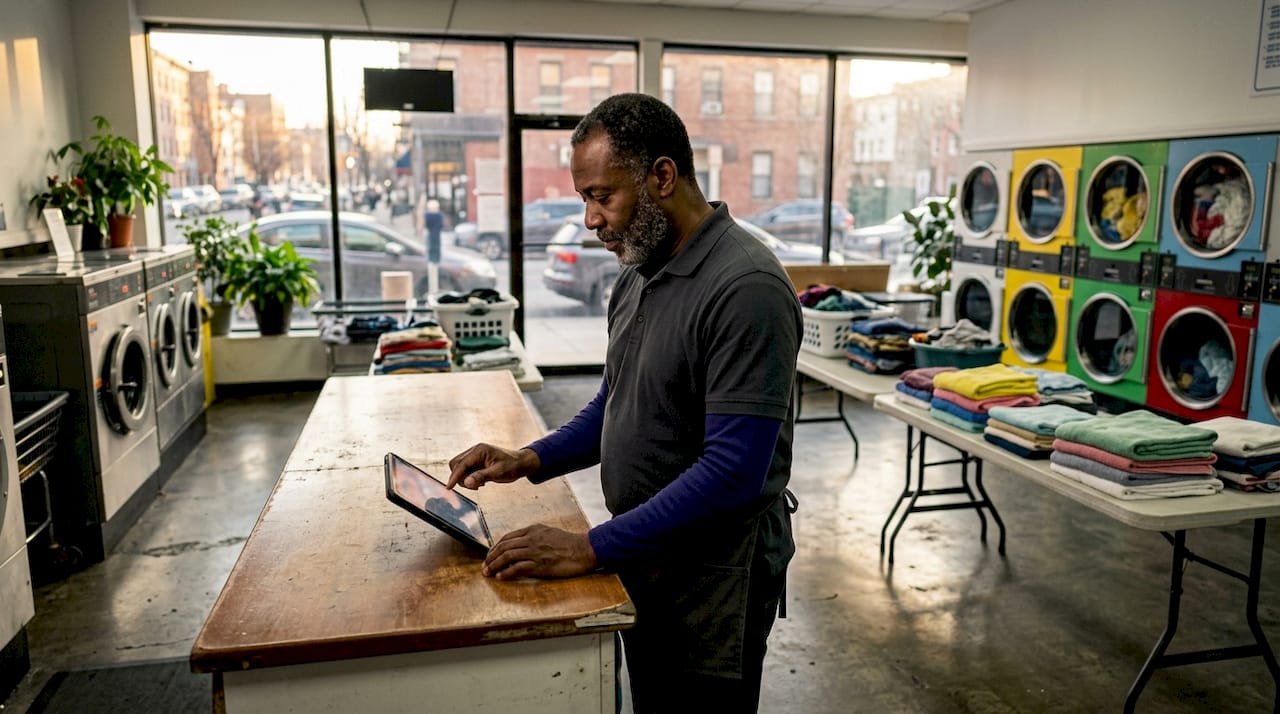
A laundromat attendant accountability system is a structured, trackable framework that combines digital task management, POS integration, and quality training to ensure staff perform consistently and transparently. Without one, lost garments, missed tasks, and cash discrepancies become daily problems with no paper trail to resolve them. The good news is that modern tools make this framework far easier to build than operators expect. This guide walks you through the technology, training practices, and step-by-step setup you need to run a tighter, more trustworthy operation in 2026.
What tools and technology enable a laundromat attendant accountability system?
The foundation of any staff accountability system is replacing manual, unverifiable records with digital logs that create an audit trail. Paper checklists and whiteboards tell you what should have happened. Digital systems tell you what did happen, and who was responsible.
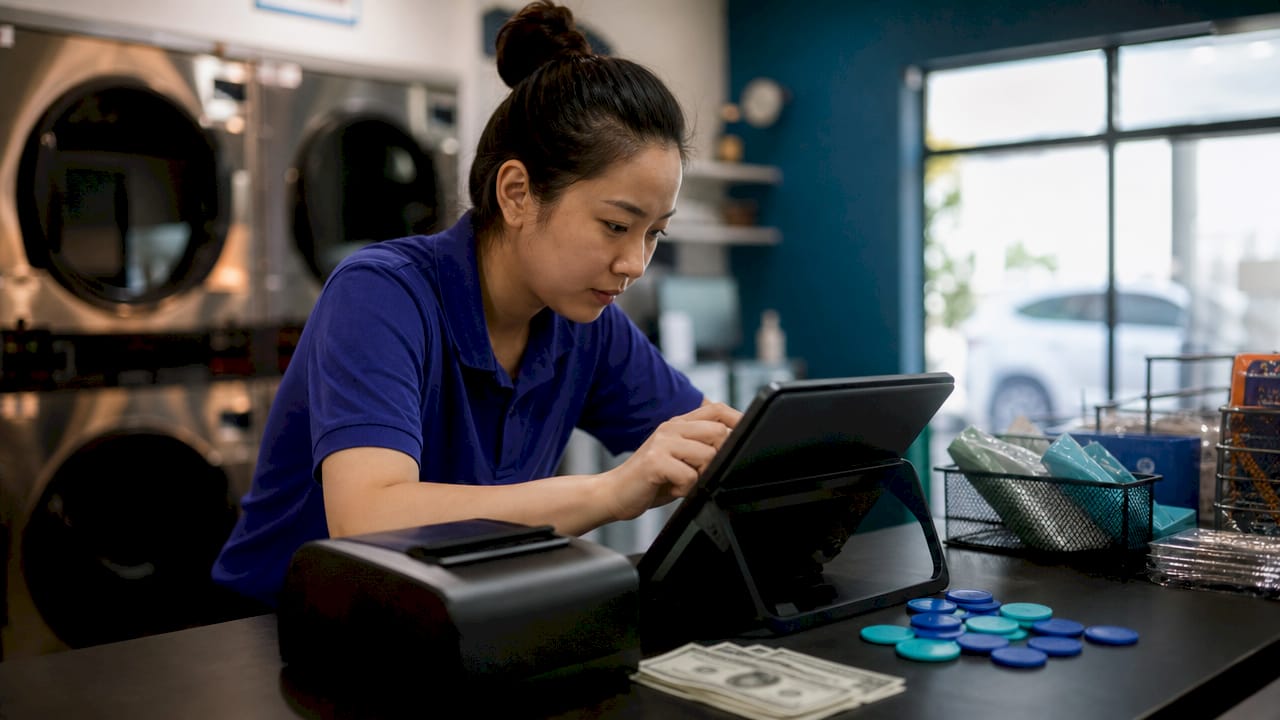
Automated Scheduled Tasks software replaces manual whiteboards with trackable digital task lists. Staff acknowledge and mark tasks complete via a kiosk or POS terminal, which records the timestamp and the employee on duty. That single change converts a vague “someone was supposed to do it” situation into a documented, auditable record.
The core technology stack for a modern accountability setup includes:
- Digital task scheduling software that pushes duty reminders to attendants and logs completions in real time
- POS systems integrated with laundry equipment to link every machine start to a specific customer order
- Photo intake tools that document garment condition at drop-off, eliminating disputed damage claims
- Per-device PIN security so every transaction and task acknowledgment is tied to a specific employee
Pro Tip: Set up your POS with individual employee PIN codes before anything else. Every action in the system then carries a name, not just a timestamp.
The table below shows how different tracking approaches compare on the features that matter most for staff oversight.
| Feature | Paper checklists | Basic digital logs | POS-integrated system |
|---|---|---|---|
| Audit trail | None | Partial | Full |
| Real-time visibility | No | Limited | Yes |
| Employee attribution | No | Sometimes | Always |
| Remote access for owners | No | No | Yes |
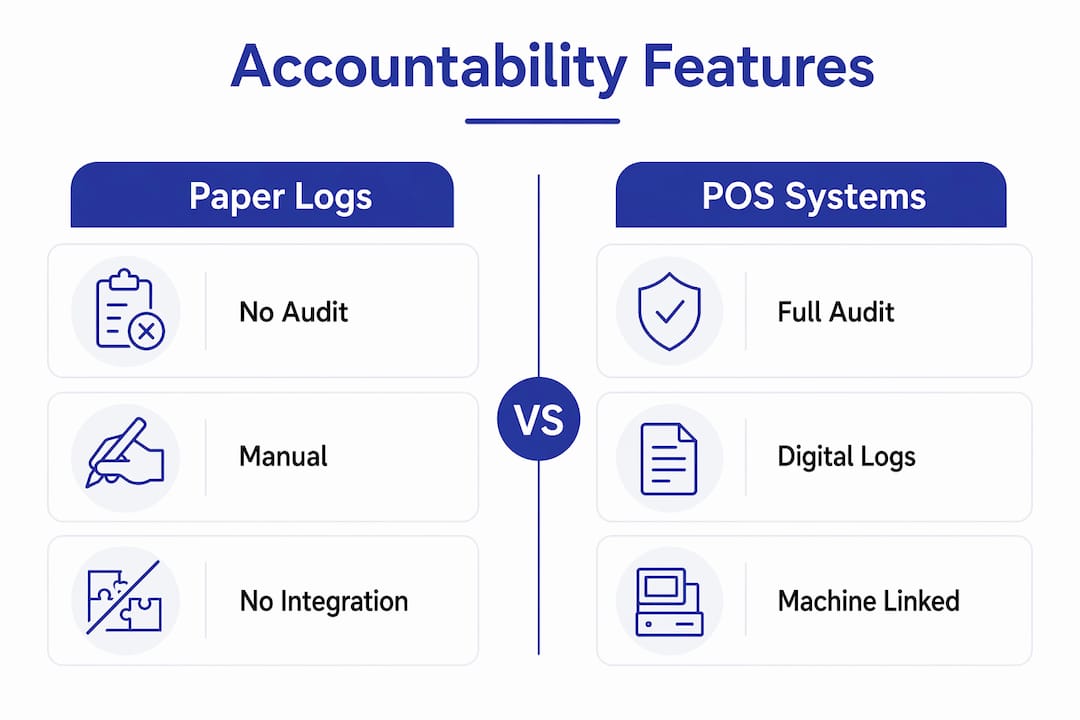
The gap between paper checklists and a fully integrated POS system is not just convenience. It is the difference between guessing and knowing.
How does integrating POS systems with machine operations improve staff accountability?
POS systems integrated directly with laundry equipment link every machine start to a specific customer order. That connection creates a performance record that owners can review at any time, from anywhere.
The most useful metric this integration produces is the machine-start-to-order-value ratio. When a machine runs without a corresponding order in the POS, that is a discrepancy. It could mean an attendant started a load without logging it, or it could signal a more serious problem. Either way, you now have data to act on instead of suspicions to manage.
Key performance improvements this integration delivers:
- Traceability per order: Every wash cycle links to a customer name, weight, and price, so errors are easy to locate
- Productivity measurement: Owners can track pounds processed per hour per attendant, identifying both high performers and bottlenecks
- Discrepancy detection: Unmatched machine starts surface immediately in reports, prompting fast follow-up
- Reduced cash handling risk: Automated payment logging means owners know exactly what collections should be, making shortfalls visible within the same shift
The productivity measurement piece is underused by most operators. Tracking pounds per hour per attendant gives you an objective baseline. Once you have that baseline, performance conversations become factual rather than personal, which makes them far easier to have.
What are best practices for training and monitoring laundromat attendants?
Training is where accountability systems succeed or fail. Technology only works when attendants understand the standards they are being measured against.
Comprehensive attendant training includes detailed written instructions, photo examples of correct folding and sorting, and staged shadowing with supervisor sign-offs before independent work begins. Skipping the shadowing phase is the most common shortcut operators take, and it costs them weeks of rework and customer complaints.
A structured training and monitoring program follows this sequence:
- Written standards first. Document every task with photos showing the correct outcome. Attendants need a reference they can check, not just verbal instructions they may misremember.
- Shadowing period. New attendants work alongside an experienced staff member for a defined period before handling orders alone.
- Supervisor sign-off. A manager formally approves each attendant for independent work after observing their performance on a set number of orders.
- Regular spot checks. Managers conduct order audits and spot inspections on a scheduled basis, not just when problems arise.
- POS report reviews. Weekly reviews of individual performance data give managers objective grounds for feedback, recognition, or corrective action.
Pro Tip: Frame accountability as a tool that protects good employees, not just a way to catch bad ones. Attendants who perform well benefit from a system that proves it.
The cultural framing matters as much as the process. Attendants who understand that the system documents their good work alongside any errors are far more likely to embrace it than resist it.
How to implement a laundromat attendant accountability system step-by-step
A phased rollout prevents the common mistake of trying to change everything at once and ending up with a half-built system that nobody uses consistently.
- Assess your current setup. Identify which tasks are tracked, how they are logged, and where gaps exist. Note whether your POS currently links to machine operations or operates independently.
- Select and install your software. Choose a POS platform that supports machine integration, digital task scheduling, and individual employee logins. Install it on your primary counter device before training anyone.
- Build your attendant checklist. Document every recurring duty, from opening procedures to garment intake to machine cleaning. Assign each task a frequency and a responsible role.
- Train attendants on the new system. Walk through every feature they will use daily. Emphasize that the system logs their completions, which protects them as much as it monitors them.
- Set your monitoring schedule. Decide how often you will review POS reports, check task completion logs, and conduct physical spot checks. Weekly reviews are the minimum for a single-location store.
- Review and adjust after 30 days. The first month reveals gaps in your checklist and training. Treat that period as a calibration phase, not a final rollout.
The table below maps each implementation step to the person responsible and the expected output.
| Step | Responsible party | Output |
|---|---|---|
| Current setup assessment | Owner or manager | Gap list and tool inventory |
| Software selection and install | Owner | Configured POS with employee logins |
| Checklist development | Manager | Written task list with frequencies |
| Staff training | Manager | Signed acknowledgment from each attendant |
| Monitoring schedule | Owner | Calendar with review dates |
| 30-day review | Owner and manager | Updated checklist and training notes |
The 30-day review is the step most operators skip. Skipping it means small problems compound into habits that are much harder to correct at 90 days.
What common errors affect laundromat staff accountability and how do you avoid them?
Most accountability failures trace back to three root causes, not bad employees.
Common pitfalls include overreliance on manual logs, insufficient training, and a lack of transparent records that creates mistrust on both sides of the counter. Each one is preventable with the right combination of technology and communication.
The most damaging pitfall is the manual log without verification. A paper sign-in sheet or handwritten checklist tells you nothing about whether the task was actually completed. It only tells you that someone wrote their name down.
Watch for these specific failure patterns:
- Unverified manual logs: Replace paper sign-offs with digital acknowledgments that timestamp the completion and link it to an employee login
- Inconsistent training: Attendants trained by different managers to different standards produce inconsistent results. One written standard, applied by everyone, fixes this
- No visible records: When attendants cannot see their own performance data, they have no way to self-correct. Share weekly summaries with your team
Transparency through automated payment and logging systems reduces temptation by making discrepancies visible. Visibility and verifiability of transactions immediately impact staff behavior, building a culture of trust and honesty that benefits owners and employees alike.
Physical audits still matter even when your digital system is running well. Walk the floor. Check folded orders against the POS record. The combination of digital oversight and hands-on management closes gaps that technology alone cannot catch.
Key Takeaways
A laundromat attendant accountability system works when it combines digital task tracking, POS-machine integration, and structured training into one consistent process.
| Point | Details |
|---|---|
| Digital logs replace paper | Automated task software creates audit trails that identify which employee missed or completed each duty. |
| POS-machine integration adds traceability | Linking machine starts to customer orders lets owners detect discrepancies and measure productivity per attendant. |
| Training must be staged and documented | Shadowing, supervisor sign-offs, and written standards prevent the inconsistency that makes accountability systems fail. |
| Phased rollout prevents system collapse | Implementing in steps and reviewing at 30 days catches gaps before they become habits. |
| Transparency protects honest employees | Visible performance records benefit good attendants and deter errors, creating a culture of mutual trust. |
Why accountability systems changed how I think about laundromat management
I used to believe that hiring the right people was enough. If you found trustworthy attendants, the operation ran well. If you did not, you replaced them and tried again. That thinking cost me time, customers, and money I did not need to lose.
The shift happened when I started treating accountability as infrastructure, not supervision. A whiteboard is not infrastructure. A digital task log with timestamps and employee attribution is. The difference is not about distrust. It is about giving honest people a system that proves they are honest, and giving owners data instead of gut feelings.
The operators I have seen struggle most with staff management are the ones who built their accountability process around people rather than systems. When a reliable attendant leaves, their institutional knowledge walks out with them. When you build around a documented system, the knowledge stays.
Automation does not replace the human side of management. You still need to walk the floor, talk to your team, and recognize good work when you see it. But laundromat staff management tools give you the data to back up every conversation, whether it is a performance review or a customer dispute. That changes the entire dynamic.
The goal is not to catch people doing something wrong. The goal is to build an environment where doing the right thing is the path of least resistance. Technology, when used well, does exactly that.
— Artur
How Kansoflow supports attendant accountability in your store
Running a tight operation means having the right tools at the counter, not just good intentions.

Kansoflow is a native iOS POS platform built specifically for laundromat owners who want real visibility into how their store runs. The task scheduling and order tracking features let you assign duties, log completions, and tie every machine cycle to a customer order, all from a single device. Photo intake at drop-off eliminates garment disputes before they start. Per-device PIN security means every transaction carries an employee name, not just a timestamp. If you are ready to replace paper logs and fragmented processes with a system that actually holds up, Kansoflow is built for exactly that.
FAQ
What is a laundromat attendant accountability system?
A laundromat attendant accountability system is a structured framework using digital task tracking, POS integration, and training protocols to ensure attendants perform duties consistently and transparently. It replaces manual logs with verifiable, timestamped records tied to individual employees.
How does a POS system improve attendant performance tracking?
A POS system linked to laundry equipment connects every machine start to a specific customer order, allowing owners to detect unlogged cycles and measure productivity metrics like pounds processed per hour per attendant.
What should a laundromat attendant accountability checklist include?
A laundromat attendant accountability checklist should cover opening and closing procedures, garment intake steps, machine cleaning schedules, and customer service standards, each with a defined frequency and a digital sign-off requirement.
How do you build a culture of accountability among laundromat staff?
Frame the system as protection for good employees, not surveillance. Share performance data with your team regularly, recognize strong results, and use POS reports to make feedback factual rather than personal.
What are the most common mistakes in laundromat employee accountability?
The three most common mistakes are relying on unverified manual logs, training attendants inconsistently across managers, and failing to share performance records with staff. Each one is correctable with digital tools and a single written standard applied consistently.